Blog

Middle East Conflict, Politics

A monster is hiding in the closet

You know that feeling you get — that rush of breath-stopping adrenaline — when you watch a scary movie and you helplessly watch the main character walk across the screen straight into the death trap of pure evil?

And her hand reaches for the door knob…and…

BAM!

Someone behind you — someone in real life — slams a door.

And you scream! You didn’t realize how tense you were. You didn’t realize just how edgy you were until you screamed.

That’s me right now.

I live in Israel.

But not the part of Israel that’s being bombarded by rockets or being forced into bomb shelters every few minutes in response to the Code Red sirens sounding.

I live in Northern Israel. The Lower Galilee.

In accordance with non-specific requests by the IDF, I am not going to tell you where I live or where rockets may or may not have landed.

But I will say a hearty thank goodness we chose Nefesh B’Nefesh’s Go North program. Tel Aviv? Trust me: over-rated. Especially when rockets are flying overhead.

Had we lived in this very house six years ago during the 2006 war with Lebanon, however, I’d be singing a different tune. A tune from inside my bomb shelter, where the acoustics are questionable and the air quality not so fresh. Six years ago, neighborhoods in our region  and especially in the region where I work in the Western Galilee received the brunt of katyusha rockets targeted at Israeli civilian populations during that war.

Lucky for me, in the almost two years that we’ve lived here, I’ve only needed to visit my shelter to add another can of corn to my End of Days store.

A portion of our 2-week disaster supply

Unlike most Israelis, I keep my MAMAD clean and reasonably stocked. I’m just that kinda girl. But as prepared for disaster as I try to be, I know there is no way to emotionally prepare for disaster.

Try as I might with obsessive thoughts and compulsive behavior and endless rows of canned corn, there is no way to prepare for war. For cloudy with a chance of rockets.

* * * *

Supposedly, we’re just out of range for the rockets being fired by Hamas terrorists from Gaza. Does that help me sleep easier at night?

A little. But just like chicken pox spreads from one tight knit community to another, so does fear and dread. And with Hamas promising “big surprises,” I asked my husband, who was on his way out to a meeting, to close the outer protective shutters on the shatterproof windows to our bomb shelter.

We normally keep the heavy metal shutters open to avoid mold buildup in the airless room. (As if bombs weren’t bad enough…)

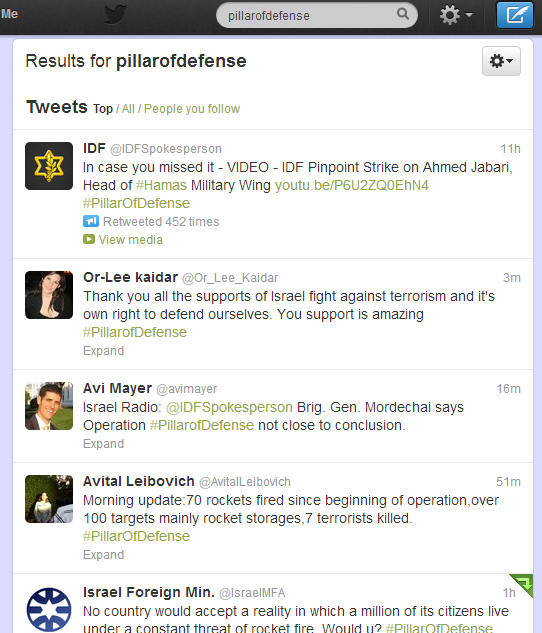
I was sitting on the couch trying to keep up with the latest tweets on the situation when I heard a very loud and extended wail from outside.

I jumped.

My heart almost leaped out of my chest.

When my mind started working. I realized the sound was just the creaking of the metal shutters.

Nothing to worry about.

“Yet,” I added out loud.

I’m more concerned for our safety than I thought I was. And more in denial than I thought I was.

It’s true that the Lower Galilee isn’t #israelunderfire in this moment. But what separates me from the families in real, true live danger right now is a highway shorter than the length of New Jersey Turnpike.

What separates me from them is a stronger rocket booster.

What separates me from them is a whim of a dictator to our North and a whim of a dictator to our East.

The whims of monsters who hate me simply because I’m Jewish and because I live on a particular piece of land.

Hamas would be sending rockets to my backyard if they could.

I tweet and I blog for Southern Israel because I know this is true.

I know I am only out of harm’s way this time.

My conscious mind is in denial, but my unconscious mind is screaming at the screen to “Watch out.”
Middle East Conflict, Politics

I’m sensitive to war

In case you haven’t heard, Israel has launched an operation against the terrorists in Gaza who have been firing rockets on Southern Israel. Rockets that keep children from going to school. Rockets that force families to sleep in bomb shelters … if they can sleep at all with the alarms going off all night. Rockets that kill.

I heard about the Operation on Facebook and Twitter because this is how I get most of my news, but especially my news from Israel.

And as much I relish feeling part of a strong, supportive, active community here in Israel, it’s days like this that I feel torn about social media.

On the one hand, like any bad news, it’s better to hear it from friends than from a stiff news reporter. On the other hand, I feel like war brings out the worst in people. People I normally like.  And on social media, people let their emotions rip. They don’t just type in 140 characters. They shout.

Today, during what’s been named Israel’s Operation Pillar of Defense, I can smell through the computer screen the adrenaline, hatred, rage.

It makes me very uncomfortable.

This is not to say I don’t firmly and strongly believe Israel has a right to defend herself. I do.

This is not to say if I were living in a city in which rockets were raining down, I wouldn’t want my government to act. I would.

This is to say:

I guess I’m a pacifist.

Which sounds weird. It’s not how I picture myself at all. In fact, I normally tag myself as an “accidental activist.” I fight for what I believe in. I don’t stand idly by when I can educate or inform or make positive change.

But activism takes many forms. Blog-ins, rallies, strikes, marches: These are actions I have a strong stomach for.

But not for war. Not for violence. Not for rockets raining down on my neighbors in the south and not for missiles being sent down on Gaza.

On the one hand, I’m thankful I am not in the position to make a decision whether or not to shoot; whether or not to fire; whether or not to initiate or retaliate.

I’m just not built for war. I wouldn’t be able to make such a quick decision. I’d hesitate. I’d think of men as babies in their mothers arms. I’d think of children wailing.

Perhaps I’m not angry enough to make such a decision. Not broken enough.

But, on the other hand, I think: Who is? Who is built for war?

Who is born built for war? What man or woman meets her mate in bed with the express desire to bring a new solider into this world? A new terrorist?

What child is raised for war? What 4 year old, as he learns his letters and starts becoming more aware of himself and his surroundings, thinks to himself, “One day I will defend this beautiful blade of green grass with my life?”

Are any of us built for war?

What would war look like if the broken ones weren’t running the show?

* * * *

I’m a pacifist.

I can still see the good, the innocent in almost anyone.

Is this a gift? Or a hazard?

I don’t know.

But what I can tell you this morning as I sit both behind my screen and behind my country is that I support Israel’s right to defend herself. But I can’t comfortably nod my head at blithe tweets about people (terrorists or soldiers or civilians) being marked for death.

I can’t feel excited or grateful or proud.

War hurts my heart.

In my heart — one that some would call naive, but I see as loving and compassionate — there is still a flicker of light. It’s that flicker of light I often hear my observant Jewish friends talk about.

That flicker of light in all of us.

The flicker of light in my own heart tells me conflicts can be solved with the right people seated around the right table.

And so I can’t enter “operations” with firm resolve or unwavering decisive support.

All I can muster as a sigh.

A disappointed and very sad sigh.

Culture, Education

Vote me

If you’re going to blog on Election Day, you better blog about the election, right?

It’s what’s trending. It’s what people are talking about. It’s what’s relevant.

No one wants to read blogs about somebody’s else’s kid on Election Day.

But just in case you’re someone who, like I am, is still in denial about the fact that today Americans vote to re-elect or elect a new president, here is a light and fluffy election-related, but unrelated post from your favorite (or second favorite) Israeli immigrant blogger.

A few weeks ago, my 9 year old immigrant son did something extraordinary. He ran for class representative in the 4th grade.

This would have been only somewhat extraordinary when we lived in the U.S. — my oldest has always been a friendly and confident kid, but nonetheless, I would have been impressed with any one of my children placing their names on a ballot, the results of which would label him a winner or a loser (at least among his peers).

Who does that? Who sets themselves up for that?

But, even more extraordinary is that my kid, the nine year old who has been in this country and part of this school communuity not quite two years, decided to run.

Part of the requirements included a speech in front of the class on why they should elect him.

In Hebrew.

I am so amazed by my children sometimes.

Truly a-mazed.

The kid didn’t even tell us he gave a speech until after the fact. He worked the speech up himself and gave it — off the cuff.

(I think he promised them a really fun year… and maybe some candy.)

People often ask me about the impacts of aliyah on my children. I know much of our happiness here has to do with how happy our kids are, so I often feel very grateful when I tell them our kids are doing beautifully.

They’ve learned the language. They’ve made friends. They even dare to throw their hats into rings.

My son — who ran against 7 other kids — did not win one of the two representative seats from his class.

He was disappointed. And, honestly, so were we.

My immediate thoughts were panic and guilt — “Wait! He was so popular when we lived in America. Did we drastically hurt his popularity by dragging him to Israel? Did we screw him up forever?!?”

Then I realized, “That’s not the point.”

The biggest accomplishment would not have been in winning. We already know this kid makes friends easily.

The accomplishment was that he ran at all.

And, for the first time ever, I felt the truth in the classic, yet typically ineffective cliche, “It doesn’t matter if you win or lose; it’s how you play the game.”

Culture, Religion

Religious puzzle

Is it possible to move to the Jewish State and feel less Jewish?

Yes. Yes, it is.

Even when you’re acting a lot more Jewish than you did when you lived in the Non-Jewish Jewish state. (Not, no the Vatican. New Jersey.)

Even though I moved to Israel and live in a community that is considered (by secular and pluralistic Jews here, at least) to be religious, I still often feel as goyish as a ham sandwich on white.

Take my Halloween post on the Times of Israel yesterday, for instance.

Of course, I knew I might ruffle a feather or two. Religious Jews don’t celebrate Halloween, not even in America. And I knew the Times of Israel attracts readers that tend to be a little on the, let’s just say, fervent side.

But I didn’t expect the commenters to go all Esmerelda on me.

(c) Twentieth Century Fox Film Corporation. Edward Scissorhands

On the one hand, I’m curious about it. In the same way I might be curious about a colorful school of clownfish swimming in a tank at the pet store.

I knew that observant Jews in America didn’t let their kids participate in Halloween festivities, though I never really understood why. Not the historical reason why; but the “why is it still relevant today” kinda why.

Halloween in America today is far, far away from idol worshipping. Unless, of course, you consider Smarties to be idolic. Why be so vigilant about keeping your kids off the streets and out of costume on October 31?

But of course, I fall into the camp that thinks kashrut as a means of humane slaughter is also outdated…especially when you take into consideration inhumane mass slaughterhouses like agriprocessor. Tells you what kind of Jew I am, and also shows you very clearly my stand on taking a more modern approach to tradition.

So, naturally, I wasn’t really prepared for the harsh admonishment on the first run of commenting on my post.

Yikes! I just wanted my kids to enjoy some cake and candy. I just wanted them to be amused and impressed by my polished witch cackle.

Heck, I just wanted a reason to be able to work my polished witch cackle into a sentence.

Is that so wrong?

Look: Halloween has nothing to do with my “traditions or values or way of life.”

Kids get dressed up and go beg for candy. When they get older, they throw eggs at my house.

Who would claim that this “holiday” has anything to do with their “traditions or values or way of life?”

Not even satan worshippers or pagans, I imagine.

And yet, somehow in her tone, this commenter implies that by recognizing a secularized American tradition I am somehow passing on bad values to my Jewish children. My Jewish children who go to Beit Knesset every Friday night for kabbalat Shabbat; my children who go to a Tali school and learn Tanakh; my children who — during play amongst themselves — will sometimes sit on the couch and daven with their dolls.

I’m not kidding.

I have video to prove it.

Maybe, the commenter is right. Maybe someday my kids will grow up to be idol worshipping pagans who dance naked in the moonlight at Stonehenge.

Personally, I think Halloween is more likely to turn kids into toothless fat old people than pagans.

And dancing naked in the moonlight at Stonehenge? Sounds fun.

But then again, I’m that kinda Jew.

Culture, Family, Food allergies, Health

Peanut-flavored twist of fate, or a miracle?

I’m writing this while it’s still very fresh.

Because I feel like I need to process it all.

Earlier this week I was engaged in a heated discussion in the comments section of a fellow blogger and fellow mom of food allergic kids about how Israel doesn’t take food allergies seriously.

Earlier this morning, I blogged about how frustrated I feel with the Israel medical care system.

And then, like a freak thunderstorm that knocks down the tree that just misses your house, the Universe decided it wanted to tell me something.

I think. Or else it’s all a very very strange coincidence.

Around lunch time, I got a call from my husband. He was on his way home with the boys from school. The 9 year old had just thrown up all over the car. My husband then told me that my son had eaten a candy at school and started feeling sick after. He was afraid it had nuts in it.

But he wasn’t sure. My son hadn’t read the ingredients.

Our smart son; our careful son; the one who has had now 7 years of experience living with food allergies… he slipped up.

Of course, one can understand. It was a sucking candy. Not a chocolate bar. Not a cake or a cookie or a brownie. An orange-flavored hard candy. At least that’s what it looked like and even tasted like to him.

In all our years of reading ingredients, we have never once ever come upon a hard sucking candy with nuts in it (save for coconut oil, which he is not allergic to.)

I think he got complacent. And, like any 9 year old boy, careless.

Maybe we got complacent. We stopped nudging him.

Either way, today, after years of wondering what it would be like to look anaphylaxis  in the face, I did. Smack dab.

This wasn’t my son’s first allergic reaction. He’s had three reactions in the past — one last Spring even to a new food he wasn’t allergic to in the past — but all have been treated  successfully with Benadryl, an antihistamine. It’s the first course of treatment according to our allergists, unless his lips swell or he can’t breathe.

Today, his lips weren’t swollen and he could still breathe, but yet, he was not right. I could tell. Kinda. But not for certain.

As soon as he got home, I could see he was pale. He also couldn’t breathe from his nose. And while he could still breathe from his mouth, his throat hurt and his voice sounded like he had something stuck in there.

I wasn’t quite sure he “needed” the epipen. But I held on to it as I evaluated him. I looked in his throat. It looked swollen.

I had just given myself the epipen a few months before for what I had thought was allergy but turned out to be food poisoning. At the time, I told myself, “It was good you did. Now you know it doesn’t really hurt. Now you will really give it to the kids if they need it and not worry about it hurting.” (Ask any parent of kids with food allergies and most will tell you they worry about having to give the epipen to their kid. “I don’t want to give him the shot. It will hurt.”)

I looked at my son and asked, “Do you feel I should give you the epipen?”

He was scared. He hesitated. He didn’t say, No. But he couldn’t say, Yes.

I said yes for him.

I reminded him that it wouldn’t hurt. It would help.

He was brave. Very brave, as I stuck the epipen in his thigh.

Thank goodness, I did. Later, after we took him to the doctor; after the doctor checked his vitals; after he gave him steroids as a follow up treatment; he told us, we did the right thing.

And it was only after that, my husband pulled out one of the wrapped candies the teacher had given us to show us what he ate. Another child had handed them out during recess when the teacher wasn’t there.

The candy said Praline on the wrapper.

Pralines are not nuts, themselves. They are a nut-flavored candy or cookie.  It wasn’t part of our vocabulary … the one we’ve always used when training him on what to do around food. My son didn’t know what a praline was. Because it’s a nut candy, he’s never eaten it. Also, it’s not something children generally eat in anywhere in America I’ve ever been (except Georgia, now that I think about it). My son has never seen anything like that.

Of course, if he had read the ingredients written in teeny tiny crumpled up type on the wrapper, he would have seen the word “peanut.” We did.

I can’t be angry at my son. I am too thankful right now he is alive.

I am thankful he trusted his body and got help right away.

I’m thankful that his teacher called us immediately as soon as she heard he had eaten the candy.

I’m thankful my husband happened to be nearby with the car and could get him from school.

I’m thankful I had the courage to give him the epipen even though I wasn’t sure he “needed” it.

I’m thankful there was a clinic open to see my child (even though the first two ones we called were closed and no one available to answer the phones).

I’m thankful we had friends around to help us with our other kids.

I’m thankful traffic on the one lane road to the clinic wasn’t extraordinarily slow as it often can be.

I’m thankful the doctor on call at the clinic happened to be our pediatrician, who knew us, and who we felt comfortable with.

I’m happy he took us seriously. I’m happy the nurse and the receptionist at the clinic also took us very seriously. I’m happy the teacher (who called us later to check on him and express her concern) and the children in my son’s class all took it seriously.

Of course, I am most thankful he is sitting next to me right now bugging me to get off the computer and get him a popsicle.

He is ok.

He is ok.

And, perhaps, there are Israelis who take food allergies seriously.

After today, I imagine some of them will likely take them more seriously than they did before.

I’m not suggesting the turn of events was all the work of something supernatural or magical. Or that someone or something was really trying to send me a message.

(They do take it seriously.)

(He is in safe hands.)

(You will know what to do.)

(He will be okay.)

But, one way or another?

Message received.

Health, Learning Hebrew

Olah’s Lament: Health Care in Hebrew

Universal Health Care is not all Peaches and Herb, as I once thought.

(And yes, by Peaches and Herb, I mean peaches and cream.  But ever since I accidentally once said “peaches and herb” (with a soft h) when I really meant peaches and cream, I am compelled to use the much sillier Peaches & Herb. It’ll catch on, you’ll see.)

Back to Universal Health Care.

Why am I title capping Universal Health Care: it’s not a proper noun.

And yet people speak of it as if they know it intimately. As if it’s a person or a place that requires commitment to or vehemence against. As if it requires an I.D. bracelet.

Since, in general, I tend to be non-committal or centrist when it comes to most heated political issues, I typically spoke in the past of universal health care in lower case.

Until I moved to Israel.

Because now, being in the system (as opposed to just daydreaming about it), I have stronger opinions.

Now, all of a sudden Universal Health Care is title capped. It’s personal.

When I first moved to Israel, I loved that I could go to the doctor whenever I wanted (or so I thought). I could get bloodwork done, a strep test, and an anti-fungal cream all in the same place, and pay practically nothing. No co-pays for visits. Pills cheap like candy. And all because I had a little card with my name in Hebrew and my new Israeli ID number.

Universal Health Care, you the Man! I thought.

Why is everyone up in arms about this concept? Who wouldn’t want doctors at the ready? Prescriptions for 5 bucks a pop?

Now, two years later and nine months into a mystery health condition to which I can’t seem to get anyone to pay attention, I’m a little less enamored with the concept that once seemed simple.

Of course,  lack of personal attention is not a problem unique to Universal Health Care, you might say. We also have this problem in the United States, where health care is privatized.

True. We do.

But, in the States I managed to find a few doctors within my insurance program who gave me a certain level of specialized attention. It was attainable, if not a little challenging.

But here, I feel very much as if I can’t find anyone in the system to care. Like, no matter how hard I tried, I wouldn’t be able to find a doctor who would see me through this condition until we figured out what it is and what to do about it.

Don’t worry about me. I’m not dying.

But if I was, I wouldn’t know it. Because no one will give me an answer! They just keep passing me on to someone else who is “more specialized” than they are.

My next visit (4 doctors and two ultrasounds since the first visit) is supposed to be to a “general surgeon.”

Can anyone tell me what that guy does?

How does he know more than the “general practitioner?”

Or the “woman’s doctor?”

Or the “woman’s doctor surgeon?”

The Hebrew word for surgeon SEEMS to be used interchangeably with specialist. Which is just as confusing if not more than the fact that the Hebrew word for infection (daleket) is the same as the Hebrew word for inflammation

Infection and inflammation are TWO VERY DIFFERENT diagnoses!

Just as different as surgeon and specialist…at least where I come from.

The surgeons here are apparently the only doctors in Israel that learn a specialty. Which, if taken literally, is really upsetting to me as someone who likes to avoid invasive procedures.

Worse, the surgeons are super-specialized to the point that if your problem falls just outside the boundaries of the region they are specialized in, they give you the “Ain Ma La’asot” shrug of the shoulder and send you off to the next guy. Who, of course, doesn’t have an open appointment until 6 weeks from Wednesday.

6 weeks from Wednesday at 8:10 pm.

(By the way, no one — not the hottest super model; not the youngest, most peaches and herby looking man or woman — looks good doing the “Ain Ma La’asot shrug.” If we don’t give this cultural expression/body language up simply because it’s defeatist and obnoxious; we should give it up because we look ugly doing it.)

The funny thing about Universal Health Care in Israel is that everyone here is happy they have it, but if they want someone to take them seriously, they see a private doctor.

By which I mean specialist.

By which I mean surgeon.

By which I mean general surgeon … 6 weeks from Wednesday.

It’s possible this is all one big misunderstanding.

That there is some secret I don’t know because I’m new here. Or there’s some magical expression I need to say in Hebrew when I call *2700, the hotline for my kupah.

It could very well be one big misunderstanding.

Especially, since there’s no “manual of services” available in English when you join the Universal Health Care system in Israel. Not even if you pay extra to be in “Mooshlam,” the upgraded platinum level of service. Which, as Americans pre-conditioned to be terrified of socialized medicine, we all buy into.

Yes, it could just be yet again one big misunderstanding.

My recommendation to Nefesh B’Nefesh in 2013, in light of the damning article and follow up posts about them in Ha’aretz this week?

Work with the kupat holim on an American-friendly semi-private health care system. A happy hybrid between Private and Universal. Something to please the centrists — those of us who prefer our health care systems to be lower capped, as long as they work in our favor.

Community, Love, Relationships

What comes after bliss

One of the first blogs I wrote about my Aliyah experience was a basic explanation of why we moved to Hannaton, and centered around our desire to live in an intentional community. I wrote this post less than a month after landing in Israel and only 12 days into our life on Hannaton.

I was in bliss mode.

Are you familiar with that method of operation?

Bliss mode:

* The first three months with your new boyfriend.
* The day before you marry your husband.
* The first two weeks your newborn baby is in the world. When he is so exhausted from birth he sleeps all the time. And you are still surrounded by friends and family who want to feed you and hold the baby.
* The first month at your new job. The one with the new title and the higher salary.

Bliss mode:

* The minutes after the editor accepts your pitch, but ten months and ten revisions before the piece is actually ready to submit.
* The first week in your new apartment, your new neighborhood. When you are absolutely, positively sure you made the best decision EVER!

When I look back at that post from January 2011, I can see how some of my friends and family back in New Jersey were upset with me. Put off by what they interpreted as my comparison between how I saw community here on Hannaton (“desired,” “nurtured,” “preserved”) and my all but outright trashing of community “back in America.”

Sorry about that. That was crappy of me. I would have been pissed off at me too.

Some of the less personally insulted friends and family, however, might have read the post and thought, “Ha! Give it time. You’re still in bliss mode, silly.”

I do that sometimes when someone is clearly operating in bliss mode.

And those seeming cynics would have been right.

The same way my brother-in-law — the one who told me and my husband in the first months of our courtship:

“You two are very cute. Enjoy it while it lasts.”

— was right.

Except, they’re not cynics. Not really.

His was not intended as a warning or a prediction or a buzz kill. It wasn’t a commentary on his own marriage or the strength of mine and my husband’s relationship or love for each other.

It’s just the truth.

Bliss mode begins and it ends.

It is scientifically proven.

And, as the researchers say, if we were constantly in bliss mode, we would never get anything done.

Think about it. Bliss mode is not sustainable.

Think about how much focused attention and energy it takes to build and maintain relationships; to create and raise a family; to build and sustain community; to develop a successful business.

If we were constantly in bliss mode … never in “Hey! You smell like cow manure all the time” mode … we would be so focused on our personal bliss that we couldn’t see the areas in which our situation could be improved.

Room for improvement doesn’t cancel out bliss.

It just reframes it.

And so I remind myself of this when I step in dog poop on my sidewalk for the 50th time this week. And I remind myself of this when I get yelled  at and honked at by an impatient driver, who happens to also be my neighbor. And I remind myself of this as my kids track in mud to my living room…and as your kids track in mud to my living room…and then they all eat shlukim on my new couch and spit out the wrappers onto the floor.

I remind myself that just because it’s no longer bliss…doesn’t mean it’s no longer love.

The best bliss is one that transforms into a loving and long-term attachment; a dedicated and loyal commitment.

Yes: Gorgeous sunsets over grassy hills and hot sex in inappropriate settings are bliss-scented bonuses that keep us warm during metaphorically cold, dark winter periods in our relationships — whether those relationships are with our partners or with our communities.

But attachment and commitment are what surely sustain us.


Love, Spirituality

Proof of Time Travel, and Other Conclusions Based on Raw Emotion

I am 38 years old.

Now you know.

But I don’t know.

I don’t know how I can possibly be 38 years old.

First, because in my mind, my mother is 38 years old. And physics teaches us that my mom and I can’t be the same age.

In my mind, my mother has brown hair with a few blonde highlights. She wears jeans and a polo shirt. She makes me peanut butter and jelly. Impossible, since my son is allergic to peanut butter and we don’t keep it in the house.

My mothers yells at me for waking up my baby brother from his nap. Who? Who is napping?

My brother? My son?

My mom is planning my bat mitzvah. My Sweet Sixteen. She’s dropping me off at my boyfriend’s house. At college. At my new apartment.

She’s 38.

And me?

I’m 20-something. Or something followed by the word “teen.”  Impossible, I know, but so is 38 years old.

In the day-to-day in which I wake up, shower, get myself and my three children ready for work and school, I can submit to the possibility of being 38 years old. A 38 year old, after all, is a grown up who does grown up things, such as taking care of herself, her children, her bills, her errands and her home.

And I do these things. I’m not crazy, after all.

But when I finally have a moment to myself, and I sit in the reality in which I am 38 years old, I am confused.

Almost as confused as if I woke up one morning and I was 63.

Or on Mars.

Or being awarded the Nobel Peace Prize.

I don’t know how I can possibly be 38 years old.

True, it was a long time ago I played kickball in the front yard with my brother and the neighborhood kids. I know it was a long time ago because the details of these games are blurry, faded.

And, yes, it was a long time ago that I walked down the football field in a graduation gown. I can’t remember the color of the dress I wore underneath. So it must have been long ago, as my memory is excellent. And if it happened recently, I would certainly remember the color of my dress. I would remember the restaurant we ate lunch at. I would remember why I told my parents I didn’t want a party.

This certainly all happened long ago. It’s the past. It’s before. It’s inaccessible. Or is it?

Because sometimes, when I press play on a particular song and I close my eyes, I can touch the wet sand on the beach in Margate. I can smell the Fruit Loops soaking in a bowl of milk in the basement of Thurston Hall. I can hear high-pitched giggles around a long table at a restaurant in the East Village. I am present. In the middle of a very important conversation. That’s taking place miles and miles away from where I am sitting with my headphones loosely dangling from my ears. And the girls are wearing Baby Doll dresses with leggings. And the guys have Caesar haircuts like David Schwimmer.

Sometimes, when I am in the space between waking and dreaming, I hear Stephanie’s voice.  If I was 38, Stephanie would already be long gone from this world.

Sometimes, I smell the burnt electric remnants of a blender mixing a chocolate Alba drink; I hear the organ playing; and I catch the vague outline of my Bubbi’s hydrangea-patterned nightgown. Impossible. It’s been 20 years since she would have been able to manage the steps to that apartment. And she’s gone, too.

You call it memory. But I call it time travel.

What’s the difference, really, between recall and time travel? If I can smell, hear, taste, and even touch 1992; how can you tell me I’m 38 years old?

I applaud their efforts, but physicists are looking in the wrong places for proof that time travel is possible.

They should be spending less time with quantum mechanics and  more time with the human heart and brain.

Relativity baby. It’s special.

Community, Spirituality

Alternative Atonement

I really love the word alternative.

A little too much, probably.

When I imagine the word alternative in my mind it’s pure white.

It represents something good, something spiritual, something I can connect too.

Like Yom Kippur.

Like reflection. Contemplation. Healing. Forgiveness. Fasting.

When I let my mind rest, words become colors. And colors become emotions. And emotions connect me to my spiritual side.

What a colorful world it is when I let my mind rest.

This is my pathway to Yom Kippur.

*   *   *   *

Soon I will walk up to the Hannaton Spiritual and Education Center to sit in on a “dharma talk” given by one of the teachers leading a retreat organized by Tovana, an “organization that disseminates spiritual teachings and practices derived from the Buddhist teachings, the Dharma, [to] help us discover a deep inner peace and awakening and a life of harmony and wisdom.” Had I known about the silent Yom Kippur meditation retreat in advance, I likely would have convinced my husband to give me a couple of days off to participate.  But I only heard about it last weekend. And so, I won’t be reflecting, atoning, or meditating Jew Bu style.

Luckily, though,  Hannaton residents are invited to listen to one of the few talks that take place in the middle of the otherwise silent retreat. So this is where I’m going in a few minutes. Before I leave, I will shut down my computer. And keep it shut for the next 36 hours or so. Sitting at a dharma talk — another pathway to Yom Kippur.

When I come home, I will turn off my phone. I will turn off my IPad. I’ll spend time with my children. Time with my husband. Time with my new kitty. Time in my garden (read more about how that connects to Yom Kippur here.)  Time in the synagogue with friends. Time outside the synagogue with friends.

All pathways to Yom Kippur.

It’s amazing, really.

And simple.

White. Pure.

Yom Kippur.

Family, Kibbutz

When the novelty wears off

What to do when the novelty wears off?

This is the question I didn’t realize I have been asking myself all summer.

What happens after you’ve lived in a new country for a full year, a full four seasons? What happens when you’re no longer the hot new family in the neighborhood? The charming foreigners? The intriguing mystery couple in the red rental house?

What happens when the cultural differences are no longer cute? When the adventure takes back seat to the normal every day demands of life?

What happens when you’re life become less about navigating national landmarks and more about homework? Grocery shopping? Haircuts? Conference calls? Birthday parties? Forms? Soccer practice?

What happens when you suddenly realize you live here; and that it’s time you start living here?

What happens then?

What happens is that you get a little depressed. You find yourself frustrated. Then in a funk. Then frustrated again. Then in a funk. Then you spend a few days longing for your old friends; your old neighborhood; your old book club; your old familiar premium natural foods market just down the street. You long for things you hated “back home”: the mall, the post office, the emergency room at the local hospital.

You wonder if you should move back to New Jersey. Back to Arizona. Back to somewhere that has a premium natural food market.

Somewhere that sells kale.

You wonder if you’re really happy at your job.

You consider getting a hair cut. New glasses.

You cry in the shower.

You blog about it.

Then…

something magical happens.

You force yourself to go to a community potluck. You look around and you realize you have friends. Not just one or two. But a few friends.  Women and men you can laugh with. And you know exactly which ones you can laugh with!

You realize you don’t have to hide in the corner anymore talking to the one person who will tolerate your pitiful Hebrew. You realize there are a few conversations you could easily interrupt and join. A few people who would be happy you did. A few people who know the right questions to ask you, and care about your answers. A few people who can even smell the funk on you, and ask, “Is everything okay?”

A few people who want to know the truth.

The truth.

The truth is, when the novelty wears off, you find that the sunset over the reservoir isn’t as AMAZING as it was when you first arrived. You find that the smell from the cow farm isn’t really SO QUAINT and AUTHENTIC.  You find that the FARM FRESH eggs actually come from chickens kept in teeny tiny horribly inhumane coops and that despite living on real live farms raised by real live farmers the chickens are treated so poorly they might as well be raised in factories.

The truth is, you realize you didn’t move to a dream. You didn’t move to a Facebook photo album. You didn’t move to a Lifetime movie for women.

You moved to a life.

And one sign that your new life is good is that when the novelty wears off, you’re able to go to a community potluck…and find a friend… and laugh.

Even if there’s no kale.

Culture, Religion, Spirituality

Tradition

Do you celebrate Rosh Hashana like your parents did? What do you borrow from the High Holiday celebrations of your youth?

This is what I am thinking today on Rosh Hashana 5773, Day Two.

It occurred to me this morning, the second day of the new Jewish Year that we didn’t go to services the day before.

Even writing that statement feels funny. It occurred to me. I’m a little embarrassed; a little ashamed, even.

I accidentally forgot to go to services.

This is particularly ironic since, when I was a kid, Rosh Hashana was one of two days during the year when you could be sure to find me inside a synagogue (or at the very least, on the playground of a synagogue, or in a crowded hallway of a synagogue among other hormonal teenage girls spying on well-groomed oblivious teenaged boys.)

It’s ironic because now I am an adult living on a fairly traditional kibbutz in Northern Israel; now, I go to Friday night services at least twice a month; now, I speak Hebrew and think about God:

Now, is when I forgot to go to services.

Instead of going to synagogue on the morning of Rosh Hashana — and I write “instead” very loosely since there really was no active choice involved; I simply forgot — I hung around my in-laws’ house, enjoyed a nice breakfast with my family, and played with the baby kitten my son befriended in the yard.

It’s not that I forgot it was Rosh Hashana. Certainly not. It’s a state holiday. I dipped apples in honey. I thought about the people I had hurt the year before and made a silent intention to right wrongs. I sent New Year’s greetings to loved ones and blessed my children. I kissed my husband with gratitude. I ate brisket.

But I didn’t go to services.

It only occurred to me once we returned to Hannaton later that evening that we really should go to synagogue. It was Rosh Hashana after all.

I thought back to the High Holidays of my youth. I thought about my young parents; and my childhood home. I thought about sweet kugel at my Bubbi’s house. I thought about the new dress from Botwinick’s my mom and I would shop for and the fresh pair of itchy tights we’d break out of the package on the morning of Rosh Hashana. I thought about my brother struggling into a suit from Fleet’s and my dad in a black nylon kippah. I thought about my mom in high heels. My mom hardly ever wore high heels.

I thought about posed family photographs in the front driveway. Plastic smiles, but pretty pictures.

I thought about making it to synagogue early enough to hear the Torah, but not so early that we were the first ones there (10:15 am). I thought about the challenge to find parking in the neighborhood behind Beth El. And worse yet, on the years it would rain.

I thought about parting with my parents as they made their way to their assigned seats in the auditorium…and in later years to the Main Sanctuary. I thought about the classrooms turned into babysitting rooms; and the small chapel I dutifully spent ten minutes inside.

As I recall the Rosh Hashanas of my youth, I don’t recall prayer. This is certain.

But I recall tradition.

Intentional or accidental, our family had a Rosh Hashana tradition. A custom practiced year upon year and, in some little way, passed down to generations. Customs out of the ordinary that I only associate with the High Holidays.

Last night, when it occurred to me that we didn’t go to services, I suggested to my husband that we take the kids the next morning and he agreed.

Not because I felt compelled to pray. Not for fear of the wrath of God. Not even because I thought it was “the right thing to do.”

I took my kids to synagogue because remembering the boring, overdressed, agitated, sometimes hormonal, often drama-filled High Holidays of my youth opens up my heart.

It’s like playing an 80s video on YouTube.

It’s like reading an old journal entry.

It’s like running into an ex-boyfriend on the street.

It’s like smelling your grandmother’s perfume.

It’s like looking at the pictures of your baby’s birth on his 6th birthday.

This is the nature — and the merits — of tradition.

And I want my children to experience the overwhelm of their hearts opening.

They can’t possibly know it today as they argue over who got a bigger glass of grape juice; as they complain about having to pin the kippah to their heads; as they moan and groan as we walk up the hill to the Beit Knesset underneath the hot sun.

But someday they will remember.

And their hearts will burst with feeling.

And they will welcome in the New Year.

Culture, Family

Seducing Fall

You wouldn’t know it from the digits on the thermometer but we’re a few breaths away from Fall.

Evidence mounts, instead, on friends’ Facebook photos and in the mess of backpacks and lunchboxes thrown haphazardly in my hallway.

A new year of school has begun and our second Israeli summer is almost behind us.

I know I’m adjusting to life in Israel because I inhale the faint smells of Fall with desire and relief.  As opposed to how I’ve always associated summer; here, Fall is the season in which we get to play outside and explore.

The summer heat is oppressive, as are the masses at public beaches and parks. In the fall, on the other hand, the weather and the tourists taper off, and the locals get to play a little. Especially with the Jewish High Holidays smack dab in the middle of our transition back into our “regular schedules.” Government and school holidays from Rosh Hashana thru Sukkot provide many of us with a veritable Indian Summer. Mandatory days off from work. An excuse to slack a little.

While I’ve always been a summer lovin’ kinda girl, Israel — and perhaps age –have created a rift between me and my childhood steady, the Summer Sun. I no longer crave his touch as much as I used to, and when we spend too much time together I bristle from it instead.  For the the first time ever, I don’t think I will have a hard time bidding him goodbye.

And with a more mature, but just as selfish abandon, I beckon Fall instead.