Childhood, Dreams, Family, Letting Go, Memory

Meditation on Yard Sales

I have a tendency to hold on.

This tendency is so strong, I’m confident I will end up a haunting ghost in someone’s house when I go.

I hold on to photographs, to letters, to my child’s sketches. I refuse to part with shoes I want to love but can’t because they give me blisters; nor can I say goodbye to the beat up stuffed animal I’ve had since sixth grade.  The t-shirt I received as a party favor at a forgotten friend’s bat mitzvah sits at the bottom of a box  with fifteen others waiting to be turned into a quilt I’ll never make.

I hold tight to first impressions, grudges, undeserved adulation.

And then sometimes, I let go.

No, not just that.

I purge.

I prepare a huge yard sale and lay all my attachments on the grass for everyone to peruse.  Everyone I know and don’t know descends on my beloved belongings.

“Please take them from me!” my eyes say. And they do. For a penny, for a song.

And my load becomes lighter.

If I were to die then and there, I could float up to Heaven like a feather on the wind.

Letting Go, Mindfulness, Philosophy

What color is fear?

I have this thing.

After half a lifetime of thinking it was either a special power possessed by only a select few, or a strange sensory birth defect that generally didn’t interfere with my life, I discovered it was a thing.

With a name.

Synesthesia.

I see letters, and words, in color.

Not all words, and not all the time — only particular words and only really when I pay attention to it.

Months of the year, for instance, each appear as a particular color when I visualize them in my mind. So detailed, in fact, that June and July are both red, but different shades.

All the letters of the English alphabet are colored, too, but strangely, not the Hebrew alphabet. Some letters are (Aleph is white like “A”), and some aren’t. If I were a neurologist, I’d probably study that, but I’m not. I’m just the handicapped super hero with a colorful dictionary in her mind.

What’s particularly interesting to me, though, is how words can change color when they are paired with another.

Prickly is white. But pear is yellow. Prickly pear is white. Why?

I have no idea.

Home is red. But go is green. Go home is “green.” Does my mind automatically prefer the verb? Does the adjective always dominate?

Fear is a word whose color I’d like to change.

If  I could somehow convert fear from that rusty-tinted brown orange to a vibrant hot pink with purple polka dots, I somehow believe that my perception of fear might change, too.

Can you really be terrified of a word that is hot pink with purple polka dots?

What if, indeed, the secret power of synesthesia is the ability to use color to change the way you perceive ?

Change the color of a word in order to manipulate your world?

Into a place that’s less scary?

Letting Go, Mindfulness, Philosophy, Relationships

Do you trust me?

My one son has the memory of an elephant.

He can remember the details of events that happened when he was three, trips we took when he was four.

My other son — not so much.

He hardly remembers his best friends from America, and what he does remember is from stories we’ve told him and pictures we’ve shown.

We’ve fabricated most of his memories by sharing our own.

What I mean by that is, my son now claims to remember things I’m not sure he does.

He’s recounting stories of stories. Not stories about actual events in his memory.

Elizabeth Loftus, a psychologist, claims that this is not unusual. That our memories are easily-manipulated.

Unintentionally, and intentionally.

In her recent Ted talk, she offers a firsthand account of working on a crime case gone horribly wrong.

A man was wrongly identified by his supposed victim and convicted of rape — purely on the testimony of a woman who claimed she remembered him doing it.

I’m conflicted by this.

On the one hand, I’m extremely uncomfortable that a person may be put in jail for a crime he didn’t commit simply because one or more people remembered seeing him at the crime — which apparently happens a lot (less so now that we can use DNA evidence). On the other hand,

I desperately want to be believed.

If it were me — If I remembered this man as the perpetrator of the crime against me — I’d better well be believed!

I want raped women to be believed.

I want children to be believed.

And, even when a crime hasn’t been committed against me, even when I have not been wronged, I want to believe in my memory.

I want to know that what I remember seeing and doing and feeling and hearing actually happened.

I am emotionally attached to my memory.

My memory serves me.

Most of the time.

And yet, intellectually I understand that my memory is nothing more than an ever-changing interpretation of an event or an experience.

I think about memory a lot — as a parent, as a child, as a wife, as a writer.

I am very conscious of making my children’s memories, for instance.

I am very conscious that no matter how hard I work to make them good, they might remember them bad.

It’s in these conscious moments that I have great compassion for my own parents.

It’s in these conscious moments that I feel frustrated, too — knowing that there is very little I can do to control or manipulate another person’s memory of me.

As a writer, I acknowledge that my memory is faulty, even though I happen to have one that’s particularly strong and sensitive to detail.

And yet, I honor my memory when I write. I let it lead me down dark hallways, and up vanilla-scented stairwells.

I let my memory pierce that outer wall of my heart so that I may feel love not just in the past but in the present.

We put ourselves at great risk by ascribing so much power to memory – -this is true — especially in situations where memory may put an innocent man in jail;

But if we don’t give so much power to memory; what then?

If we laugh at it; belittle it; if we judge it; doubt it; forget it …

What happens then?

Who are we without our memory?

Letting Go, Mindfulness, Parenting, Relationships

Learning by metaphor

You know you are meant to learn a lesson when it’s offered to you in metaphor three times in one week.

Last week, I wrote an ode to Yom Kippur. One of my friends commented by referencing a Dvar Torah given by a friend and neighbor during the holiday:

She used driving a car as symbolic of seeing into the future (forward) and the past (rear view mirror) at the same time. She said it may be the only time in life that we actually have that unique opportunity to do so. She spoke about being on auto-pilot and how lucky that we have 25 hours of Yom Kippur to actually stop.

Being a little obsessed with time travel, and still hopeful that one day I will be able to travel both into the future and into the past, I really appreciated this metaphor.

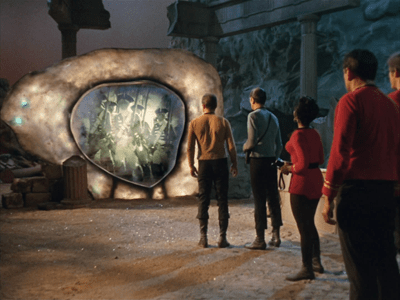
Driving a car is a little bit like time travel — or at least a little bit like the megalith “Guardian of Forever” in The City on the Edge of Forever (Star Trek, episode 1×28).

star trek
Courtesy Wikipedia

There are times, if you pay careful attention, when you may be privilege to what’s behind and what’s ahead, even if there is little to do to change it.

Yesterday, as I drove home from work, I passed by a 6 kilometer bumper-to-bumper back up. As I realized how long the traffic jam was, I started to feel more and more compassion for the drivers sitting in the jam on their way home from work. They had no idea how long the backup was — but I did.

Then, as I slowly made my way around the curvy bend just after the village of D’meida, but before Kfar Manda, I approached the end of the line. There, as cars slowed to a stop, I felt compelled to open up my window and shout:

“Turn around! You’re about to hit a major traffic jam! There’s no way out.”

I felt overwhelmed with sympathy for these people who had no idea what was about to happen to them.

Only minutes before, they were grooving to tunes, catching up on the news, joyfully anticipating a reunion with their kids at the end of a long day.

And now…

stuck.

I didn’t call out my window, though.

Even if I did, I asked myself, would they have heard me? Understood me?

Would they have listened?

Would they have done anything in response?

Many wouldn’t have understood. And even those who did, would use their own evaluation of the situation and past experience to decide what to do.

I chuckled to myself.

It’s a bit like parenting.

You think you know more than your kids. You’ve been there; done that, after all.

You worry. You nudge. You shout:

“Don’t do that!”

“Be careful!”

“You’re making the wrong choice!”

Sometimes they listen. Sometimes (rarely) they value your input.

But usually they don’t.

Like my daughter, for instance — who slammed the front door on her finger last Friday.

She closed the door with her hand in between the jam, despite 2 1/2 years of warnings from both me and my husband to please not.

Evidence that you can offer advice, insight, admonition,

But people — not just kids, but grown ups, too — usually need to learn from experience.

They hardly ever make decisions based solely on the advice of others.

Even if those others are knowledgeable.

Even if they can see into the future or the past.

* * *

Today, on my own drive into work, I found myself stuck in a traffic jam; almost in exactly the same spot as the jam yesterday.

Traffic sat still for a half hour. The minutes ticked away.

A few times I contemplated what to do.

Stay in the car and wait this out?

Try to make it 10 car lengths ahead and turn left to try to go around?

Do a k-turn and return home?

I chuckled. Clearly, there was a lesson to be learned with this whole car metaphor.

I checked Waze.

There was a major accident ahead. It had been there for over an hour.

I thought back to the day before, and then made a k-turn to return home.

I drove slowly, a little bit tripped out by the accident I never saw and the whole car metaphor.

I meditatively contemplated the take-away.

Is the only source of knowledge experience, as Albert Einstein once said?

Are we doomed to ignore others, until we experience things for ourselves?

Probably.

Or at least until we figure out time travel.

Culture, Letting Go, Mindfulness, Modern Life, Relationships, Technology

Crazy Jen and her digital detox

In a discussion with my mother last week, I explained to her with confidence that a group of people were surely talking about me when I left the room.

“How exactly do you know that?” she asked me.

“I just do,” I replied.

“How?” she pressed.

I explained to her that in the same way she is brilliant when it comes to data analysis or number crunching, I know people and their behavior.

It’s not my paranoia, it’s my specialty.

This is why I excel in marketing and branding — you need to be hyper sensitively tuned in to emotions and able to anticipate reactions in order to predict trends and behavior.

I like to tell people — because it’s true and a little self-deprecation is still attractive on a 39 year old who looks 34 — that I am a trend spotter, not a trendsetter.

I spotted the name Hannah, and sock monkeys, and gluten free all before they became Average Joe household-familiar trends.

It’s a blessing and a curse.

The bad part about being a trend spotter, much in the same way that it’s bad to be psychic — people tend to think you’re crazy until the moment after the trend hits the Today Show.

They either don’t listen to you or roll their eyes or … talk about you behind your back, often and with more eye rolling.

The worst part? I receive little to no vindication years later when the trend is obvious. Most people, except for my cousin Jami, have all forgotten by then that crazy Jen suggested years ago that probiotics were the key to fighting depression.

As for my digital detox, I was a little late on the uptake this time.

Only days after I finished my detox — which included the elimination of my smartphone and all computer-related activities for 2 1/2 weeks except for checking personal email once a week and Facebook on my birthday — someone sent me this smart and poignant short film about our cultural obsession with digital connection. The same day, as I returned to Twitter activity, this article from Fast Company appeared in my feed about “slow design” and mentions the digital detox trend. (Not to mention silent meditation retreats — something I’ve been doing, writing about, and suffering ridicule for over the last two years! )

Maybe my trend spotting eye has blurred in my old age, or maybe — like the rest of the world — I am too tired and over-stimulated to be spotting much of anything save for my second cup of espresso.

If digital detox has become  a trend before I spotted it, so be it.

It’s good for us.

We need it.

And we need it fast.

More and more I am hearing from my friends or seeing evidence on the social media networks I somehow feel compelled to follow even though I am getting more and more tired of the content, that —

life is too fast and too hard to keep up with

Just yesterday, my poor friend on Facebook posted an urgent plea for advice:

How do you all do it? She wanted to know.

How do you all keep up with everything? Work, kids, marital bliss, friends, community, world news?

How do you all do it?

I could hear the defeated sigh that followed the last question mark.

We don’t, was my answer.

We’re suffering, I told her.

I hoped to offer her some solace, some comfort. Misery, after all, loves company.

But I don’t know how much relief company will bring. In this case, the more we see others faking it, the more “less than” we feel. And it’s so easy to fake it. It’s so easy to distract yourself from your pain and discontent.

Until it’s not.

Courtesy gawker.com
Courtesy gawker.com

During my own digital detox, which took place during a family vacation, I become hyper aware — just like the girl in the video — of all that goes on, and all that is ignored, around me.

I also became acutely aware and appreciative of my own presence in my own life.

It took only 48 hours of being off Facebook to be so thankful to be off Facebook.

To be relieved.

It took less time for me to be thankful to be off Twitter.

To not know what was going on in the news.

To not have to be witty or responsive.

To tune out the latest trends.

To tune out other people, and the details of their lives.

This may sound mean or psychopathic. Or at the very least, depressive.

Maybe it is.

But if it is, it’s a cultural disease that most of us are severely suffering from.

Most of us just don’t know it — or acknowledge it – yet. OR we’re still convincing ourselves that information access trumps burn out.

Or we think there is no way out.

The symptoms of our cultural disease come out in little ways, like my friend’s Facebook plea, or in a whispered coffee chat between young mothers, or in a verbal spar between embarrassed male colleagues, both overtired and fearful that they will never be able to catch up on their emails or please neither their bosses nor their wives.

My heart hurts for those men, and

I mourn the loss of my freedom.

Because that is what digital detox is — a gateway drug to freedom.

It’s just too expensive for my pocketbook right now and not trendy enough to be available to the masses.

I’m waiting, though.

I’m watching the Today Show headlines on Twitter, and waiting.

Because years ago, back when people were complaining that $5.99/pound was too much to be paying for apples, I was secretly shopping organic at Wild Oats in Tucson, Arizona, waiting for Walmart to catch up.

And hoping for a trend to hit.

Hoping that I wasn’t mistaken and hoping I wasn’t alone.

Health, Letting Go, Love, Mindfulness, Modern Life

“Cheerful Birthday to Me:” a ballad sung solo

My birthday is this month.

In two weeks, to be exact. August 19.

Just about 39 times, I’ve grown older on August 19 and it still feels off.

Why?

I’m a numbers girl and 19 has never quite fit me.

Not now, not when I was 19, not ever.

First of all, in general, I prefer even numbers to odd.

And second of all, nine sounds harsh, and nineteen harsher.

The 20th seems like a good day to be born. Or the 4th. Or the 16th even.

But not the 19th.

Of course, it doesn’t help that my birthday lands in the worst part of the summer, when school is out but camp is over and everyone is away on vacation or hiding in their houses praying for Labor Day to arrive quickly or not to arrive at all. No one is around or above ground to notice that it’s August 19, the day of my birth that never quite feels like my birthday.

Maybe the 19th is better when it arrives in June.

Whenever my birthday week comes and goes, I feel as if I was headed for a honeymoon in Vegas but ended up stranded in Cleveland.

Long ago, I stopped expecting my birthday to be special.

Sad, huh?

But I’m taking my birthday back this year. Because it is special, I realize. It’s my birth day. The day my soul came alive.

Fortuitously, I read this post by Waylon Lewis this morning, which helped me make a decision to transform my birthday this year from a not-quite-right kinda day of  awkward moderate celebration into a meaningful experience. Even if that meaningful experience lasts an hour, not all day long.

Waylon, who was born and raised in an American Buddhist family, suggests:

“Meditate for a few minutes, then contemplate—a focused, deliberate sort of thinking—your life. Think about what it’s for, and where it’s been, and where you might have gone off the path of being genuine and trying to be helpful to yourself, to others, and to our fragile planet. Don’t waste much time in regret, which Trungpa Rinpoche said was a valuable emotion but one that you ‘should only spend three seconds on’ after making a mistake. Think about where you’re going, how short your life is and what it is for (‘benefiting all sentient beings, including oneself’ is a good place to start if you’re coming up empty).

Then, celebrate the day with your community—genuine friends and close family. Presents, cake, it’s all to the good.”

Yes, it is all to the good.

It will be especially this year because I’ll be on vacation during my birthday. And since I’ve made a conscious decision to disconnect during my vacation, meditating and deliberate thinking for an hour should come reasonably easy.

Yes, this is to the good.

August 19 was, according to my parents and a hospital clerk in Philadelphia, the day I was born. The day my soul made a conscious decision to enter into human life.

And while, for some unexplainable reason, the 19th has never felt quite like mine, perhaps this is just something to notice.

Allow the idea to simmer, to be there without judgement.

To just accept August 19 as my birth day and be grateful that it has come again, and my life is mine to create. Each year. Each day.

Waylon finishes his post with this note:

Chogyam Trungpa always had everyone sing “Cheerful Birthday,” not “Happy Birthday,” saying that Happiness was a state of mind that had Sadness or Unhappiness on its flip side. Cheerfulness, he said, better described a fundamental way or attitude of being. So, growing up in the Buddhist tradition, we always sang Cheerful Birthday to you… Either way is great, as long as you consider that you’re not wishing a temporary state of being based on circumstances—but rather that the you may truly continue to become friends with oneself.

If you wish for me something this birthday, wish for me health, cheer, and the strength to continue becoming friends with myself.

I’ll be offline for a while — meditating on me, and enjoying life.  Please consider reading some older posts and commenting on them in the meantime.

Culture, Letting Go

If your smartphone jumped off the Brooklyn Bridge, would you?

We know our smartphones make us stupider.

We know they distract us.

Confuse us.

Make us crash our cars into each other.

And keep us from having meaningful conversations with other human beings, in particular our kids, our spouses, and our friends. People, presumably, we like and want to have meaningful conversations with.

And yet, we keep using them. We keep buying faster ones, stronger ones, more multi-purpose ones.

We download apps faster than you can say “Shoot me up, Scotty.”

This isn’t news.

Nor is it news that many of us are, at the very least, conflicted about this,

But despite our conflict, we continue to use.

As a recovering control freak — I am pretty addicted to my Waze and my easy access Google, which lets me find out within thirty seconds where the nearest ER is.

We parents like our Angry Birds, so we have something to do while waiting for the doctor. We like our YouTube, so we can have a quiet meal with kids every now and again.

We really, really, really like our Instagram.

Last week, however, the battery in my smartphone died. And due to complications with my warrantee, I have been using a regular old telephone for the last week.

It’s been great.

Weird, disruptive, but great.

I know I’m not the first to notice how much of your life you get back when your smartphone dies, but I can’t help but share my awareness with you.

Without the camera on my smartphone, I just sat and watched my children play for an hour on inflatable jumping castles yesterday.

Without my instagram, I smiled inside and shared my joy with myself only … until I saw my husband later, and had to use my words, and not pictures, to describe how much fun they had.

Without my smartphone, my work day ends when my work day ends, and my work day begins when it begins.

It isn’t one long everlasting day that runs into the next one.

Without my smartphone, taunting me with a flashing light or a clever, nostalgic ring-a-ling-a-ling, my thumbs rested, for the first time in many years. And I listened to a story someone was telling me. I actually listened — to the whole thing — uninterrupted.

Our smartphones are the very physical representations of our very distracted society — a society that runs, forgets, snaps, jumps.

Only when our smartphones disappear — or worse, when tragedy strikes — are we reminded of the choices we have to make each and every second of each and every day.

We must constantly choose where to be.

Are we with our phones? Or are we with our life?

When our phones are around, most of us inevitably choose our phones.

When we don’t, because we have to focus on something or someone else, our typical first responses are irritability or confusion.

WHY ARE YOU BOTHERING ME?

WHAT?!?

HUH? WHAT DID YOU SAY? SORRY I WAS IN THE MIDDLE OF SOMETHING.

This state of irritability or confusion is how we spend our days … our moments …

With our minds constantly stimulated, we forget we have a choice.

We forget that in every moment, we must choose.

Where to be.

With whom

With what.

Why do we forget? Because usually we don’t choose. We react.

That’s what humans do when they are over-stimulated.

Our minds have been re-trained from choice to reaction.

For the last week, my mind has been getting a work out in under stimulation.

I had to sit in the doctor’s office and look at the walls, and the people.

I had to wave to the guy riding a donkey in the middle of the road, instead of snapping his picture for posterity.

I had to watch my children … just watch them.

Mostly — I loved this week.

I cheered the death of my smartphone secretly, even though I kept bugging the technician for a date of repair.

Because I understand that it can’t be like this.

That I can’t have it both ways.

That, yes, there is a bigger choice I could make that would allow me to be more present more of the time.

But it would require giving up a lot.

In the meantime, I’m grateful for the death of my smartphone. And I’m proud of myself for realizing the gift inside this temporary loss.

Health, Letting Go

Stuck in Your Throat

Your silence is a cover-up.

It’s a conspiracy between you and the way you think people see you.

Your silence is a ruse.

It’s a simple means of getting from here to there.

Avoiding an accident.

Your silence is a hushed conversation between you and yourself.

It’s a promise.

It’s a plan in the making.

It’s a vendetta.

Your silence is silent until it’s loud.

And then BOOM.

Destruction.

Why are you silent in the face of men who care not if you smile or frown, stay or go, live or die?

Why is your silence, then, in front of them, so valuable? Such a commodity?

Why are you loud in the face of children whose only desires lie in pleasing you?

Why is your silence, then, in front of them, so rare? Out of stock?

Stuck deep down in your throat are all the things you want to say

But you are silent

Anger rages like a river, swirling whirlpools in your throat you swallow.

Until a tidal wave of release

Drowns the ones you love.

Letting Go, Love, Mindfulness, Uncategorized

Joy ride

I almost got stuck in a worry this morning.

I was in my car, driving to an appointment for a medical test.

I started imagining doom and gloom.

But about five seconds into the worry, I shook my head. Literally shook it.

And forced myself to get stuck in something else.

Something joyful.

I quickly looked around for a prompt.

Once, not too long ago, the winding hills of the Galilee would have been enough to move me. The goats and shepherd along the road. The fields lined with greens ready to be picked.

But not today. The scenery didn’t do it for me.

Like a Freudian free association exercise, I quickly reminded myself how happy I was only three weeks ago to be driving at all.

Feel it! I told myself. Feel the gratitude just to be driving with a real, certified driver’s license.

Nope. Didn’t feel it.

Next, taking a page out of my friend Andra’s “First Times” series of blog posts, I tried to turn my attention to more than two decades ago when I first got my American driver’s license and when I finally had a car of my own. Tried to imagine myself 17, alone, on the open road, without a grownup.

Surely memories of my youth would move something inside of me, I thought.

And, indeed, something started to stir.

The worry moved aside for a minute. But the “something” wasn’t quite strong enough to overpower the worry.

Then in an instant, in the mysterious way memory works, I remembered a “first time” that would move me from worry to joy.

I was 23.

I had just moved to New York City from Washington, D.C. where I had studied.

I was living, at the time, with a bunch of girls in a dorm room at NYU to take part in the university’s Summer Publishing Institute.

That day — the one my memory drifted to this morning– was a typical stifling hot summer day in NYC in 1997. Extra stifling in the subway system.

There’s a long underground hallway at Times Square/Port Authority that takes you from what was then the 1-2-3 line to the A-C-E. The walls were peppered with advertisements, of course. But hanging from the ceiling was a series of signs…an art installation geared towards the walking commuters. It apparently still hangs today.

The series starts with one word:

OVERSLEPT

And continues:

SO TIRED

IF LATE

GET FIRED.

One in a series of subway signs at Times Square. Photo by Daniel Goodman / Business Insider

I remember being 23 and noticing those signs and having an out of body experience a la Steve Martin in LA Story.

“Are those signs talking to me?” I wondered.

I paused and considered what the signs were saying. Who they were speaking to.

And in my head, to the imaginary voice or to myself, I answered.

Not me.

“I’m not tired at, all. In fact, I feel more alive than ever!” I thought.

Those signs were clearly speaking to some very sad and sorry grownups — not me! — who were already tired from life.

I laughed out loud.

Grownups.

It suddenly occurred to me that I was a grownup!

“I can’t believe I am a grown up,” I thought. “This is IT. I am officially a grownup.”

My self-talk continued:

“Here I am.  In this subway station. Underground. Alone. On my own. Nobody here knows me. I can do or be anything I want. No one can tell me who to be or what to do anymore. I am an adult.”

I remember this as the exact moment I felt adult.

I remember a combination of terror and joy.

But mostly joy.

I wanted to dance around the room.

I was free!

Free to live my life!

Instead dancing, I just smiled.

I smiled at the strangers. The tired ones. The ones wondering, “Why bother?”

I felt sorry for their malaise, but I walked underground between 7th and 8th Avenues with a lighter step and a huge smile on my face.

“I am a grownup!” My smile said. “Just try and tell me what to do!”

The fragments of that smile remain today, sitting in the back of my throat, waiting for worry.

And I accessed that smile today and the emotions behind it.

Alone (!)

On my own (!)

I can do or be anything I want!!!

I laughed at myself, then

and at life.

At how funny life is.

At how funny humans are.

Fragments of a smile became a true smile of joy as I realized I was free.

Letting Go, Love, Mindfulness, Parenting, Relationships, Survivalism

Fast or Slow, This is Life

I read and sighed and groaned with interest this morning, “The Day I Stopped Saying Hurry Up” by Hands Free Mama.

Her words resonated with me and stabbed me like a fork in the heart.

I know I hurry my kids too much.

I hurry through life too much.

And I know I don’t deserve an award for the fact that I hurry them a lot less now than I used to.

Or that I hurry life a lot less since I moved to the country.

But maybe I do deserve a pat on the back.

Just a little one.

Because there are certain people that have a really, really hard time slowing down.

They have a hard time sitting still.

They have a hard time being far away from action, from access, from information.

Because action and access and information make those particular people feel as if they have control over their very fast-moving, often frightening and sometimes frustrating lives.

I am one of these people.

Our busy, busy world of  24/7 cellphones, emails and carpools only accelerates my in-born madness.

I was born running.

Running my mouth.

Running my head.

Running the world the way I want it to run.

Running away from scary ideas or circumstances.

Running towards change, adventure.

For people like me, slowing down is infuriating and unnatural.

Until we do it.

And reap the very quiet rewards.

It’s still unnatural, but we can be trained to understand how slowing down sometimes works better and faster than running.

= = = =

I sometimes fantasize about the End Days — the day after the solar grid is taken down by a Coronal Mass Ejection and we’re all forced to live Frontier House style.

I’m sure I’d still be running in the End Days, but less like a lower paid, less inspiring Sheryl Sandberg. and more like a nicer Mrs. Olesen
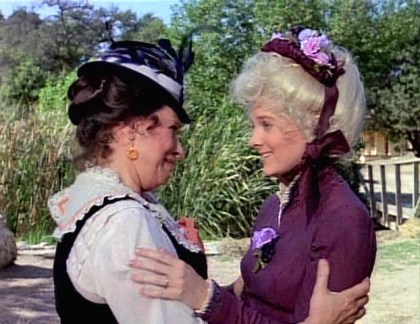
Little House Mrs Oleson

I have this fantasy that if the world was forced to slow down, I would slow down too.

Because I want to experience life.

And I realize that running past or through life, blurs the experience.

But I also accept (with bitterness) that not all of my real life (the one I chose, and built, and need to maintain) can operate on slow, as much as I do appreciate what Hands Free Mama illustrates as the benefits of slow living.

My challenge — above and beyond trying to live slower — is to acknowledge that THIS is life.

Fast or slow

THIS is life.

This making-the-lunches

This sitting-with-my-daughter-for-ten-minutes-at-preschool-before-heading-to-work

This watching-my-son’s-school-performance

This taking-the-car-to-the-shop

This scheduling-the-parent-teacher-conference

This waiting-for-bloodwork

This wrapping-the-present-for-my-daughter’s-friend

This making-sure-all-three-kids-brushed-their-teeth

This listening-to-my-husband’s-day-at-work

This showing-up-for-book-club

This calling-the-plumber

This schlepping-the-kids-to-that-experience-we-really-want-them-to-have

Sure — I can and most definitely should– SLOW DOWN.

Because the slower I live life, the better I process it.

The deeper I experience it.

And the more vividly I remember it.

Slow works wonders.

I, too, have found that living life slower   (…and taking pictures with my camera or my mind)

MAKES LIFE LAST LONGER.

pee wee

But slow is hard.

And there are days I simply wish I could wind the world backwards the way Superman does

and there are days I wish I could simply freeze everyone and everything in it like Piper Halilwell.

Because that’s the only way I can imagine slowing down.

But then, there are days — moments of unexpected presence and awareness and awe — when I fully realize that THIS is life.

Fast or slow

This wanting

This noticing

This fixing

This laughing

This burping

This farting

This regretting

This missing

This needing

This freezing

This sweating

This balancing act

This being alive in this very awkward, too short, not-exactly-as-I-planned-it moment

THIS is life.

= = = =

Handsfree Mama, in her poignant and beautiful post, writes “pausing to delight in the simple joys of everyday life is the only way to truly live”

YES!

But this begs a question in my mind: how do we move through the less than simple (but required), the less than joyful (and often scary) parts of life?

May we move through those moments quickly?

Is “fast”, not “slow” what these moments call for?

Or do they also call for slow?

Dealing with the rotten eggs life sometimes throws me is where I tend to struggle the most

I want to run past those moments as quickly as I can

I want fast. not slow

= = = =

Will I one day, on my deathbed, understand that

THIS

too

is

life.

Those moments I ran through?

Will I suddenly smell the sweet smell hidden deep inside the rotten eggs of life and will it smell like cookies baking?

I don’t know.

Born a runner

I am trying to stop running

I am trying not to wish myself out of this moment.

I am trying not to judge this moment either.

THIS life.

Which is easy when you are in the middle of something magical, but not so easy when you are moving through something hard.

Fast or slow,

rotten or sweet

THIS is life.

Born a runner, I am trying to say those words

slowly

with a smile

with conviction

THIS is life.

Letting Go, Love, Mindfulness

Kindness is less expensive than you think

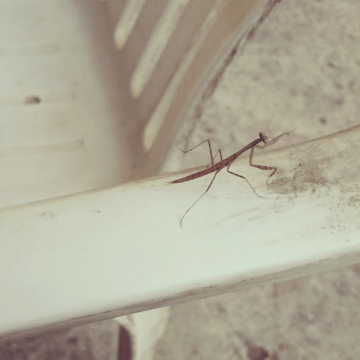
I was sitting at a sidewalk cafe table when I noticed a praying mantis slowly crawling on the arm of the plastic chair next to me.

praying mantis
A bug in Israel

I was sitting there because I had nothing to do but kill time  — 15 minutes to kill — until my scheduled driving test in downtown Haifa.

It would be, in fact, my second driving test in as many weeks. I failed the first one.

Since waking up with a startle at 4:30 am, I had been psyching myself up for the test. Trying to remind myself that the test was not that big of a deal; that passing or failing wasn’t life or death. I told myself I’m a good and safe driver, but (as I learned last time) there is only so much I can be prepared for such a test.

As in life, sometimes a street cleaner in an orange vest decides to walk backwards into traffic and you have to make a split second decision, and hope for the least messy result….and, in the case of a driving test, the kindness of the instructor.

Sitting in that cafe chair with 15 minutes to go and nothing else to do, I noticed the praying mantis. I thought to myself, “That guy is lucky I sat next to him and not some 6 year old serial-killer-to-be who would have enjoyed pulling off his skinny little legs one by one.”

I examined the creature closely. How was he so calm? How could he possibly just meander along like that without worry? Did he sense the presence of the fat hairy guy standing next to him drinking an espresso? Was he worried at all that the guy would sit down and rest his heavy arm on top of him?

In fact, I could very easily smush that bug myself, I thought. Or at least swat him away, off the chair, simply because I don’t like bugs.

Instead, I’m observing him, I thought. Acknowledging him. Letting him be.

Lucky him. I kinda wish I were that praying mantis right now.

Or, at least, I wish for the same kind of luck.

I need to be let alone today.

I need a lucky break.

I need the simple kindness of a stranger.

Then it hit me.

Sometimes, just letting someone — or something — be is an act of kindness.

To be kind doesn’t require a lot of time or money. Nor does it require great courage or forethought.

Sometimes, you just need to let someone be.

Leave a bug alone.

Allow someone a mistake (without reprimanding her for it)

Give someone a break (when she doesn’t necessarily deserve it)

Back off  someone when you could just as easily crush her

(Pass her when you could just as easily fail her).

Sometimes (just as our listening is sometimes a bigger gift than our speaking)our inaction is a greater kindness than our action.

Letting Go

How peeling eggs turned me into Ralph Macchio

I think the majority of the world falls into two camps.

People who don’t mind peeling eggs. And people who hate it with all their might.

Peeling eggs, for me, is torture.

It’s a slow torture, too.

It’s painful to my senses. The uneven, unexpected cracks that may or may not lace the eggs once they come out of the pot. The stretch of the skin as you pull off the hard, cracked outer shell.  The rubbery touch and feel of the skin beneath. All the small left over pieces that you can’t easily scrape off your fingertip.

I can hardly stand it.

What I like even less about peeling eggs is the amount of time it takes, and the fact that each egg must be peeled slowly and with care. This isn’t so bad if you want just one egg, but becomes more of a nuisance if you need to make egg salad …and much more of a pain if you are making egg salad for a party of 10 or 15 people.

That’s a lot of eggs to peel.

But what I like even LESS is when a piece of shell pulls off with it some of the meat of the egg white.

Grrrr… and you’re left with a very deformed, less than perfect, certainly not whole, egg.

As a borderline perfectionist, this truly is almost more than I can bear.

But I bear it.

Over the years, I have been given a few tips on how to peel eggs easier. (“Wait til they’ve cooled. Do it quick while they’re still hot. Crack a hole on each end and blow into it first.”)

No matter what the technique, it still is a process I wish I didn’t have to go through.

But I do it anyway.

Mindfulness comes in handy in these situations, I have found.

Unless you don’t mind chomping on shells, peeling eggs requires extraordinary presence and patience.  You need both hands to peel and you need a careful eye to search and find the leftover pieces of shell on the egg.

You need to be with the egg.

You can’t be typing a text to your husband or responding to an email from your boss.

You can’t be changing the baby’s diaper or sitting on the toilet.

You can’t speed through it — unless you don’t mind peeling half the egg off with the shell.

And you can’t do it in front of the TV or in the dark in bed.

And if you hate peeling eggs as much as I do — you tolerate all this in the hopes that the ends will justify the means. BUT, at the same time, you are required to completely give up expectations of the outcome.

You need to be okay with the mauled, ugly egg, for instance — or you’ll be boiling and peeling eggs all day long, over and over again.

I was peeling eggs semi-mindfully today — and by semi-mindfully, I mean my emotional state was somewhere between pulling out my hair and poking out my eyes — when my 6 year old son came over and asked if he could help.

I almost said, “Thank GOD!” and ran away.

Instead, I sat with him and patiently showed him how to peel an egg. I taught him the steps, instructed him on how to peel the shell completely, and coached him on letting go of the need for the egg to be perfect.

As I heard my voice out loud, guiding him on concepts I still myself need coaching on, I suddenly got the epiphany of  “peeling the eggs”

Do you hear Mr. Miyagi’s voice the way I do?

He’s saying:

“Peel the eggs eggs

Peel the eggs

Peel the eggs …

No, no look here.

Slowly, slowly.

Peel the eggs

Peel the eggs

Peel the eggs.

Very good, Jenny San.

Don’t forget to breathe…

Peel the eggs,

Peel the eggs.”