Religion, Spirituality

Ed-jew-cation

Last night, as I was trudging through the final half hour of John Carter with my husband, I noticed a word in the Hebrew subtitles at the bottom of the screen.

תשתחווה

This is something I like to do when watching an English program on TV. Especially, when I’ve lost patience for the show I’m watching.

Subtitles make for good learning opportunities.

But, the reason this word caught my eye is complicated in the way that only religion can be.

My mind didn’t just notice this word. My mind remembered this word.

In a sing songy sorta way. In a dressed up in my Shabbat clothes sorta way.

השתחוו לאדוני

I could hear a familiar tune in my head. Feel joy in my heart.

I knew this word. From Kabbalat Shabbat. From Friday nights on Hannaton.

I recognized the word, but had no idea what it meant.

I turned to my husband, and asked.

תשתחווה

What does it mean?

Bow, he told me. That woman just told John Carter to bow to him.

Ah, now I understand.

It’s a funny thing, this journey of mine.

As I become more Israeli, I become more Jewish. And as I become more Jewish I become more Israeli.

I’ve known the Shema prayer by heart for more than three decades, for instance, but only now do I understand many of the words.

I can’t say that they resonate with me. But at least now I understand most of what I’m saying when I sing it.

Is this what they call prayer?

Is this what they call “observance?”

Is it prayer when you sing a Hebrew song praising God, but don’t know exactly what you’re saying when you sing it?

It it prayer when you finally do understand the words but they still don’t resonate with you?

It is prayer if you don’t believe?

Is it prayer if singing it opens your heart?

Is it prayer if your heart closes once you know the meaning of the words?

Many Jews in America learned Hebrew; learned Jewish prayer; the way I did.

We were taught the letters, the sounds, how to string them together so we could read them, speak them, sing them.

But through all my “learning,” I was never inspired enough to feel those words — old, antiquated translations of old antiquated words.

Not until I made Aliyah — until the language became a language I needed to use to express myself — did the words touch me.

The words haven’t changed.

But I have changed.

And my understanding of the words has become deeper. On many levels.

Is it my connection to Israel that connects me to the prayer? Or my connection to the prayer that connects me to the language of this country?

Or neither? Or both?

And does it matter to anyone else but me?

Love, Making Friends, Relationships, Spirituality

Wonder might be what saves us

(This was originally posted on The Times of Israel)

In college, one of my best friends was Stephanie. We met sophomore year as we both hesitantly decided to join the eager freshman girls in sorority rush. By the time Rush Week was over, we knew that no matter how much or little we ended up liking the girls dressed in matching t-shirts and hair ribbons, we’d have each other.

And we did. Until the summer before Junior year when Stephanie got sick. She didn’t return for fall semester, and instead spent the next nine months receiving treatment for lymphoma. We spoke on the phone often during that time — in fact, when I remember Stephanie, I remember her phone voice, “Hey Jen, It’s Steph.” But I visited her only once at her parent’s home in Pennsylvania, a winter break road trip I dared alone from my parent’s house across the Delaware River.

I remember carefully washing my hands when I entered the house, and I remember how cheerful Steph was that day despite being clearly weakened. We played board games, and she showed me her computer station in the basement. The place, she told me, where she still felt connected to the world.

This was in 1994. The internet was still very young. I can’t remember if I even had an email address yet. If I did, I didn’t use it for anything other than connecting with my friends at school. But to Steph, the internet was everything. It was her only thing.

She told me about the friends she had made online; the games they could actually play together; the chat rooms. I remember being curious, but also sad. Who were these “friends” that my friend was so eager to meet each day; and how could she possibly get to know them simply through the green letters peppering a dark monitor screen?

But now I understand.

Almost 20 years later, I understand.

I understand how a stranger can make you feel alive.

How technology can be a life line.

And while for some, this is a more literal truth than for others; I do believe it can be a truth for us all.

I’m no technophile. In fact, I’m the mom that severely limits her kid’s computer time; rolls her eyes at her husband’s urgent need for the new IPhone; and worries that the next generation will never learn how to spell because they’ve never lived without Spell Check.

But, I’m no technophobe either. In fact, I believe that technology, and more specifically social media, just might be what saves us.

It’s a lofty statement with modest origins.

I realized today, for instance, how using Instagram has reignited my sense of wonder.

Through the lens of my mobile phone camera and the filter of Instagram, I suddenly find myself marveling at the beauty that is the backyard of my otherwise unattractive rental home in the Galilee:

I’m touched by the remnants of a lost time and place:

I feel in my heart the true miracle that is my son playing on the playground the day after a cease fire:

Through Instagram, I see the world with hopeful eyes, and from that space find myself seeking new objects of wonder.

Every day.

Wonder. Hope.

I’m on the look out for wonder and hope.

And when I find it, I want to share it.

This is what the world needs more of.

And it’s not just Instagram. Twitter ignites my curiosity. It’s in this space that I meet up with science geeks; where I’m reminded of just how many people out there really, truly want to save our planet. It’s in this space that I found my community in Israel; where I realized I’m not alone in my quest to make this land and the gentle hearts of those of us who live here understood by those who don’t.

Wonder and hope.

And Facebook, too. It’s here I’m inspired by the joy of the people I love. It’s here where I’m reminded by just how much people care about me, and just how much I care about others. How much my heart can burst at the photograph of a new baby born to someone I’ve never met in real life, but know through her blog what a gift that baby truly is.

Wonder and hope.

Social media –and your sharing bits and pieces of your wonder and hope — makes me feel alive.

And together, our joy at living, just might be what saves us.

Spirituality

Remedy for discontent

 ”’Kathy, I’m lost,’ I said, though I knew she was sleeping,

I’m empty and aching and I don’t know why…”

Lyrics written before I was born, and yet as I sing them out loud today, I feel their depth and their truth. They penetrate my heart, and silence my mind.

But only for a moment.

And then the mind awakens.

How many of us are empty and aching and don’t know why?

How many of us do know why, but are afraid to admit it? Afraid to do anything about it?

Paralyzed?

How many of us are, like Kathy, sleeping?

And at the same time restless?

Casually cognizant of our discontent but resigned to its permanence in this one precious life we have to live?

Why don’t we do something?

===

We are 9 days away from an internationally-renowned pop culture event – the end of the long count of the Mayan calendar. Otherwise known as the Mayan Apocalypse, aka 2012, aka End of Days.

Whoever was in charge of brand strategy for the Mayan civilization should get a big fat bonus.

News stories from Russia indicate people are stocking up on disaster supplies; reports also abound of tourist influx to pseudo-scientific hotspots like Mount Rtanj in Serbia or Pic de Bugarach in the Pyrenees.

Some of us are scared and admit it.

Some of us are scared, and won’t admit it.

Some are smug.

Some of us clueless.

Most of us fall in between.

No matter where we fall, our lives are certainly about to feel like a scene from a Michael Bay movie.

And no matter where we fall, for a moment, for certain, we will awaken.

What is going to happen next? we wonder.

Will the sky fall?

Will the stock market crash?

Will Target run out of transistor radios and matches?

And who gets to score the soundtrack?

===

Here’s my question:

Is it possible that we crave disasters?

That there’s something soothing about an imagined apocalypse?

An end to the agonizing restlessness of our real lives? A beginning of a craved banding together of humanity?

Is this the spark that created Doomsday Preppers? World War Z? The Walking Dead?

This interest in disaster is not just the stuff of the fringe. It’s not just the stuff of zealous religious folk who think the End of Days heralds the coming of Jesus. It’s not just the stuff of conspiracy theorists who are certain the Mayans knew what they were talking about and the government does too, but is hiding the secret from the good people.

It’s the stuff of all of us.

Secretly, perhaps, we all wish for something that will shake us from our slumber.

Secretly, or not so secretly, we wish for something that will force us to make a decision. To take action. To live a life of deeper meaning.

A life where our actions feed our hearts, not our heads.

And, perhaps, we think the answer lies only in global catastrophe.

How else but a global catastrophe could we justify leaving our jobs? Selling our house? Breaking our lease? Ending our broken relationships? Dropping out of school? Trekking across Africa alone for seven years?

If the zombies were to take over, on the other hand, we’d finally have an excuse to quit our job. To change majors. To tell people what we really think of them.

On the other side of catastrophe is a new beginning.

===

“Toss me a cigarette, I think there’s one in my raincoat

We smoked the last one an hour ago

So I looked at the scenery, she read her magazine

And the moon rose over an open field.”

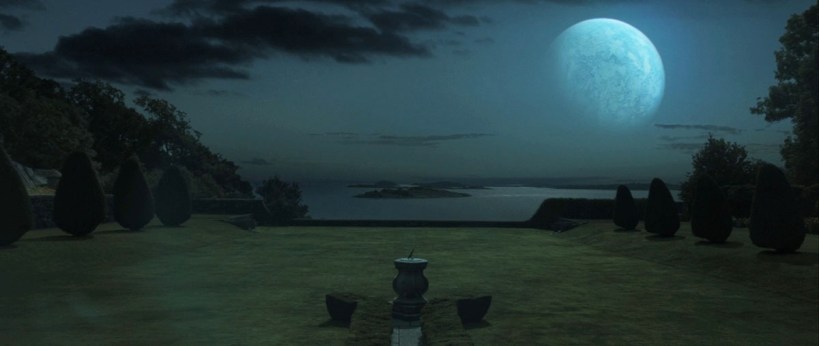
The final scene from disaster drama Melancholia
A final scene from Melancholia
Love, Spirituality

Proof of Time Travel, and Other Conclusions Based on Raw Emotion

I am 38 years old.

Now you know.

But I don’t know.

I don’t know how I can possibly be 38 years old.

First, because in my mind, my mother is 38 years old. And physics teaches us that my mom and I can’t be the same age.

In my mind, my mother has brown hair with a few blonde highlights. She wears jeans and a polo shirt. She makes me peanut butter and jelly. Impossible, since my son is allergic to peanut butter and we don’t keep it in the house.

My mothers yells at me for waking up my baby brother from his nap. Who? Who is napping?

My brother? My son?

My mom is planning my bat mitzvah. My Sweet Sixteen. She’s dropping me off at my boyfriend’s house. At college. At my new apartment.

She’s 38.

And me?

I’m 20-something. Or something followed by the word “teen.”  Impossible, I know, but so is 38 years old.

In the day-to-day in which I wake up, shower, get myself and my three children ready for work and school, I can submit to the possibility of being 38 years old. A 38 year old, after all, is a grown up who does grown up things, such as taking care of herself, her children, her bills, her errands and her home.

And I do these things. I’m not crazy, after all.

But when I finally have a moment to myself, and I sit in the reality in which I am 38 years old, I am confused.

Almost as confused as if I woke up one morning and I was 63.

Or on Mars.

Or being awarded the Nobel Peace Prize.

I don’t know how I can possibly be 38 years old.

True, it was a long time ago I played kickball in the front yard with my brother and the neighborhood kids. I know it was a long time ago because the details of these games are blurry, faded.

And, yes, it was a long time ago that I walked down the football field in a graduation gown. I can’t remember the color of the dress I wore underneath. So it must have been long ago, as my memory is excellent. And if it happened recently, I would certainly remember the color of my dress. I would remember the restaurant we ate lunch at. I would remember why I told my parents I didn’t want a party.

This certainly all happened long ago. It’s the past. It’s before. It’s inaccessible. Or is it?

Because sometimes, when I press play on a particular song and I close my eyes, I can touch the wet sand on the beach in Margate. I can smell the Fruit Loops soaking in a bowl of milk in the basement of Thurston Hall. I can hear high-pitched giggles around a long table at a restaurant in the East Village. I am present. In the middle of a very important conversation. That’s taking place miles and miles away from where I am sitting with my headphones loosely dangling from my ears. And the girls are wearing Baby Doll dresses with leggings. And the guys have Caesar haircuts like David Schwimmer.

Sometimes, when I am in the space between waking and dreaming, I hear Stephanie’s voice.  If I was 38, Stephanie would already be long gone from this world.

Sometimes, I smell the burnt electric remnants of a blender mixing a chocolate Alba drink; I hear the organ playing; and I catch the vague outline of my Bubbi’s hydrangea-patterned nightgown. Impossible. It’s been 20 years since she would have been able to manage the steps to that apartment. And she’s gone, too.

You call it memory. But I call it time travel.

What’s the difference, really, between recall and time travel? If I can smell, hear, taste, and even touch 1992; how can you tell me I’m 38 years old?

I applaud their efforts, but physicists are looking in the wrong places for proof that time travel is possible.

They should be spending less time with quantum mechanics and  more time with the human heart and brain.

Relativity baby. It’s special.

Community, Spirituality

Alternative Atonement

I really love the word alternative.

A little too much, probably.

When I imagine the word alternative in my mind it’s pure white.

It represents something good, something spiritual, something I can connect too.

Like Yom Kippur.

Like reflection. Contemplation. Healing. Forgiveness. Fasting.

When I let my mind rest, words become colors. And colors become emotions. And emotions connect me to my spiritual side.

What a colorful world it is when I let my mind rest.

This is my pathway to Yom Kippur.

*   *   *   *

Soon I will walk up to the Hannaton Spiritual and Education Center to sit in on a “dharma talk” given by one of the teachers leading a retreat organized by Tovana, an “organization that disseminates spiritual teachings and practices derived from the Buddhist teachings, the Dharma, [to] help us discover a deep inner peace and awakening and a life of harmony and wisdom.” Had I known about the silent Yom Kippur meditation retreat in advance, I likely would have convinced my husband to give me a couple of days off to participate.  But I only heard about it last weekend. And so, I won’t be reflecting, atoning, or meditating Jew Bu style.

Luckily, though,  Hannaton residents are invited to listen to one of the few talks that take place in the middle of the otherwise silent retreat. So this is where I’m going in a few minutes. Before I leave, I will shut down my computer. And keep it shut for the next 36 hours or so. Sitting at a dharma talk — another pathway to Yom Kippur.

When I come home, I will turn off my phone. I will turn off my IPad. I’ll spend time with my children. Time with my husband. Time with my new kitty. Time in my garden (read more about how that connects to Yom Kippur here.)  Time in the synagogue with friends. Time outside the synagogue with friends.

All pathways to Yom Kippur.

It’s amazing, really.

And simple.

White. Pure.

Yom Kippur.

Culture, Religion, Spirituality

Tradition

Do you celebrate Rosh Hashana like your parents did? What do you borrow from the High Holiday celebrations of your youth?

This is what I am thinking today on Rosh Hashana 5773, Day Two.

It occurred to me this morning, the second day of the new Jewish Year that we didn’t go to services the day before.

Even writing that statement feels funny. It occurred to me. I’m a little embarrassed; a little ashamed, even.

I accidentally forgot to go to services.

This is particularly ironic since, when I was a kid, Rosh Hashana was one of two days during the year when you could be sure to find me inside a synagogue (or at the very least, on the playground of a synagogue, or in a crowded hallway of a synagogue among other hormonal teenage girls spying on well-groomed oblivious teenaged boys.)

It’s ironic because now I am an adult living on a fairly traditional kibbutz in Northern Israel; now, I go to Friday night services at least twice a month; now, I speak Hebrew and think about God:

Now, is when I forgot to go to services.

Instead of going to synagogue on the morning of Rosh Hashana — and I write “instead” very loosely since there really was no active choice involved; I simply forgot — I hung around my in-laws’ house, enjoyed a nice breakfast with my family, and played with the baby kitten my son befriended in the yard.

It’s not that I forgot it was Rosh Hashana. Certainly not. It’s a state holiday. I dipped apples in honey. I thought about the people I had hurt the year before and made a silent intention to right wrongs. I sent New Year’s greetings to loved ones and blessed my children. I kissed my husband with gratitude. I ate brisket.

But I didn’t go to services.

It only occurred to me once we returned to Hannaton later that evening that we really should go to synagogue. It was Rosh Hashana after all.

I thought back to the High Holidays of my youth. I thought about my young parents; and my childhood home. I thought about sweet kugel at my Bubbi’s house. I thought about the new dress from Botwinick’s my mom and I would shop for and the fresh pair of itchy tights we’d break out of the package on the morning of Rosh Hashana. I thought about my brother struggling into a suit from Fleet’s and my dad in a black nylon kippah. I thought about my mom in high heels. My mom hardly ever wore high heels.

I thought about posed family photographs in the front driveway. Plastic smiles, but pretty pictures.

I thought about making it to synagogue early enough to hear the Torah, but not so early that we were the first ones there (10:15 am). I thought about the challenge to find parking in the neighborhood behind Beth El. And worse yet, on the years it would rain.

I thought about parting with my parents as they made their way to their assigned seats in the auditorium…and in later years to the Main Sanctuary. I thought about the classrooms turned into babysitting rooms; and the small chapel I dutifully spent ten minutes inside.

As I recall the Rosh Hashanas of my youth, I don’t recall prayer. This is certain.

But I recall tradition.

Intentional or accidental, our family had a Rosh Hashana tradition. A custom practiced year upon year and, in some little way, passed down to generations. Customs out of the ordinary that I only associate with the High Holidays.

Last night, when it occurred to me that we didn’t go to services, I suggested to my husband that we take the kids the next morning and he agreed.

Not because I felt compelled to pray. Not for fear of the wrath of God. Not even because I thought it was “the right thing to do.”

I took my kids to synagogue because remembering the boring, overdressed, agitated, sometimes hormonal, often drama-filled High Holidays of my youth opens up my heart.

It’s like playing an 80s video on YouTube.

It’s like reading an old journal entry.

It’s like running into an ex-boyfriend on the street.

It’s like smelling your grandmother’s perfume.

It’s like looking at the pictures of your baby’s birth on his 6th birthday.

This is the nature — and the merits — of tradition.

And I want my children to experience the overwhelm of their hearts opening.

They can’t possibly know it today as they argue over who got a bigger glass of grape juice; as they complain about having to pin the kippah to their heads; as they moan and groan as we walk up the hill to the Beit Knesset underneath the hot sun.

But someday they will remember.

And their hearts will burst with feeling.

And they will welcome in the New Year.

Health, Kibbutz, Spirituality, War

Relevance

I just added a new category to my blog:

War.

I hesitated before I clicked.

I’m a superstitious kind of girl, for one. And, two, I do think our thoughts impact our reality.

If I add a war category to my blog, how does that impact my reality?

Call it what you want: law of attraction; positive thinking; pessimism; subjectivity. I’m someone who believes that we see the world the way we see it.  The world is interpreted by us. And every time we put an idea or an action into the world, we receive an idea and action in kind.

If we want our world to be different, we need to start thinking and acting differently.

If I want a world without war, what happens to that desire when I start blogging about war?

*   *   *   *

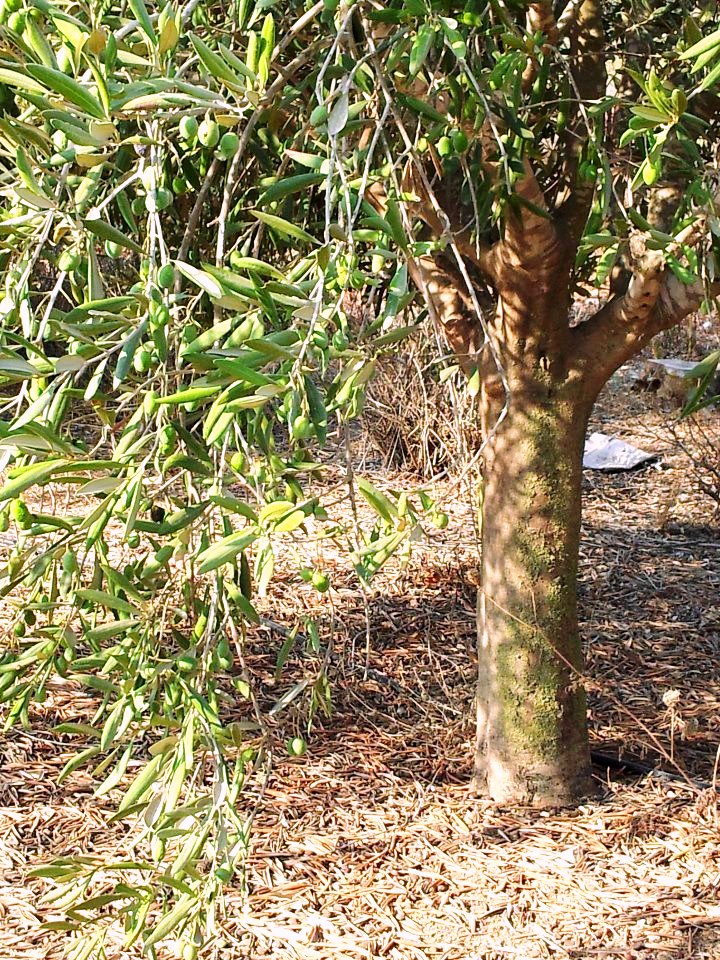
This morning, on my drive to work, I spotted a blossoming olive tree on the main road in the kibbutz. It made me so happy to see the baby green olives peppering the branches. On a macro level, it reminded me of what makes me happy about living on a kibbutz in Northern Israel. On a micro level, it reminded me that this August heat is half way out the door and autumn is just around the corner.

I snapped a photo of tree  and shared it on Facebook. I wanted my joy to spread. Spreading joy makes the world appear joyous.

I think it worked, at least a little. I smiled as I left Hannaton and turned left to drive towards Misgav.

Each weekday morning, I pass by Kfar Manda, the Arab village next door to ours. And every morning it’s a stark contrast of how we in Hannaton see the world differently from the people in Kfar Manda.

Of course, I can only guess that we see the world differently: Arab Israelis living in a mini city and Jewish Israelis living in a small kibbutz. I don’t have any friends from Kfar Manda so I have no one to interview and discuss this with.

Today, as I drove by Kfar Manda and held on to the joy that began with an olive tree, I saw smoke coming up from above the Western, residential side of the city. I felt my joy dissipate.

When I rounded the curve and passed the main entrance to the city, I saw the source of the smoke.

I couldn’t tell from my car if it was one of the trash fires I often see or smell burning in Kfar Manda. (A trash fire is exactly that –> burning trash.) Or if it was  intentionally set for an agricultural reason, since the fire was on the edge of a vegetable field. How an intentional fire serves any of us in this dry, scorching hot month of August is beyond me.

In any event, there was no one nearby trying to put out the fire. It just burned. And the smoke seeped into my nostrils as I rolled the car window down to take a picture of it.

And my joy disappeared.

My world was no longer olive blossoms. My world was fires burning at the edge of a beautiful field.

Family, Letting Go, Love, Making Friends, Spirituality

The 5 minute answer to world peace? Imagination

Every other week I have the distinct pleasure of partaking in a woman’s group in the community in which I live in Northern Israel. The woman’s group, which was informally started almost a year ago and has grown to a bi-weekly gathering of about 10 – 12 women, has a multi-focused purpose. Mainly the goal is to gather and grow as individuals in an effort to move forward both as people and as community members. We also get the chance to do inner work and get to know our friends and neighbors on a more intimate level.

Most weeks, I’m happy to go.

Some weeks, however, I have PMS…and I am too raw and irritable to handle deep thinking or to listen with care and compassion to other people’s inner struggles.

Often on those nights, I leave the meeting a bit frustrated with my inability to understand the nuances of conversational Hebrew, and/or emotionally drained.

This week, our women’s group meeting fell on a PMS week. As much as I needed a night off from family time, I was worried how women’s group was going to mesh with my hormones

But lovely Linda was facilitating, which eased my concerns some because Linda is an art therapist, and her activities are ones I typically enjoy and move in and out of with ease. They don’t usually release the beast…or require too much Hebrew.

I was right. Her exercise was relaxing — essentially a visualization activity, but the way Linda positioned it to the group was like this:

Take ten minutes to imagine a dream world. A place of your choosing. There are no boundaries; no limitations. What does that world look like? Who are you there? What are you doing?


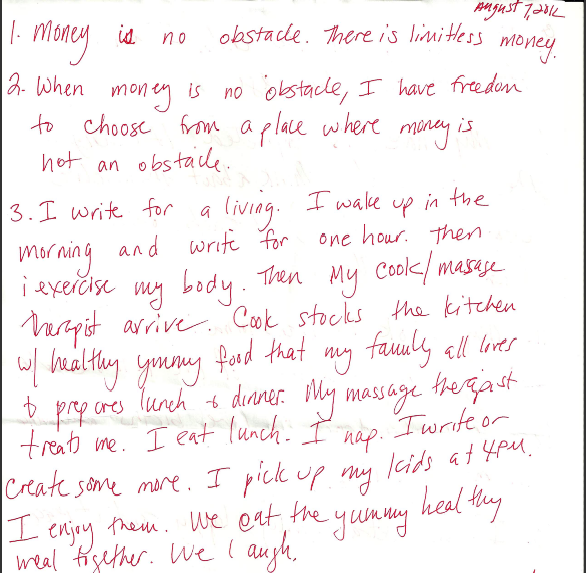
As soon as Linda handed us a sheet of paper and said go, I leapt into action. Without thinking at all, I started writing a sequential list. And this is what it looked like when I finished:

1. Money is no obstacle. There is limitless money.

2. When money is no obstacle, I have freedom to choose from a place where money is not an obstacle.

My handwritten visualization

3. I write for a living. I wake up in the morning and  I make myself an espresso. (I edited this from the original. Espresso is a necessity in my dream world.)

I sit down at a lovely wooden desk with a view and I write for one hour. Then I exercise my body. Then my cook and my massage therapist arrive. My cook stocks the kitchen with healthy, yummy food that my family all loves. She prepares our lunch and dinner. My massage therapist gives me a treatment for about an hour. I eat my healthy yummy lunch…slowly.  I nap.  I write or create some more. I pick up my kids at 4 pm. I enjoy them. We eat a yummy healthy dinner together. We laugh.

4. Once a week (maybe twice) my husband and I go out alone. Sex is sometimes involved.

5. We vacation often, and in luxury.

6. We discover the cure for food allergies and for all cancer.

7. We discover the secret to world peace, too. We implement it.

8. All my previous wrongdoings are forgiven.

9. I clean up all loose ends. I am free of guilt and emotional baggage.

10. I complete my book. It changes the way people think about themselves (for the better). It changes the way people treat each other.

11. My book is transformational. It brings an abundance of love into the world.

12. The abundance brought about by my book brings abundance into my own life.

13. I am extraordinarily happy and at peace.

14. And, most of all, I’ve managed to not mess up my kids or my marriage along the way.

As I completed the exercise, I had an overwhelming, yet unexplainable feeling that the entire kit and kaboodle was actually attainable. From the smallest triumph (write for a living) to the largest (world peace), that somehow the solution was as simple as imagining it.

I know for most people this concept is heresy — that all it takes to solve a problem is to dream up the answer. That all it takes to live the life we imagine, is to imagine it.

I mean, really, if it was as easy as all that, why haven’t we achieved world peace or cured cancer already?

And I see the truth in this way of thinking.

And yet, I see the truth in the accessibility of all I list above.

Really, what are dreams?

Are they involuntary and insignificant images that pop up during sleep? Are they the stories we concoct and ruminate over each day? The visions of the not so distant tomorrow that terrify us? That keep us in unhappy relationships or stressful jobs?

Are these really our dreams?

Or are our dreams the vehicles with which we create our reality?

One could say this visualization practice of mine the other night was no different from the anxious thoughts that keep us from doing what we really want. Except, in this case I let my mind spiral towards all that I want — not all that I am afraid of.

In the past, I’ve daydreamed a wish into reality. I bet you have, too.

My dream to fall in love. My dream to have children. My dream to move to Israel.

Once upon a time, those were dreams written out on a piece of paper — in a journal, or on an application.

And now, those dreams are my reality.

How do we reconcile this truth with the one we sell ourselves everyday? That dreams don’t come true?

Everything, in fact, begins as a dream.

And therefore everything — from personal cook to world peace — is ours for the taking.

Mindfulness, Spirituality

Star gazing

I’m a minor space geek.

Minor because I’ve never fully engaged in studying the skies above me; rather remained content to swim in the magical mystery of it all:

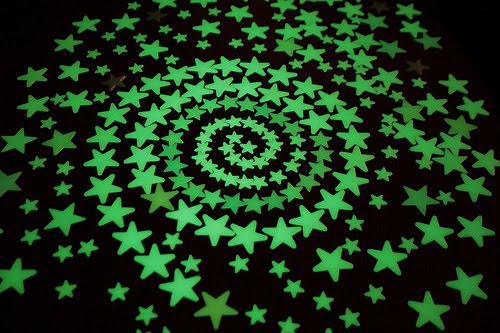
Glow-in-the dark constellations arranged haphazardly on my bedroom ceiling

“Star light star bright first star I see tonight”

Scanning the skies for falling streaks of light

Romantic summer nights

sprawled out on a blanket

Space is humbling. It’s a reminder of how much we have yet to discover.

And it’s awe-inspiring. When I allow myself to be swallowed up in space, I’ve suddenly accessed the wonder of a child.

Everything else slips away. Work. Mortgages. Car payments. Doctor’s appointments. The drama of the day-to-day.

It’s just me and space.

= = =

Since moving out to the countryside, far away from the city glare, I am no longer able to simply walk anywhere at night. I can only stroll, with my neck craning back, my eyes on countless stars, seeking understanding, succumbing to not.

I so easily get lost up there.

And so, for weeks I’ve been anticipating the transit of Venus.  Transits of Venus “occur in pairs with more than a century separating each pair.” As if the mysteries of our solar system and what lies beyond isn’t enough of a draw, the idea of witnessing something that won’t again appear in my lifetime — or sharing this experience with my children — is simply irresistible. (We’ve created an “eclipse” scope to view the event together at sunrise on June 6 in Israel.)

Venus last passed in between Earth and the sun on June 8, 2004. I missed it. I was too busy parenting a toddler in his terrible twos, building a career in freelance writing, making mommy friends, navigating the precarious curves and junctions of “married with a kid.”

So much has happened in my life in the eight years between when Venus last transited and today. But my milestones can easily be squashed when you consider what’s become of humanity since Venus’ slow march across the glare of the sun in 1882 — back in the days of Billy the Kid and the OK Corral. Before the Brooklyn Bridge was built. Before George Eastmen created the modern camera.  Before the moon landing. Before we glimpsed the Earth from above.

Before me. Before you.

And the mind can get lost in curiosity or despair when she imagines what might transpire between now and when Venus is scheduled for another transit  105 years from now.

After me. After you. After my children, too.

Humbling.

Mind bending.

===

As I said, I’m a minor space geek — more a magician’s apprentice than student. Content mostly to revel in the experience of being puzzled without having to actually solve anything. Content to point out a planet to my son. Content to scan the skies for a shooting star with my daughter. Content to share a bottle of wine with my husband on a blanket in the middle of a field under the romance-inducing canopy that is the vast night sky.

And content to stand in my backyard as the sun rises on June 6 staring into a cardboard box, eyes wide open — a child among my children. Dazzled and bewildered by space. Content to swim in the magical mystery of it all.

Our homemade eclipse scope for viewing Venus’ transit

Family, Religion, Spirituality

The emerging Jew in me

(This was originally posted on the blog section of The Jerusalem Post.)

Despite years of being a Jew in a Jewish family, Jewish tradition and, more specifically, Jewish practice often feel very alien to me. Shabbat meals, Shabbat services, Jewish prayers and rituals.  And despite being a bat mitzvah and many years a student in Hebrew school, there is little that I feel confident practicing, and there’s lots that I don’t.

In the past, this ignorance would sometimes surface as fear and loathing when, for instance, I was a teenager at USY events and I didn’t know how to do the Birkat HaMazon (“Grace after Meals”), let alone joyfully pound on the tables at just the right moments, like my friends did (the ones who had been doing it for years at Camp Ramah or Hebrew day school). Or when my college boyfriend took me to a Shabbat lunch at his friend’s apartment at the Jewish Theological Seminary and I was wearing jeans and a tank top, and all the other women covered their shoulders and knees. Or even in recent years, when I found myself in synagogue, standing next to my mother who was saying Kaddish for her father or when we chose a reform Mohel for my son’s Brit Milah, and accidentally offended my in-laws.

What surfaced as fear and loathing back then was likely fear and shame, as I understand it now. Feeling all the time that I was an impostor…stupid…uninformed. That there was something I should have learned along the way, but didn’t. As someone who thrives on information and knowledge (and who shrinks at feeling ignorant), I rejected Judaism. Flat out. I wasn’t interested.

It wasn’t until I got married in a Jewish ceremony that I started considering, even for a second, that there was beauty in Jewish practice and that certain elements of the practice might be accessible and available to me.  It wasn’t until I sent my kids to Jewish preschool that I once again found delight in singing Jewish songs and chanting Jewish prayers, a joy that was familiar to me from childhood, but so distant.  It wasn’t until I moved to Israel a year ago that I started understanding and accepted that it was safe for me to open my heart to Judaism, even though I still had lots of questions and found few answers.

Last week, I traveled back to my home town in New Jersey for my grandmother’s funeral. And for the first time ever, that I can remember, felt comforted by Jewish practice.

In the past, when I found myself in uncomfortable or anxious situations, whether it was a painful experience like childbirth or an emotionally challenging experience like public speaking, I would soothe myself by humming a chant or a mantra I learned in yoga class 12 years ago.

Shri ram, jai ram, jai jai ram

I learned this chant in 1999 at a yoga studio in Manhattan. It stuck and I’ve been humming it for over a decade — I’ve even taught it to my kids and encourage us all to use it when things get a little…hairy…around the house.

But in New Jersey recently, on the way to my Bubbi’s funeral, I found myself humming something different. A nigun we often sing as we enter into prayer on Hannaton for Kabbalat Shabbat.

Laiiiii lai lai lai lai lai

And humming the nigun soothed my nerves and eased me into the Jewish practices yet to come. Mourning and remembrance.

Over the next few days, as I participated in the rituals that followed — Shiva, prayer, Mourner’s Kaddish — I hummed the tune. I taught it to my brother who figured the melody out on his guitar. I’d even say we bonded over this nigun, something we haven’t done for years.

Over five days, I realized that I actually knew so much more “Judaism” than I thought I had. And even more impactful, I understood that it was okay that there were practices and rituals I didn’t know. That I could take from the ones that served and supported me; and refrain from those that didn’t. That there is a time for learning and a time for engaging. That, in fact, I could know absolutely nothing about Jewish practice and ritual…and still benefit from participating in it.

That practicing a ritual you do not fully understand is not hypocritical or stupid or insincere.  It’s okay.

I also realized that once your heart is open, even a little, it may be easily filled by the power of those rituals — the ones you’ve chosen; the ones that fit your needs at that moment.

It’s easy for me to say that living here in Israel is opening my heart to Judaism. That living on a Masorti kibbutz in Israel and participating in its activities have acclimated me more to Judaism. I imagine that’s what it looks like to my friends and family observing the process. That, suddenly, I have “found” religion.
 
But, it could also be that I’ve entered that time of life when we need the comfort of prayer and ritual more often. Or that my heart has softened after years of marriage and raising children, of losing friends to illness, of losing grandparents to age, of watching my parents age and lose their parents. That my awareness is growing day by day that life is fragile and community is comforting and ritual is soothing.

It may be that my path of spiritual seeking has become more refined or less judgmental.

It may be a mix of all the above.

But, for certain, the key is my opening heart.  And my willingess to let strangers –or strangeness–in.

Letting Go, Religion, Spirituality

ID

When my husband and I were deep into the process of coordinating our Aliyah back in the States, we received a lot of email communication from Nefesh B’Nefesh, some of which was extraordinarily helpful. (In addition to weekly webinars, NBN also has a robust website with lots of information for potential new olim — I would have been a lot better off if I had read any of it before I landed in Israel.)

Occasionally, though, I would get an email from NBN in my inbox and I would be really confused; in the same way I sometimes feel confused when I go to Shabbat services these days and in the middle of the service everyone starts bowing or shuffling their feet and I have no idea why or what I am supposed to do.

There I was 12 months ago: Confident enough in my intention and desire to make Aliyah — married to an American Israeli; 10 years of Hebrew school and USY under my belt; synagogue membership; two kids in Jewish preschool — but still, in many ways, feeling like an impostor.  This was not a new feeling for me — uncertain of my Jewishness among Jews– but a feeling that was becoming much more pronounced with my decision to make Aliyah.

While preparing for Aliyah, there were some things I didn’t understand, but felt awkard asking for an explanation. Shouldn’t I already know the answer? If was “Jewish enough” to be making Aliyah, shouldn’t I have been Jewish enough to understand all the steps involved in transforming from an American Jew into an Israeli?

This was all very subliminal, mind you. I wasn’t consicously aware that I was questioning my own qualifications for making Aliyah. Consciously I was preparing all the documents with ease. I am a Jew after all. I have the figurative C.V. to prove it.

But just as I had never felt Jewish enough among Jews, I didn’t feel “oleh enough” among the olim.

Let me offer you an example. Apparently, when Jews from other countries make Aliyah, they will sometimes change their names.  You could be a 45-year-old woman, whom her whole life has been called Randi, and one day she lands in Israel and her name is Rivka. In December, you’re Susan or Bill or  Mandelovitch and, in January, you’re suddenly Shoshana or Ruven or Manof.

And it’s not just make believe. It’s legal. I don’t know exactly what happens, particularly when you go back to the States to visit, but it’s legal in Israel.  I imagine your American passport still lists you as Susan, but for all official and unofficial intents and purposes here in Israel, you are Shoshanna.

So, Nefesh B’Nefesh sent us this email a month before we made Aliyah asking us if we would be changing our names, and instructing us what to do if so. Huh? I thought. Change my name? Isn’t that something only zealots and freaks do? (Yes, judging, judging, judging.)

I could see the practicality of changing our names — all of which save for my husband’s are very Anglo — but I could not imagine calling my son Oliver by his Hebrew name, Itamar. Or by any name other than Oliver.  Certainly, as an idea, it seemed fun to come up with a new beautiful name for myself–one of my own choosing, one that was easy to say– or to have a second chance in naming our children (particularly our daughter whose name I think we chose in haste). But I couldn’t imagine it. For better or for worse, I am a Jennifer who likes to be called Jen.

Then, soon after receiving that email, we went to an NBN job fair a month before making Aliyah. If we didn’t feel out of place enough already at the event — fairly secular Jews in a sea of Orthodox –we were introduced to a seemingly secular couple our age who was also making Aliyah to the North around the same time we were. They introduced themselves to us by their “new names,” with a shy footnote that they were trying those new names on for the first time. My husband Avi and I smiled and nodded politely, but after they parted, we exchanged looks as if to say, “Say WHAT?” (This was one of those delightful moments where I once again thanked the Divine for gifting me a husband who I could have “say what” moments with.)

Who were these people we were making Aliyah with? Who were we to be making Aliyah?

Who am I to be making Aliyah?

And really…Who am I to call myself a Jew?

My husband was already an Israeli citizen. He was born in the States to two Israeli parents who moved to the U.S. as young adults. His parents returned to Israel with their children when my husband was in preschool and they lived here for many years while he was growing up. He’s Israeli. He may not “look Israeli” or “act Israeli” (this is something I heard over the years from my family and friends when they first met my husband.) But he’s Israeli. This (along with the eight years he spent at Solomon Schecter)  lends legitimacy to his both his Judaism and his Israeli-ness, in my eyes.

But who am I? Am I Jewish enough to live here? Am I Jewish at all?

The irony, I have learned in the 11 months that I have lived in Israel is: I am not the only Israeli asking myself this question.

In fact, a lot of Israelis are asking themselves this question. And, in some ways, I might be considered “more” Jewish than the ones who aren’t  because I am asking the question.

As deficient as a Jew as I often felt in the States, I am feeling here…awakened spiritually. Indeed, more awakened possibly than Israelis who have lived in this country since birth…Israelis who have never stepped foot in a synagogue their entire lives. Perhaps, even more awakened than religious Israelis who have been praying daily in the synagogue for years.

I bring this up not to judge or to compare, but to transform my judgment into compassion. My judgment of myself. My judgment of others.  My judgment of religion, of spirituality. My judgment of the words “God,” or “Universe,” or “Divine.” My judgment of prayer practices, of devotion.

I share this with you as a way to publicly offer myself compassion retroactively and to ask forgiveness for the judging.

My wish is that as my spiritual journey continues, however it continues, may I continue to explore Judaism (my version and yours) with curiousity and compassion…and an open heart and mind.

And, as always, your feedback and contribution to the discussion (via Comments) are welcomed.

Culture, Family, Kibbutz, Letting Go, Living in Community, Love, Making Friends, Parenting, Spirituality, Uncategorized

Unwound

A friend of mine moved from NJ to Guam with her husband and two boys a few months before we decided to make Aliyah. On Facebook, I followed her move and her family’s transition with interest, particularly once we decided we were moving to Israel.

Despite what I assume must be vast differences in culture and landscape between Guam and Israel, I often find myself nodding in agreement and understanding when I read Shelley’s posts. (This could also have much to do with our common interests in holistic parenting and healthy eating, as well.)

There is, I’ve realized, companionship in leaving the busy American suburbs, the busy American life, for the “outskirts.”

Today Shelley wrote, “There are times when I miss living in the States with all of its modern conveniences, but then there are days like yesterday when I never want to leave our little bubble in Guam.”

I know exactly what she means.

Except our bubble is not Israel, per say, as Israel is no island paradise: She possesses as much hassle, aggravation, and overstimulation as any developed country.

My bubble is Kibbutz Hannaton, the small 120-or-so family Lower Galilee community in which we live. And a sub-bubble of Hannaton is my little red house with green shutters.  And yet another sub-bubble is my little work enclave of former Americans whom allow me eight hours a day to pretend I still live and work in the U.S.

But the true sub-bubble is the one I created for myself with intention last December when I  chose not just to live somewhere different, but to live differently.

I often tell people (in fact, I did so just yesterday during lunch) that our successful “absorption” here is due in large part to the community in which we chose to live: one made up of young, growing families like our own. One where friendships are only now being formed…because the community is still new and finding itself. So, despite being different, we still somehow fit in.

But I also credit our successful transition to the conscious lifestyle changes we, as a family unit, decided to make in conjunction with our move.

In addition to many of the comforts we gave up — the modern conveniences Shelley mentions in her post — we also gave up our attachments to what we knew up until then as the “right way to live” in the hopes that we might find happiness living another way.

One modern convenience I gave up was information overload.

I was (and still am in many ways) an information addict. My understanding up until recently was that with more information comes more control…over my own life…over what happens to me and to my kids. My understanding was that information made me safer; made my life easier. This is why I easily fell in love with the Internet, email, blogs, Facebook. And, to some extent all those modern conveniences have improved my life. But what I’ve discovered, retroactively, was how much they also controlled my life.

I had a really good excuse for feeding my addiction; addicts always do. I was a business owner. A writer. A blogger. My success depended on my communication with the outside world. I needed to check check check…all the time. Who knew when the next big opportunity, client or connection would land in my inbox? At the height of my addiction, I had six different email addresses, four blogs, two Facebook profiles, three Fan Pages, a LinkedIn and two Twitter accounts to manage. Not to mention those I managed for my clients. 

I also had kids with asthma and allergies. I had unexplained chronic illness of my own. I had an acute awareness that with more information about the world around me, the greater chance I had of healing myself and healing them. Information provided answers. Tools. Connections to the right people. How could I give up information? 

I also consciously understood that my information interface, so to speak, was possibly unhealthy.  Which made for a bit of a contradiction.

Despite my awareness that my commitment to my online personas (and to my business and clients) was likely impacting my real-life relationships with my husband and my kids, I persisted.  Despite the fact that my comments on your “feed” may have been keeping me from experiencing real, waking, daily pleasures, I couldn’t shut down. I couldn’t give it up. I couldn’t walk away from it.

Until I started walking away from it. Taking baby steps. That started once my feet touched ground in Israel.

As I said, my information withdrawal began first with an intention. But I followed through with an action: I purposefully did not register my Blackberry here in Israel. I got myself a regular old cellphone with a regular old phone call plan. No emails, no SMS packages. My husband did not register his IPhone either which was a HUGE shocker for me because my husband loves his IPhone more than I love information. Or, at least, equally as much.

Just this simple choice, along with the decision not to purchase Cable TV made a great impact on the quality of our lives in the first few months we lived here.  We quickly adjusted to checking emails only on our computer (remember when you used to do that?) and our kids spent more time outside and not in front of the TV than they had ever in their lives.

And that was nice for a while. I’d like to say that we remained unplugged, but we didn’t. A few months in, we used Hebrew immersion as an excuse to sign up for basic cable. The kids still only watch a portion of what they used to. (I haven’t watched an episode of the evening news or any sitcom, save for Israel’s Ramzor.)

A few months after that, my husband bought a new IPhone, much to my dismay, and I often find him face down fingering the thing with pleasure. That said, it only takes one semi- dirty look from me for him to put the thing down when the kids are asking him a question (repeatedly) and his finger keeps methodically sliding across the little touchpad as if it’s in a trance. He also gave up TV and for the first time in many years I can now find him in bed in the evenings reading e-books on the Nook. 

Once I got a full-time job, they handed me a Smartphone with my work email configured, but amazingly, without the unspoken expectation that I be attached to it 24-7. And I like that. I like that a lot.

Despite the reintroduction of information overload devices, my information withdrawal continues. I didn’t configure my personal email into to my new phone. I never check my work email after I leave the office or on the weekend. And I have found as the months pass, I check my personal email less and less often: Sometimes going as much as 2-3 days without checking. People who were used to hearing from me immediately would write back after only hours asking me, “Where are you? Did you get my email?”

Sure, I am still on Facebook. It’s my lifeline to friends and family who didn’t follow me to Israel. But I’m hardly on Twitter; have no interest in this new thing called Google Plus. Sometimes, I even find it difficult to motivate myself to blog. I find that at the end of the day, after working and spending time with my family, I prefer to walk and then to read. And then to sleep.

Yesterday, I discovered my main personal email account was down. I had forgotten to pay the web host for a month or two and they shut my account down temporarily. People reached out to me via Facebook or SMS asking me what happened to my email. Why were mails being bounced back?

At first I panicked that my email was down, “What if someone is trying to reach me??” But my panic lasted only a minute. Soon after, the feeling transformed into freedom.

I realized I had passed over the hurdle of my information addiction. I was now able to say no. To be without. To let go. In particular, I wasn’t worried about what I had missed or would miss over the day or so the email account would be down. I wasn’t worried about what people might think when they received their emails returned, unread.  In fact, I decided right then and there to pare down all my email accounts, returning only to one. One that I may or may not check during the day.

This is not to say I’m unplugging completely. Or that I will ever really be able to fully walk away from easy access information. There is no guarantee that this represents a permanent recovery from information addiction. But it certainly indicates a big step in the right direction.

I think I’ve developed a taste for something new.

Being here. Being present. Absorbing today. Still with an eye on tomorrow, but with a good solid foot planted in today.