Culture, Letting Go, Memory, Technology, Writing

Disclaimer: I am not the me you think I am

In the days since the Justine Sacco twitter incident (which has officially been labeled a mob by the New York Times), I’ve spent a little time on a project that I’ve been meaning to focus on for a while:

Cleaning up my internet bread crumbs

You see: I’ve been at this a while. This thing I call “sharing of myself with strangers.”

I’ve been writing and posting opinion pieces, and uploading and approving photos of myself online since … well, at least since 1997. That’s as far back as I am able to trace myself though I imagine a stalker or a fairly good sleuth with a wad of cash with my name on it could identify earlier instances. Let’s hope that the first doesn’t exist, and the second never does.

For most of those 17 internet loving years, I stood firmly by the belief that sharing was good; identity theft was bad; and that since there was no way to stop people bent on investigating you or stealing your credit cards, why not position yourself in the light you prefer.

There was one little detail I didn’t pay attention to.

It’s that the light I want to shine in is ever shifting.

Even more so, there may come a time when I don’t desire the light. When I prefer to be hidden in the shadows.
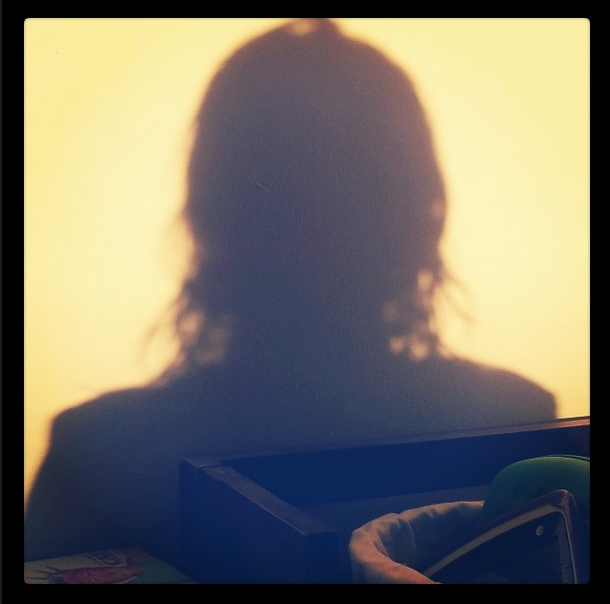
Shadow me
Shadow me

If one day, a mob were after me, they’d find judgmental rants I am now ashamed of; they’d unearth unkind comments that were written on an off day; and they’d be able to amass a decent collection of really unattractive photographs of me in really unfashionable clothing (especially if they come across any from 2001 – 2003).

They’d find pictures of my kids that were cute in context, but now seem inappropriate. They’d stumble upon references to wacky dreams I’ve had or remembrances of drunken bodily performances. They’d certainly find articles written in a voice that is no longer mine; in a tone I no longer wish to express myself in.

I am not the girl you will find on a Google search.

I’m not even the girl who began this blog in 2011.

I’m someone else entirely.

In the cleaning up of the bread crumbs of me, I began by deleting or making private any online content I thought might embarrass my growing children. An effort of Herculean proportions that I will certainly never complete to their satisfaction.

Next, I tried to dig up the most obnoxious, off-the-cuff public statements I’ve made over the past year or two on Twitter or Facebook. Things I meant in jest, but might one day be held against me in a court of rash, cruel, public opinion.

But I know — even as I do this —

I know

That my efforts are nearly inconsequential.

Because what is appropriate now might one day not be. And what I see as an innocent or well-intentioned sharing of myself  could, at some point, be used to position me as anything from self-centered to irresponsible to crazy.

What do you do with that knowledge?

Do you unplug completely? Do you spit in the face of future detractors?

Or do you do what any good lawyer would tell you to do?

Add a disclaimer.

disclaimer jen


Family, Letting Go, Love, Making Friends, Memory, Mindfulness, Writing

The almost, so-very-lost, art of the letter

I’ve been finding letters.

Long lost letters.

Long saved letters.

Long ago, written-by-hand letters.

As and Es and Is strung together to form laughter and love and pain.

Through my veins runs remorse

then retraction

as I read the letters aloud.

Loopy script

Straight uppercase caps

Bubbled Oooos and lowercase bees

All of them stamps of time and postmarks of personality

Who knew then that you were a poet, dear Friend?

Who knew that you could dance with your words, dear Lover?

Who knew, Mother, that you missed me with an ache you hid away so I would never know

until I, too, was a mother?

Aching…

Who knew then

what I know now?

Did you?

And I simply

missed it?

Did you know I would read your words aloud

and fall in love with a version of you I never knew?

Memory, Writing

Don’t you remember you told me you loved me baby?

The first song I can remember singing in the shower started like this:

“When I was young, I’d listen to the radio,
waiting for my favorite songs
When they’d play I’d sing along.
It’d make me smile.”

Do you know this song?

Do you hear the tune in your head?

Are you singing along with me?

If yes, you’re already in on the joke.

If not, play along for a few minutes. Humor me.

The song continues:

“Lookin’ back on how it was in years gone by
And the good times that I had
Makes today seem rather sad, so much has changed.

It was songs of love that I would sing to then
And I’d memorize each word
Those old melodies still sound so good to me
As they melt the years away…”

I was five then. I know only because I remember the blue paint on the walls of my parents bathroom and my reflection in the mirror that spanned the length of the vanity. I was beveled, like the glass of the shower door.

I was Karen Carpenter in that mirror. Singing my little heart out. Singing about the kind of pain I wouldn’t know until many years later — the simple heartache that is a result of nothing too tragic, just the passing of time.

Soon after those singing in the shower days, I’d lose the freedom to belt out Karen Carpenter to social pressure. The Carpenters, after all, were played only in the tape deck of my mom’s car and on the easy listening channel. The Carpenters were weak … and for losers.

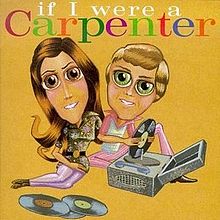
If_i_were_carpenterThis changed quite suddenly when I was a senior in college. A compilation CD was released called “If I Were A Carpenter” in which alternative rock bands got together to cover the songs of the brother-sister duo. The result was stunning. Mind-blowing. Just listen to Sonic Youth’s rendition of Superstar. It’s an entirely different song. Reinterpreted, and yet, carrying the same powerful message.

“Don’t you remember you told me you loved baby?
You said you’d be coming back this way again baby…”

It’s dreamy, this version, creepy even. Not sweet and innocent. Nothing a five year old girl would sing in the shower. It’s so not Karen Carpenter, and yet, her legacy remains between the lines.

Funny, I thought, this morning. At 5, I could hear a faint bit of optimism in Karen’s vibrato, as if maybe the superstar would one day return. At 39, listening to Sonic Youth, all I hear is drawn out hopelessness and the certainty that the superstar will never “be back this way again.”

Who was right?

“Yesterday Once More,” the song I used to sing in the shower was covered on the album by a band I never heard of (and still haven’t) called Redd Kross.  Their version introduced electric guitars and transforms a wistful reflection into an anthem. 

Consider what happened to Karen Carpenter when her songs were covered by alt rock bands. She became relatable to an entirely different audience.

Someone whose ears would have been closed shut to her poetry, to her message when she sang it … suddenly might have opened up when her words and music were expressed by someone else. In their accent.

This made me think of my listening of others. And others’ listening of me.

How quick we are to stop listening when the voice is unfamiliar, when the song isn’t one we want to sing along to. Or when we’ve already decided the person speaking is weak, or a loser.

We’ve already shut our ears … before they even have a chance to speak. Or sing.

And what happens when someone else steps in and offers the same message, but with a different tune.

Culture, Love, Memory, Writing

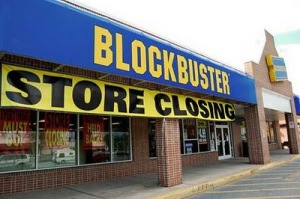
RIP Blockbuster: A pop culture haiku

(This haiku was inspired by “R.I.P. Blockbuster, You Frustratingly Magical Franchise, You” by Kevin Fallon in the Daily Beast)

==

RIP Blockbuster Video

By Jen Maidenberg

==

Neighborhood stop for

high school dates rated PG.

Press play. Then make out.

==

blockbuster-closing

Work, Writing

Genius in a bottle

I hit my head this morning. Hard. On the corner of the stackable washer/dryer in the very tight space that is my bathroom/laundry room.

After the stars stopped spinning, I waited.

What was I waiting for?

A stroke of genius.

My flux capacitor.

The only thing that came was a golf ball size lump on my forehead.

Lucky enough, I’ve remained conscious since and can see straight enough to write this post.

But sadly, my knock on the head didn’t wake up any sleeping idea.

Except this one …

Not only are we always half expecting that one day our great idea will come to us, but

we are also always half expecting it will come to us quite by accident.


Culture, Mindfulness, Modern Life, Writing

The internet has turned me into a distracted tree killer

The internet, while seemingly a solution to the problem of the environmental impact of paper, is in fact turning me into a murderer.

Of trees.

For the past decade, I’ve been an obnoxiously devoted supporter of replacing paper with screens.

I’ve forsaken writing, receiving, and hoarding handwritten letters in exchange for emails. I’ve replaced the amusing 20 minutes I used to spend browsing the  greeting card aisles of the Hallmark store in exchange for working too hard on a mildly humorous  Facebook birthday greeting. I’ve even given up one of my greatest pleasures — lounging in a hot bath with a paperback — because now I read on Kindle and I’m too afraid of electrocution to bring my IPAD within five feet of a pool of water.

Did Al Gore, when he created the internet, carelessly forget about this thing called evolution that has now made it literally impossible for me to read on screen anything longer than 300 words?!

Yes. I admit it. I cannot read on screen anything longer than six paragraphs. All those articles I share on Twitter? Only read the first 300 words. Skimmed the rest. Occasionally I will force myself to read an entire 1000-word post of a good friend first by leaning in (thank you Sheryl Sandberg) and then by literally hugging the monitor close to my face, forcing my mind to process each and every word.

When I really need to read something I don’t want to read — because for some reason, people keep writing ARTICLES, CONTRACTS, and DOCUMENTS longer than 300 words and I am professionally bound to edit and/or respond to those documents — I print them out on paper. I have to. Otherwise, I black out and find myself mindlessly scrolling Pinterest.

Yes, tree killing is coming back. Watch. You’ll see.  You and me — we’re headed towards a killing spree.

Work, Writing

Whose writing do you want to make out with?

When I was a little girl, I would swing high on the swings next to Rachel or Lisa or Debbie who would be fisting two Twizzlers while simultaneously reaching with their feet for the moon.

Rachel or Lisa or Debbie would say, “I love Twizzlers so much.”

And I would say snidely, “If you love them so much, why don’t you marry them?”

There is a period between the ages of 6 and 7 in which this is the response to pretty much any sentence containing the word, “love.”

And while it’s easy to shrug this off as an immature, but age appropriate reaction to the word “love,” I’d also like to suggest that it also demonstrates a need for a word or expression that illustrates how one can love something inanimate so very, very much.

Is that really love?

Or is it something else?

After-the-QuakeI need a word for when I want to make out with good writing.

Last night, I finished reading Haruki Murakami’s short story collection, “After the Quake.”

As I do when I finish all of Murakami’s work, I sat in bed and absorbed the final words of the penultimate sentence in the book.

His writing does that to me.

It makes me want to bathe in it.

Soak up every last character description; every musing; every carefully thought-out analogy or metaphor.

In this particular instance, I was so grateful to Murakami because I have been struggling with a particular element in my own writing — how to describe the way music makes me feel. How to show, and not tell, how a character may be transported back in time in an instant at the first note of a song or by the tapping of certain keys on a piano.

Music plays this very role for the main character, Satsuki, in Murakami’s story, “Thailand.” A driver who picks her up at the airport slips a cassette tape into the car stereo and in an instant Satsuki recognizes the jazz tune “with some emotion” from a record her father used to play over and over as a child.

I read the passages on this page three or four times. The first time, as an engaged reader, but the following times as a student of the craft.

How does he do it, that genius, Murakami? What words does he use that don’t sound trite?

And how does he keep the reader’s interest when the reader does not know the music that he is describing?

I struggle with this a lot — how can a reader reading about Van Morrison appreciate Van Morrison if she has never heard him?

Right now, if I could aspire to any writing, it would be to Murakami’s. He is the moon I want to reach with my feet. He is the Twizzlers I want to double fist.

His is the writing I want to make out with.

Childhood, Memory, Relationships, Writing

The yellow bowl

I am obsessed with my child’s memory of me

of this moment

of this yellow bowl.

This inaccessible ceramic yellow bowl

perched high upon a dusty refrigerator

will one day be dusty, too —

an image sitting in a drawer waiting to be opened

in my child’s memory.

Inside the yellow bowl are rainbow jelly beans, Polish lollipops

handmade by a retired couple sitting at a railway station.

There are remnants of chocolate wafers, too, and little crystal crumbs from an uneaten

sucking candy.

Pomegranate flavored.

In my child’s memory, this yellow bowl

is the key to happiness

and evidence of goodness

and bad.

It is what determines right and wrong.

It is — and will always be —

a beacon.

“Lost children,

find your way home.

The yellow bowl is calling you back.”

Family, Health, Memory, Writing

I’m no Katie Couric — but I really don’t want cancer

In order to be adequately prepared for a colonoscopy, you need to get to a point at which your poop looks like pee.

It’s the one time in your life when yellow liquid shooting out forcefully from your butt is a WIN!

I share this with you not to gross you out to the point of leaving my blog never to return, but in order to do my part towards colon cancer awareness and, like Katie Couric (although not as gracefully) to show that colonoscopies are not as bad as they sound.

I’ll let you know on Saturday if that’s true or not since I’m heading in for my first one tomorrow.

Sure — colonoscopies involve your butt, or as Dave Barry so appropriately coined it, your “behindular zone.”

And yes, the prep towards colonoscopy involves a lot — yes, a lot — of poop.

And no, poop blogs are not as popular as mommy blogs or political blogs, but since this is a personal blog, I decided I couldn’t receive full penetration by a camera attached to a long tube without sharing the experience with all of you.

I won’t be instagramming my IV insertion (since it’s usually a long and painful process for a nurse to find my veins), or tweeting my ease into sedative-induced slumber (because if the IV found its way in, it means it’s time to finally relax), but I do hope to encourage a few folks who have been putting off their recommended colonoscopy appointments by detailing how “not-so-bad” my experience was.

Here’s why:

My grandmother died of stomach cancer.

I was 12 when she died, but I vividly remember her wasting away in the months prior.

I remember what my grandmother looked like before — alive, full-busted and round. And what my grandmother looked like after — suffering, yellow and skeletal.

All my life, I have been troubled by a sensitive stomach and by these images of my grandmother, and if a colonoscopy can somehow alert me to pre-cancerous polyps, I think it’s well-worth the poop.

Wish me luck.

  • EDITOR’S NOTE

I completed the procedure this morning after the moderately challenging prep and happy to report clean results. I will say this — reading message boards about the prep before doing actual prep (drinking a laxative mix that makes you go for 24 hours straight) scared me into thinking the prep would be much worse than it was. It wasn’t that bad. Of course, this coming from a lifelong sufferer of IBS who is not stranger to spending 24 hours on the toilet.

Bottom line: Colonscopy is a lot scarier in your mind than in reality. Get it done. I’m not scheduled for another one for 10 more years. Woohoo!

Childhood, Relationships, Writing

He gets like that

One of my dear friends turned 40 today. She was the first of my group of childhood friends to get her driver’s license, the downside of which, I said to her today, is that she also is the first of our group of friends to hit middle age.

Of course, none of that statement is true.

Our friends — the ones who celebrated her 17th birthday years ago — are now scattered around the world, and some are no more our friends than the random stranger from Kenya who friend requested me yesterday on Facebook.

And, what really is “middle age?”

Is it literally the day you turn 40 — is that truly the middle of your life?

I feel as if I passed middle age long ago. Could be that my opinion will change, but I measure time as BC (before children) and WMBBTS (when my boobs began to sag).

So I pretty much hit middle age 10 years ago.

Contemplating my friend’s birthday and hearing a familiar voice in the back of my mind, I searched YouTube for the last scene of one of my favorite childhood movies — Stand By Me.

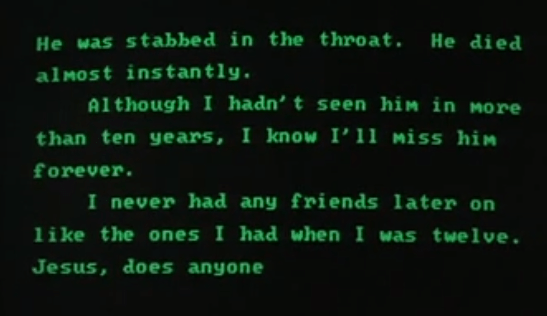
Somehow — and I am constantly amazed at how prescient I was of the nostalgic longing that accompanies aging — 12-year-old me was certain that grown Gordie’s words in the closing scene of the film were, and would remain, poignantly, heart-breakingly true.

From the film Stand By Me

It’s Richard Dreyfuss’ voice I heard this morning and whose voice I hear from time to time when I consider the impact my friends from childhood had (and continue to have) on the creation that is grownup me:

“I never had any friends later on like the ones I had when I was twelve…. Jesus does anybody?”

But when I watched the final scene of the film today, what struck me for the very first time is the unspoken, yet classic writer’s epiphany that prompts Gordie to tap out satisfyingly the closing line of his book.

Grown Gordie’s son enters the study to find his father staring at the computer. The kids ask Gordie to hurry up and they roll their eyes when he (for the umpteenth time) tells them “Okay, I’ll be right there” and continues to stare at the computer monitor.

The son turns to his friend and says:

“My dad’s weird. He gets like that when he’s writing.”

Gordie laughs.

I laughed, too, when I watched the scene today. I know well the “like that” of which his son speaks.

I know it as this feeling, this presence that soars into my heart when I finally grasp one of my life’s great truths — like the incomparable experience of knowing someone when you were 12 — and when I am able to transform this truth into words.

And share them.

When I can nod my head along with the cosmic consciousness in understanding.

And know for certain that you, the reader, will understand it too.

Memory, Relationships, Writing

What I learned from Alice Munro’s Nobel Prize win in literature

Oh Alice Munro:

“For years and years, I thought that stories were just practice, till I got time to write a novel,” she told The New Yorker in 2012. “Then I found that they were all I could do, and so I faced that. I suppose that my trying to get so much into stories has been a compensation.”

Thank you for your well-timed win and wisdom, Ms. Munro, if I may call you that.

(Though I prefer to call you Alice.)

Your words in  The New Yorker were exactly what I needed to read right now, as a writer and as a human being:

As a writer who wishes to breathe life into the characters who infiltrate my dreams, but doesn’t yet know exactly what those characters really want or where they are going.  As a woman who yearns to give life to ideas stirring inside my heart — but often lacks the time or the energy. As a human being who is constantly wondering what in this life is practice and what is for real.

Thank you for writing real women, real marriage, real life … in a way that allows the reader to envision the beauty that exists even in those very real, raw circumstances.

I’ll be honest. I’ve only read Runaway, and selected short stories of yours, but you’ve always been a writer I’ve wanted to read more of.

And I love your name.

Alice.

Munro.

It’s a name that deserves celebrity.

I love that you’re Canadian, and that my Canadian best friend loves your writing, and that those two things together make me want to read more of your stories.

I love that your first collection was only published when you were 37. It offers this exhausted and overwhelmed 38 year old mother of three a glimmer of hope.

I love that you’ve lived to be 82, and I wonder if you always knew that you would live this long or if you always thought, like I do,  that you were only one year away from dying — a victim of a tragic disease or an automobile accident.

Too bad. So sad. No book for you.

I wonder when your heart stops breaking. Does it?

I wonder when you run out of vivid memories to weave into your stories.

I wonder when you stop caring what people think and just write what you must so that a weight is lifted from your shoulders, and you can move on.

I love that picture of you — the one in which you’re sitting on the edge of the railroad track in The New York Times’  article. You look defiant, brave, and yet serene.

I wonder what takes more courage? Writing your truth or having it read by others?

Or sitting on the edge of a railroad track?

I win too, from this celebrated win of yours, Alice Munro.  Through getting to know you better, I am reminded that writing about what you know is enough.

Writing about relationships, memory, your life in your town. It’s enough.

I don’t need to fabricate tales of magic and mystery. I don’t need to create a romance that is one for the ages.

My life alone offers enough content for me to mine — life itself is a gift to any attentive writer.

Isn’t it?

What would you say, Alice Munro?

To a grown woman who still imagines herself a girl?

To a writer who still imagines herself on the slow road to a Nobel Prize in literature?

What would you say?

Would you say,

“Slow down?”

“Don’t worry?”

Would you say,

“It was all worth it?”

“It doesn’t mean a thing?”

Oh, Alice Munro. You’ve taught me a thing or two just by winning a damn award.

Getting old is better than being dead, you said, to the New York Times reporter.

“I’ve done what I wanted to do,” you said. “And that makes me feel fairly content.”