Relationships, Writing

Finish this haiku … if you can

I was attempting a haiku this morning when I realized there is no good antonym for alone.

Walking alone is
often the first step towards

These were the first two lines of an idea I was trying to work through by haiku. Except, I couldn’t finish it in a satisfying way.

“Together?” Is together really the only antonym for alone?

I was going for an emotion, a feeling, a deep sense of being close to another person or to humanity. Feeling less afraid. Feeling as if someone else understands you.

And “together” … just doesn’t do it.

Together is so physical. It’s a fixing word. It’s an extrovert’s word. It’s not the word I mean at all.

Want to help me finish the haiku?

Walking alone is
often the first step towards…

I’d love it if you’d give it a shot in the comments below or on your own blog with a pingback here. If your haiku especially speaks to me, I’ll reblog it.

Love

Love is as close as the refrigerator door

When I was a girl, our refrigerator was stocked. Not just with food, but with memories.

My mother liked to collect magnets from places she had visited — and while it’s difficult to remember exactly from where and from when, I do distinctly recall a trail of experiences splattered like paint across the front of a series of refrigerator doors of my childhood.

It’s a tradition I’ve, without much serious intention, carried forward. It started when I moved in with my now-husband. He already had a few refrigerator magnets that predated me, but we began building a refrigerator of love of our own. The first addition was a magnet we found at a gift shop in Hoboken where we lived at the time.

We loved the quote so much we incorporated it into our wedding invitation.

Marcel Proust let us be grateful

A few weeks ago, after a bunch of dreams of messy houses, I realized my home was in need of attention. In the middle of mopping up the kitchen floor, I noticed how dirty, disorganized and jumbled our refrigerator had become. We had been mindlessly putting up A+ exams, beautiful art class drawings, and promotional magnets from every local business, from the hairdresser to Pinchi the clown, birthday party extraordinaire I don’t ever remember being entertained by.  I don’t have “before pictures,” but imagine a Leap Frog alphabet game scattered in more than 26 places; a Made in China set of Hebrew letters ready to be choked on by a visiting baby; and hidden beneath five field trip permission forms was the Marcel Proust quote.

I held it in my hands — saw how smudged and worn it had become in 13 years — but smiled knowing it remained. Intact, across continents and seas; still stuck to my refrigerator door.

I spent some time then sorting, throwing away, and putting the dusty alphabet letters in a bag to give to a friend whose children would use them — mine had grown too old for them while I wasn’t paying attention.

I filed away some papers, recycled others. I organized the promotional magnets in a big square on the hidden side of the fridge.

Afterwards, I pulled out the Marcel Proust quote — made it a centerpiece holding up a series of photographs that represented experiences we treasure, times and places … faces almost forgotten in the everyday rush of life.

I made love, once again, the focus of the refrigerator door. And said a quiet prayer that Proust’s words would continue to carry this family forward in 2014.

“Let us be grateful for people who make us happy; they are the charming gardeners who make our souls blossom.”

Yes, our days, if only we are lucky, will still be filled with exams to study for, dentist appointments to run to, and permission slips to sign, but somehow, in spite of it and in light of it, let us be grateful for the people who make us happy.

Love, Mindfulness, Parenting, Philosophy

Guns are just a metaphor

This is not a post about gun control. It’s not a post about violence prevention in our schools or in our towns.

It’s a post about growing up — my growing up — as a mother.

And the single greatest lesson I have learned in my ten years, 364 days of parenting.

Ready?

I know nothing.

Absolutely nothing.

If I look at myself now from the future, this will always be true.

Each day, as a mother, I am growing and learning and changing. And when I look back at the mother I was two years ago, five years ago, 10 years ago, I understand instantly how little I know. And in knowing this, I know everything.

When my son, who is turning 11 this weekend, was a little boy and started to amass little boy toys, we had a rule (my rule): No guns in the house.

As my son transitioned from dinosaurs to Playmobil, the rule shifted a little: No handheld toy guns in the house. But Playmobil policemen were allowed.

And as he grew, in a house that didn’t allow guns, he still played with imaginary ones, as boys do. I could’ve attempted to enforce a new rule, “No pretend guns with clothes hangers,” but by that time I started to realize, just a little, that I might not be able to prevent imaginary gun play and so I instated a new rule: No video games or computer games with guns.

This, I knew, would prevent my son from turning into one of those scary people on the 6 o’clock news; I just knew it. Video games and TV were really the culprits in the downward cycle of violence in America. If our children didn’t see it on TV or in video games, we’d all be safe. I was certain of it.

But, as you probably have gathered by now and mothers more seasoned than I already know, my son grew older. He started to do things on his own — when I wasn’t around. He played shoot ’em up computer games at friends’ houses where rules didn’t get in the way, and watched Clint Eastwood movies on YouTube. And one day, last year, got a Nerf gun as a gift from his classmates for his birthday.

On that day, I had to choose: Would I rescind a parenting decision I had made 10 years prior? Or stick to my guns, so to speak?

I let the Nerf guns in.

I held up my palms to the air that day and looked skyward and said to someone (or no one) in that defeated mother’s voice:

“What, really, do I know?”

And an answer came down from somewhere or nowhere: You know nothing. And yet …

And yet, my son seems to. He seems to know something.

A year later, the kid has amassed a Nerf collection — guns, foam bullets, a vest.  And despite this, seems to know the difference between right and wrong. Play and reality. Seems to be able to function appropriately with peers — completely against my assumption 10 years ago about what happens to boys when they start playing with guns.

In a twist that feels unfathomable to me — a woman who once thought her sons would never handle a toy gun — my son is hosting 20 of his friends today at a paintball party. It makes me uncomfortable a bit; it does.  I find myself asking this morning: What does this say about my son that he wants a paintball party? Worse: What does it say about my parenting that I am allowing it?

And the only answer I can come up with is:

I know nothing.

This is my BIRTH-day gift.

This knowing does not release me from fear or from self-blame for whatever my son may choose to be or to do in the future.  But, rather, allows me to be free to love in the best way I know how … today.

I am certain that I will keep making rules for my children. Just as I am certain I will always be afraid for them.

But, I suppose, that with each passing year, as I understand more and more how little I know about what my raising them will ultimately lead to, I will allow myself to let go.

To trust them to raise themselves.

And hope that my loving them was enough.

Because really, I know nothing.
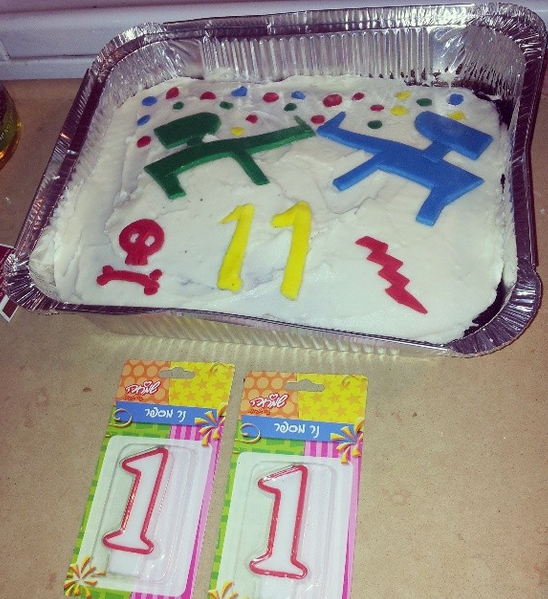
gun cake

Philosophy

The space between dreams

Fevered dreams
Unfulfilled chills
Can’t shake ’em off.

The space there
between awake and asleep
Hot outside
Cold inside
A mystery understood only by the archetype of me.

If I could write the space there
between awake and asleep
it’d be a bestseller.

The book of the month for vampires and demons
that dwell inside the space
between dreams.

Modern Life, Parenting

The small victories of a working mother — flash poetry

“There’s a clean shirt in your backpack!”

<Door slams! Bam!>

First

to sign up for parent-teacher meetings.

Small victory.

Showed up on time —

early pick up, after all.

Small victory.

Pushed the migraine aside

(til tomorrow)

in order to be present

today

for preschool Chanukah party, songs, dance, and black light.

Huge victory.

Grater?!? Where’s the grater?

Found it.

And it’s clean.

Ready to make latkes. Here you go.

Take it. Take the potato, too. Wait don’t forget it’s late already past over there under the couch no upstairs in your room under the laundry basket i don’t know maybe okay fine call me at work later and let me know you’re home so I don’t worry I’m always worried what did you eat today tomorrow I promise tomorrow i know I’m sorry on Monday.

I’ll make it to the party on time.

Clean shirt in his backpack. Clean shirt. He’s got a clean shirt.

Family, Letting Go, Love, Making Friends, Memory, Mindfulness, Writing

The almost, so-very-lost, art of the letter

I’ve been finding letters.

Long lost letters.

Long saved letters.

Long ago, written-by-hand letters.

As and Es and Is strung together to form laughter and love and pain.

Through my veins runs remorse

then retraction

as I read the letters aloud.

Loopy script

Straight uppercase caps

Bubbled Oooos and lowercase bees

All of them stamps of time and postmarks of personality

Who knew then that you were a poet, dear Friend?

Who knew that you could dance with your words, dear Lover?

Who knew, Mother, that you missed me with an ache you hid away so I would never know

until I, too, was a mother?

Aching…

Who knew then

what I know now?

Did you?

And I simply

missed it?

Did you know I would read your words aloud

and fall in love with a version of you I never knew?

Modern Life

Craving life

One of the major down sides of social media for me is access to second degree sadness.

I just don’t need it.

Sorry if that sounds cruel, harsh.

But it’s true.

I’m a sensitive girl already.

I feel people’s eyes. Their frantic glances, their furrowed brows.

I’m pained by the way they walk with their head down low.

I’m frightened when their steps get heavy behind me.

I’m deathly afraid of a silence that emanates from thousands of miles away. Because it must mean that something is very wrong.

I absorb another’s anger as if it’s mine

And I jump high at a cough from another room or from a firecracker from across the street or from a chair falling backwards with the wind.

I’m easily startled.

As much as I love how connected we all are through the technology webs, I am also overwhelmed sometimes by

sadness.

Death, sickness, loss, hunger, pollution, destruction.

Hurricanes, typhoons, murder, suicide, bullying, anorexia, drug overdose, car accident.

Cancer, anaphylaxis, SIDS, amputation, chemical warfare.

Cancer.

The photographs, the videos, even the messages of love and care sent from strangers to other strangers.

They all hurt my heart.

My heart can’t hold the sadness, though it’s soft with compassion,

it’s too too thin for the empathy.

And while sometimes my heart can hold it all,

Other times it feels filled up.

Like right now.

Tragedy, one-degree removed,

is life at 40.

Until it’s tragedy, no degree removed.

It was like this, I imagine, for my mother and her mother.

At 40, you start to know sick people, and people caring for sick people, and people who have lost people.

And you start to be afraid you are soon going to be one of those people. Or more than one. All three.

I am afraid.

And while I know that my fear is not a new one, not one invented by me or my generation, there’s something so much more vivid about this knowledge when it’s brought to you in full-color, in a row of announcements on the monitor in front of you via social media

every day, every few hours, every touch of a button

it’s there.

I need a newsfeed of life.

Call me naive, call me ungrateful, call me callous, call me whatever you like, but this is what I need.

A newsfeed of life.

Work, Writing

Genius in a bottle

I hit my head this morning. Hard. On the corner of the stackable washer/dryer in the very tight space that is my bathroom/laundry room.

After the stars stopped spinning, I waited.

What was I waiting for?

A stroke of genius.

My flux capacitor.

The only thing that came was a golf ball size lump on my forehead.

Lucky enough, I’ve remained conscious since and can see straight enough to write this post.

But sadly, my knock on the head didn’t wake up any sleeping idea.

Except this one …

Not only are we always half expecting that one day our great idea will come to us, but

we are also always half expecting it will come to us quite by accident.


Culture, Family, Parenting

Hebrew Language Tip 135: Turn your curse word into a casual remark

What You Need to Know About Me Before You Read My Tip

I like to curse. I think people who curse are cooler than people who don’t. I think people who don’t read blogs because the author uses curse words are over-sensitive. I used to have a blog called The Wellness Bitch. I like to scream, “Fuck,” really loudly when I stub my toe or drop something on it. When I say Fuck really loudly when I get hurt it makes me physically feel better. All my kids, ages 5 – 10, have said the F word out loud at least twice with my permission. (Two of them have a hard time differentiating between the F sound and the Th sound so at least one of them probably said THUCK. ) I have to hold back sometimes from saying to my kids, “Are you fucking kidding me?” because despite how much I like to emphasize my surprise, I know I don’t want them saying that phrase to their friends or teachers. All in all, I want to live in a world where people curse, but don’t want them cursing at me. For instance, I don’t want to ever be on the recipient end of “you are a f-ing …” well… anything.

Tip

If you like to curse, move to Israel where nobody gives a SHEET about cursing. Three year olds drop their pacifiers on the ground and say, SHEET!  10 year olds miss a goal on the soccer field, and they scream, SHEEEEEEET! Not to mention, every one and their 90 year old grandmother says “dafuk” which is basically a morphed Hebrew version of the F word.

That Said…

It should have been obvious (but it wasn’t) that curse words not in your native language lose their strength.  Which is why “shit” is something Israelis of all ages say by the way, without a second thought. (Including my own angelic little 7 year old.) Israelis don’t even consider “shit” a curse word. It doesn’t belong to them. It belongs to English speakers

But say “Lekh tezdayen!” to an Israeli and you might just make them flinch, or so I learned the other day when I said it a little too loud in my office coffee break room. Silly me, I thought I was being the cute immigrant. Turns out I was being foul.

Lesson

Words have strength … until we decide they don’t.

And that, my friends, is one to grown on.

Letting Go, Mindfulness, Philosophy

What color is fear?

I have this thing.

After half a lifetime of thinking it was either a special power possessed by only a select few, or a strange sensory birth defect that generally didn’t interfere with my life, I discovered it was a thing.

With a name.

Synesthesia.

I see letters, and words, in color.

Not all words, and not all the time — only particular words and only really when I pay attention to it.

Months of the year, for instance, each appear as a particular color when I visualize them in my mind. So detailed, in fact, that June and July are both red, but different shades.

All the letters of the English alphabet are colored, too, but strangely, not the Hebrew alphabet. Some letters are (Aleph is white like “A”), and some aren’t. If I were a neurologist, I’d probably study that, but I’m not. I’m just the handicapped super hero with a colorful dictionary in her mind.

What’s particularly interesting to me, though, is how words can change color when they are paired with another.

Prickly is white. But pear is yellow. Prickly pear is white. Why?

I have no idea.

Home is red. But go is green. Go home is “green.” Does my mind automatically prefer the verb? Does the adjective always dominate?

Fear is a word whose color I’d like to change.

If  I could somehow convert fear from that rusty-tinted brown orange to a vibrant hot pink with purple polka dots, I somehow believe that my perception of fear might change, too.

Can you really be terrified of a word that is hot pink with purple polka dots?

What if, indeed, the secret power of synesthesia is the ability to use color to change the way you perceive ?

Change the color of a word in order to manipulate your world?

Into a place that’s less scary?

Memory, Relationships, Writing

What I learned from Alice Munro’s Nobel Prize win in literature

Oh Alice Munro:

“For years and years, I thought that stories were just practice, till I got time to write a novel,” she told The New Yorker in 2012. “Then I found that they were all I could do, and so I faced that. I suppose that my trying to get so much into stories has been a compensation.”

Thank you for your well-timed win and wisdom, Ms. Munro, if I may call you that.

(Though I prefer to call you Alice.)

Your words in  The New Yorker were exactly what I needed to read right now, as a writer and as a human being:

As a writer who wishes to breathe life into the characters who infiltrate my dreams, but doesn’t yet know exactly what those characters really want or where they are going.  As a woman who yearns to give life to ideas stirring inside my heart — but often lacks the time or the energy. As a human being who is constantly wondering what in this life is practice and what is for real.

Thank you for writing real women, real marriage, real life … in a way that allows the reader to envision the beauty that exists even in those very real, raw circumstances.

I’ll be honest. I’ve only read Runaway, and selected short stories of yours, but you’ve always been a writer I’ve wanted to read more of.

And I love your name.

Alice.

Munro.

It’s a name that deserves celebrity.

I love that you’re Canadian, and that my Canadian best friend loves your writing, and that those two things together make me want to read more of your stories.

I love that your first collection was only published when you were 37. It offers this exhausted and overwhelmed 38 year old mother of three a glimmer of hope.

I love that you’ve lived to be 82, and I wonder if you always knew that you would live this long or if you always thought, like I do,  that you were only one year away from dying — a victim of a tragic disease or an automobile accident.

Too bad. So sad. No book for you.

I wonder when your heart stops breaking. Does it?

I wonder when you run out of vivid memories to weave into your stories.

I wonder when you stop caring what people think and just write what you must so that a weight is lifted from your shoulders, and you can move on.

I love that picture of you — the one in which you’re sitting on the edge of the railroad track in The New York Times’  article. You look defiant, brave, and yet serene.

I wonder what takes more courage? Writing your truth or having it read by others?

Or sitting on the edge of a railroad track?

I win too, from this celebrated win of yours, Alice Munro.  Through getting to know you better, I am reminded that writing about what you know is enough.

Writing about relationships, memory, your life in your town. It’s enough.

I don’t need to fabricate tales of magic and mystery. I don’t need to create a romance that is one for the ages.

My life alone offers enough content for me to mine — life itself is a gift to any attentive writer.

Isn’t it?

What would you say, Alice Munro?

To a grown woman who still imagines herself a girl?

To a writer who still imagines herself on the slow road to a Nobel Prize in literature?

What would you say?

Would you say,

“Slow down?”

“Don’t worry?”

Would you say,

“It was all worth it?”

“It doesn’t mean a thing?”

Oh, Alice Munro. You’ve taught me a thing or two just by winning a damn award.

Getting old is better than being dead, you said, to the New York Times reporter.

“I’ve done what I wanted to do,” you said. “And that makes me feel fairly content.”

Technology, Writing

I’m a little obsessed with time travel, are you?

I love playing with the idea of time travel.

I’m not a quantum physicist. In fact, attempting to wrap my brain around the quantum physics aspects of time travel gives me such a headache I have to read a Danielle Steel novel to make it go away.

So instead of trying to understand the science behind time travel, I watch movies, read books, and write about time travel from an artist’s perspective. How writing letters to your younger self is almost a multi-dimensional portal waiting to be entered, and how reading poems you wrote as a child is like opening a window to the past.

From the view of an almost 40 year old woman who can still smell spaghetti sauce boiling in a pot in her childhood home when she closes her eyes and really tries, time travel is this easy. It’s the second step in a yet-unproven three-step process.

1. Dress up in period clothes.

2. Imagine yourself there.

3. Lock yourself in a dark room with a cassette tape playing over and over again, “This is 1987. You are now in 1987. When you leave this room you will see 21 Jump Street on the tv and the latest issue of Teen magazine on the kitchen counter. You will be madly in love with Matt Heitzer. Suzanne is leaving a message on your answering machine. It is 1987. You are now in 1987.”

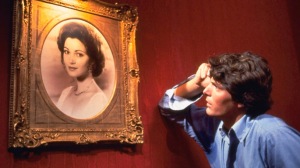
This is, at least, how the Christopher Reeve character in Somewhere in Time goes back in time to meet a long-dead woman he’s obsessed with (played by Jane Seymour). And frankly, it always seemed the most likely way for time travel to work.

somewhere in time

(Up until today, I always thought the movie was loosely based on the story Time and Again by Jack Finney. But it’s not. The main characters use a similar process to get back in time in both stories, but the guy in Finney’s book puts a lot more effort into his preparation. He’s trained by the U.S. military for the project, in fact, and therefore, his time travel success is a lot more believable.)

The common overlap between my time travel theory and practice, and those of the quantum physicists’, I firmly believe, is that both are indeed possible, but have not yet been pulled off successfully.

I think the reason why so many of us are obsessed with time travel is not because of it’s magical-like inaccessibility; not because we are imaginative children longing to explore cities and places far off and forgotten; not because we are approaching middle age and overwrought by nostalgia and an urge to fix our past mistakes.

But because we understand somewhere deep down that time travel is possible and we are only one tiny step away from realizing it.

Like a fog-covered windshield, we need just to wipe away the moisture to see clearly where we are going and how to get there.