
Smushy mushy heart
springs back like Silly Putty
even when it’s broke.
Tag: Poetry
The almost, so-very-lost, art of the letter
I’ve been finding letters.
Long lost letters.
Long saved letters.
Long ago, written-by-hand letters.
As and Es and Is strung together to form laughter and love and pain.
Through my veins runs remorse
then retraction
as I read the letters aloud.
Loopy script
Straight uppercase caps
Bubbled Oooos and lowercase bees
All of them stamps of time and postmarks of personality
Who knew then that you were a poet, dear Friend?
Who knew that you could dance with your words, dear Lover?
Who knew, Mother, that you missed me with an ache you hid away so I would never know
until I, too, was a mother?
Aching…
Who knew then
what I know now?
Did you?
And I simply
missed it?
Did you know I would read your words aloud
and fall in love with a version of you I never knew?
Meditation on Yard Sales
I have a tendency to hold on.
This tendency is so strong, I’m confident I will end up a haunting ghost in someone’s house when I go.
I hold on to photographs, to letters, to my child’s sketches. I refuse to part with shoes I want to love but can’t because they give me blisters; nor can I say goodbye to the beat up stuffed animal I’ve had since sixth grade. The t-shirt I received as a party favor at a forgotten friend’s bat mitzvah sits at the bottom of a box with fifteen others waiting to be turned into a quilt I’ll never make.
I hold tight to first impressions, grudges, undeserved adulation.
And then sometimes, I let go.
No, not just that.
I purge.
I prepare a huge yard sale and lay all my attachments on the grass for everyone to peruse. Everyone I know and don’t know descends on my beloved belongings.
“Please take them from me!” my eyes say. And they do. For a penny, for a song.
And my load becomes lighter.
If I were to die then and there, I could float up to Heaven like a feather on the wind.
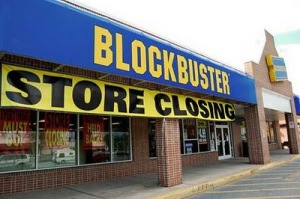
RIP Blockbuster: A pop culture haiku
(This haiku was inspired by “R.I.P. Blockbuster, You Frustratingly Magical Franchise, You” by Kevin Fallon in the Daily Beast)
==
RIP Blockbuster Video
By Jen Maidenberg
==
Neighborhood stop for
high school dates rated PG.
Press play. Then make out.
==
The yellow bowl
I am obsessed with my child’s memory of me
of this moment
of this yellow bowl.
This inaccessible ceramic yellow bowl
perched high upon a dusty refrigerator
will one day be dusty, too —
an image sitting in a drawer waiting to be opened
in my child’s memory.
Inside the yellow bowl are rainbow jelly beans, Polish lollipops
handmade by a retired couple sitting at a railway station.
There are remnants of chocolate wafers, too, and little crystal crumbs from an uneaten
sucking candy.
Pomegranate flavored.
In my child’s memory, this yellow bowl
is the key to happiness
and evidence of goodness
and bad.
It is what determines right and wrong.
It is — and will always be —
a beacon.
“Lost children,
find your way home.
The yellow bowl is calling you back.”
What I learned from Alice Munro’s Nobel Prize win in literature
Oh Alice Munro:
“For years and years, I thought that stories were just practice, till I got time to write a novel,” she told The New Yorker in 2012. “Then I found that they were all I could do, and so I faced that. I suppose that my trying to get so much into stories has been a compensation.”
Thank you for your well-timed win and wisdom, Ms. Munro, if I may call you that.
(Though I prefer to call you Alice.)
Your words in The New Yorker were exactly what I needed to read right now, as a writer and as a human being:
As a writer who wishes to breathe life into the characters who infiltrate my dreams, but doesn’t yet know exactly what those characters really want or where they are going. As a woman who yearns to give life to ideas stirring inside my heart — but often lacks the time or the energy. As a human being who is constantly wondering what in this life is practice and what is for real.
Thank you for writing real women, real marriage, real life … in a way that allows the reader to envision the beauty that exists even in those very real, raw circumstances.
I’ll be honest. I’ve only read Runaway, and selected short stories of yours, but you’ve always been a writer I’ve wanted to read more of.
And I love your name.
Alice.
Munro.
It’s a name that deserves celebrity.
I love that you’re Canadian, and that my Canadian best friend loves your writing, and that those two things together make me want to read more of your stories.
I love that your first collection was only published when you were 37. It offers this exhausted and overwhelmed 38 year old mother of three a glimmer of hope.
I love that you’ve lived to be 82, and I wonder if you always knew that you would live this long or if you always thought, like I do, that you were only one year away from dying — a victim of a tragic disease or an automobile accident.
Too bad. So sad. No book for you.
I wonder when your heart stops breaking. Does it?
I wonder when you run out of vivid memories to weave into your stories.
I wonder when you stop caring what people think and just write what you must so that a weight is lifted from your shoulders, and you can move on.
I love that picture of you — the one in which you’re sitting on the edge of the railroad track in The New York Times’ MICHIKO KAKUTANI article. You look defiant, brave, and yet serene.
I wonder what takes more courage? Writing your truth or having it read by others?
Or sitting on the edge of a railroad track?
I win too, from this celebrated win of yours, Alice Munro. Through getting to know you better, I am reminded that writing about what you know is enough.
Writing about relationships, memory, your life in your town. It’s enough.
I don’t need to fabricate tales of magic and mystery. I don’t need to create a romance that is one for the ages.
My life alone offers enough content for me to mine — life itself is a gift to any attentive writer.
Isn’t it?
What would you say, Alice Munro?
To a grown woman who still imagines herself a girl?
To a writer who still imagines herself on the slow road to a Nobel Prize in literature?
What would you say?
Would you say,
“Slow down?”
“Don’t worry?”
Would you say,
“It was all worth it?”
“It doesn’t mean a thing?”
Oh, Alice Munro. You’ve taught me a thing or two just by winning a damn award.
Getting old is better than being dead, you said, to the New York Times reporter.
“I’ve done what I wanted to do,” you said. “And that makes me feel fairly content.”
Time spent dreaming
Longing for the day
When my dreams count as real life
And I remember.
Only good ones though–
Sidewalk reunions, relief.
Scattered song and dance.
I could do without
underground caves teeming with
naked mannequins.
Just on a whim … all we are is just on a whim
Let’s move to San Fran
just on a whim, you and I.
We’ll bring the kids, too.
A poem about Israel
For my 15-minute Friday exercise, I jotted down some thoughts I had while celebrating/not-celebrating the Jewish High Holidays in Israel this year.
The poem I produced out of this exercise may be found here on The Times of Israel and is a culmination of both my confusion and my devotion; of my acceptance and my denial. It is an admission of judgment — of myself, as well as others. And it is a declaration of hope.
Or maybe it’s just a poem.
A whim. A wish. An exercise. A prayer.
Amen.
Where dreams come from sometimes
If time were to
stand still,
I would kiss your lips
leaving no trace of me behind.
You’d awaken
when time moved again
and know your life had changed forever
but the only evidence
of the crime
would be a hazy cornered memory
hidden in the land of dreams.
= = =
(This vignette was prompted by The Daily Prompt: Standstill)
Smells of Shabbat
One day in the future
My son will need some air.
He’ll leave home
Seeking solace
If only for a minute or two.
On his journey toward temporary peace
He will come upon
The smell of roasted potatoes with rosemary
Two minutes to go til burning
The scent will float beneath his nostrils
And he will remember tonight…
Walking with me
Up and down emptying streets
Through quieting paths
Around quickly passing cars
Parking on the other side of the gate.
A walk
A gasp for air
A last chance to let go of all that was
And open to
what will be
This week
Is blogging the new MFA program?
Before I was in high tech, I was in publishing.
At Scholastic, I worked in the creative marketing department, not directly with authors, but with their work; trying to make their work appeal to the largest audience as possible.
My claim to fame is that I wrote responses to fan letters for R.L. Stine and K.A. Applegate. So if you came of age in the late 90s, we were probably pen pals.
I also was a part of the exciting marketing campaign surrounding the release in the U.S. of the first Harry Potter book.
Good times.
After I left Scholastic, I spent a few years in other publishing jobs: in the promotions department at Parade Magazine and as an assistant editor for a Jewish newspaper.
I soon became expert in making other people’s work better.
Of course, through this experience, my work became better, too. In addition to assigning and editing stories to freelance writers at the Jewish newspaper, I would report on local happenings and sometimes interview C-level Jewish celebrities for features.
Every time my boss, the Editor, would hand me back my first draft, I would grimace at the red marks in the margins.
But the marks, when implemented, always made my stories better.
In time, I became a confident writer of short form non-fiction. Your work becomes better the more you write and the more heavily you are edited.
I imagine the process is similar for any form of writing; especially in fiction and poetry, two genres in which I am experimenting and want to improve.
This is why so many emerging writers and published novelists come out of MFA programs.
They’ve dedicated themselves to writing, yes — but they’ve also committed to being publicly criticized for two years in the hopes of improving. In the hopes of one day being so good they will be noticed. Noticed like a misused metaphor, like a dangling participle.
This element of the writing program — the communal critical eye — is missing from the fantastic writing community that is the blog-o-sphere.
I never — or hardly ever — publicly criticize a blogger’s work. If I add a comment to a blog, 99% of the time it’s a positive comment. If it’s a negative comment, it’s finely worded so as to not offend the author.
I’m not talking about political blogs, where trolls feel completely uninhibited to offer their frank opinions about how the author is a stupid, naive right-wing psychopath. I’m talking about the community of essayists that have sprung up through the popularity and ease of the blogging platform.
Mommy bloggers.
Aspiring novelists.
Flash fiction writers.
People who feel the need to chronicle the every movement of their cats.
Everyone can be a published writer now.
A published author even — thanks to Amazon.com and a host of self-publishing software.
And, yes, this is awesome.
Really awesome.
And … not so awesome.
I like to read good writing.
I like to pay for good writing.
I’m annoyed when I read bad writing, especially when I’ve paid for it.
I want the books I read to have been written by people who cared enough to become better writers. I want those books to have been through at least one, if not five, careful revisions by an editor.
I say this not just as a writer, but as a consumer of the written word.
Maybe I hold myself up to too high a standard. (That sounds obnoxious, I know. )
Maybe if I didn’t, I would already be a published author myself now. (I’m not counting The Fantastic Adventures of Me & My Friends or the two other activity books I wrote for Scholastic. That also sounds a bit obnoxious, doesn’t it?)
Maybe I’m worrying for nothing.
Maybe the world is a happier place because more people are writing and finding their own audiences.
But I think there is room for criticism in the blogging world. Perhaps we would do more to support each other by not just commenting when we think a post is good, but when we think a post is almost good — when something could be just a little bit better if only it was rewritten once or twice.
It irritates me when I write a post that I think is really good and a commenter writes something simple like,
“Lovely.”
This happens a lot. Which should be a good thing.
But I want to follow up on that “lovely.” I want to know, “Why?”
“Why do you think this is lovely?”
Did it strike a chord?
Was it my careful phrasing?
Was it how elegantly I described the herd of goats by the side of the road?
And how could it be better? How could I rewrite it into something you’d be happy you paid for? Satisfied you spent your time on?
This is what is missing from the blogosphere. And why, at least now, blogging in community will never be as serious as a writing program.
Most of our comments are just blatant attempts at trying to attract new followers.
It doesn’t have to be that way.
Are you a blogging writer who seeks comments like this? Who wants more than just a
“Great post!”
If so, let me know — perhaps we can build a more critical commenting community together.
Help each other… emerge…from red marks in the margin.
 and yadda yadda, an aliyah blog