Community, Love, Mindfulness, Philosophy, Relationships, Religion, Spirituality

Synchronistically delicious

I am often troubled when I hear people use the word “serendipity” when I think they mean “synchronicity.” But I never really investigated the difference between the two words.

In my unresearched opinion, I always imagined synchronicity as attached to “meaningful” or extraordinary. Whereas serendipity is more playful, like a cup of frozen hot chocolate.

serendipity

Lucky. Fortuitous. Unexpected. Right place at the right time sorta thing.  Whereas synchronicity … when it happens … almost feels as if its arrival was fated. Expected, even if not by the participants. Anticipated, in some way, even if unseen to all but the gods until the very moment the synchronicity occurs.

Synchronicity, to me, carries in its meaning a certain divinity, a certain magic.

So much so that I remember distinctly when and where I was when I first heard the word and its layperson’s explanation.  I was at the lake house of a friend in celebration of her engagement. While dipping my feet in the lake, I chatted with a friend of the bride-to-be whom I’d never met before. She shared with me the details of a paper she was working on (perhaps her Master’s thesis or her dissertation), all on the topic of this experience called “synchronicity.”

I admitted to her that I’d never heard the word before.

“Oh,” she smiled. “But you’ve certainly had this experience.” She went on to describe what I had always thought of (at least since reading The Celestine Prophecy in 9th grade) as “meaningful coincidence.”

However, “meaningful coincidence” always sounded lame. Such a deeply moving or spiritual encounter needed a better descriptor.

“Synchronicity,” a word steeped in the concept of time (my favorite philosophical topic of conversation both then and now), was perfect for me. I was so thankful for having met this woman at the lake. Our meeting was, in fact, meaningful. Synchronicitous (synchronistic?), we joked at the time.

Perhaps this is why I loved so much Ginz’s response to my “haiku challenge” yesterday.

Walking alone is
often the first step towards
synchronicity.

This, indeed, is what I was going for when I was trying to describe the outcome of a walk alone I took yesterday. Too me, synchronicity, isn’t just a word, but a timely, yet timeless explanation for magic, for meaning, for connection.

When “alone” unexpectedly transforms into “no longer alone.” And loneliness is replaced by oneness.
Childhood, Dreams, Family, Letting Go, Love, Memory, Mindfulness, Philosophy

A case for hoarding

I’m a hoarder.

I hoard paper, photos, t-shirts, cozy socks, cookies, memories, books.

Especially books. And memories.

I’m not so compulsive to be recruited for a reality TV show, but I’m bad enough that closets are always full and there’s never enough storage space.

Not in my house, not in my brain.

Despite this need to hang on, each time I have moved homes (about 6 or 7 times in adulthood), I’ve let go of things I didn’t think I would need anymore.

I purge — in the rapid, violent way the word evokes.

Goodbye to the japanime LeSportSac bag I coveted. Sayonara to the collector’s set of Leonardo DiCaprio movies on VHS. Farewell to the Fall-inspired finger paintings done by my son when he was 18 months old.

When we moved to Israel, a country that does not believe in closets, nor basements, my husband and I did a major purge — in the form of a yard sale and of giveaways to friends and neighbors. But there were about a dozen boxes we knew not to bother opening — for they would go into storage until we figured out exactly what this aliyah thing would mean for our family.

Boxes sealed in brown packing tape marked in hastily drawn capital letters:

JEN’S MEMORABILIA

AVI’S OLD PAINTINGS

WEDDING PARAPHENALIA

MIXED TAPES, SCHOOL PAPERS OF JEN’S, DO NOT THROW AWAY!!!!!!

CARDS, PERSONAL

Those boxes landed in Israel on a cargo ship a few weeks ago and eventually — after the usual Israeli-style run-around at customs — arrived in our storage room/bomb shelter last week.

Carefully, carefully I am opening those cardboard boxes.

Because they aren’t just cardboard boxes, you know.

They are Pandora’s. Modern day Pandora’s boxes.

Carefully… because danger lurks in the folded over corners of hoarded memories

just as often as joyful surprise.

Carefully… because yellowed papers inside a stale smelling tupperware container may easily transform into messages in a bottle.

Carefully… because when you save, when you keep, when you store away, you might just get what you wish for one day–

a portal into the past.

a light unto what was once dark.

* * *

Watch this space to see what I discover inside a set of boxes.

Love, Mindfulness, Parenting, Philosophy

Guns are just a metaphor

This is not a post about gun control. It’s not a post about violence prevention in our schools or in our towns.

It’s a post about growing up — my growing up — as a mother.

And the single greatest lesson I have learned in my ten years, 364 days of parenting.

Ready?

I know nothing.

Absolutely nothing.

If I look at myself now from the future, this will always be true.

Each day, as a mother, I am growing and learning and changing. And when I look back at the mother I was two years ago, five years ago, 10 years ago, I understand instantly how little I know. And in knowing this, I know everything.

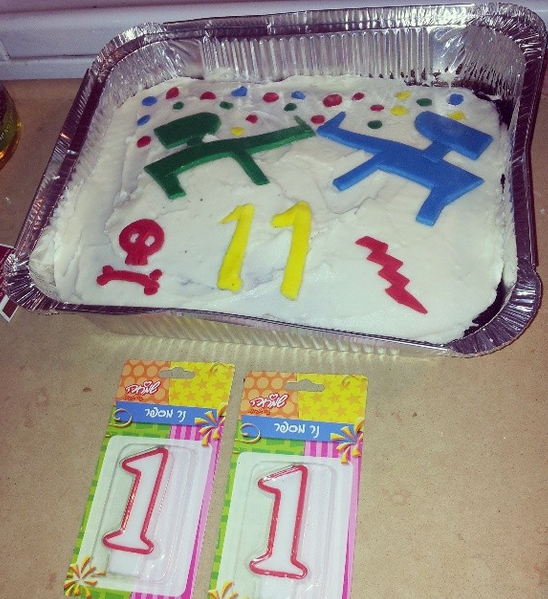
When my son, who is turning 11 this weekend, was a little boy and started to amass little boy toys, we had a rule (my rule): No guns in the house.

As my son transitioned from dinosaurs to Playmobil, the rule shifted a little: No handheld toy guns in the house. But Playmobil policemen were allowed.

And as he grew, in a house that didn’t allow guns, he still played with imaginary ones, as boys do. I could’ve attempted to enforce a new rule, “No pretend guns with clothes hangers,” but by that time I started to realize, just a little, that I might not be able to prevent imaginary gun play and so I instated a new rule: No video games or computer games with guns.

This, I knew, would prevent my son from turning into one of those scary people on the 6 o’clock news; I just knew it. Video games and TV were really the culprits in the downward cycle of violence in America. If our children didn’t see it on TV or in video games, we’d all be safe. I was certain of it.

But, as you probably have gathered by now and mothers more seasoned than I already know, my son grew older. He started to do things on his own — when I wasn’t around. He played shoot ’em up computer games at friends’ houses where rules didn’t get in the way, and watched Clint Eastwood movies on YouTube. And one day, last year, got a Nerf gun as a gift from his classmates for his birthday.

On that day, I had to choose: Would I rescind a parenting decision I had made 10 years prior? Or stick to my guns, so to speak?

I let the Nerf guns in.

I held up my palms to the air that day and looked skyward and said to someone (or no one) in that defeated mother’s voice:

“What, really, do I know?”

And an answer came down from somewhere or nowhere: You know nothing. And yet …

And yet, my son seems to. He seems to know something.

A year later, the kid has amassed a Nerf collection — guns, foam bullets, a vest.  And despite this, seems to know the difference between right and wrong. Play and reality. Seems to be able to function appropriately with peers — completely against my assumption 10 years ago about what happens to boys when they start playing with guns.

In a twist that feels unfathomable to me — a woman who once thought her sons would never handle a toy gun — my son is hosting 20 of his friends today at a paintball party. It makes me uncomfortable a bit; it does.  I find myself asking this morning: What does this say about my son that he wants a paintball party? Worse: What does it say about my parenting that I am allowing it?

And the only answer I can come up with is:

I know nothing.

This is my BIRTH-day gift.

This knowing does not release me from fear or from self-blame for whatever my son may choose to be or to do in the future.  But, rather, allows me to be free to love in the best way I know how … today.

I am certain that I will keep making rules for my children. Just as I am certain I will always be afraid for them.

But, I suppose, that with each passing year, as I understand more and more how little I know about what my raising them will ultimately lead to, I will allow myself to let go.

To trust them to raise themselves.

And hope that my loving them was enough.

Because really, I know nothing.

gun cake

Philosophy

The space between dreams

Fevered dreams
Unfulfilled chills
Can’t shake ’em off.

The space there
between awake and asleep
Hot outside
Cold inside
A mystery understood only by the archetype of me.

If I could write the space there
between awake and asleep
it’d be a bestseller.

The book of the month for vampires and demons
that dwell inside the space
between dreams.

Letting Go, Love, Memory, Mindfulness, Modern Life, Music, Philosophy, Relationships, Uncategorized

Both sides

On my drive home from work, I play a game sometimes.

I choose a song to listen to on YouTube. When it finishes and when I get to a stop sign, I look through the suggested songs at the bottom and choose one. That’s the game.

I typically get through three or four songs this way. (I have a 25 minute drive but not so many stops along the winding mountain roads.)

I play this game, as opposed to creating a playlist or listening to a CD, because I am lazy and because Pandora doesn’t work in Israel and because I have this notion that there is a certain magic to the way songs appear in the recommended song section, as opposed to this thing called an “algorithm” I hear so much about but have no idea what it really, truly means. And anyway, I’d rather believe in magic, in an elf DJ who lives inside my smartphone.

It was in this way that I came upon a live version of Both Sides Now sung in 2000 by Joni Mitchell.

I was first introduced to this song in 1988 by my friend Suzanne. I remember because anything folksy or hippiesh I pretty much learned from Suzanne, whose parents were once, apparently, hippie-like, or at least more hippie-like than any of my other friend’s parents in that they owned a guitar and watched Woody Allen movies and collected Bob Dylan records and other stuff I am not at liberty to reveal because you can only embarrass your own parents on your blog, not somebody else’s.

I say this only to let you know that I’ve been listening to Both Sides Now for a long time. I know all the words. I know Joni’s voice and pitch in the song by heart. It made many a mixed tape because I loved it so.

So when I heard Joni from 2000 sing Both Sides Now on my smartphone today, I almost didn’t recognize her. Her voice had changed so. It’s deeper, raspier, more…broken. In a way middle aged women are broken. In a way moons and Junes and Ferris wheels one day become broken after years of working hard on automatic.

I, like I’m sure many who’ve heard this later version of Joni sing this poignant song, thought, “how very perfect.” She is singing this from the other side, and the change in her voice — now alto and smoky with maturity — matches perfectly the impression of being there, then, in the days when clouds only block the sun. One listens to this version and really feels as if Joni has been through it all. One listens to this version and can sense beneath the vocals an oh so subtle laughter, as if…

She sounds resigned, Joni, and yet, satisfied. Good with the turns her life took. Or at least accepting of them, even those which were unexpected.

I listened to her and thought about the girl I once was; the girl who once listened to this song mournfully, as if I was already on the other side. As if…

I sang out loud and wondered, “what would you hear in my voice now?” You who knew me when I was young. You who knew me before the years… Before the years carried me over into the other side?

Philosophy

Carl Jung said life begins at 40

Courtesy quotepixel.com

Carl Jung, man … his words are a treasure box of quotes waiting to be mined for social media memes.

I was looking on Google this morning for a passage he wrote in his autobiography — Memories, Dreams, Reflections — and in passing discovered the above quote, not at all on the topic I was researching.

Nodding my head, I quickly downloaded the picture and uploaded it to my blog, eager to share it with all of you. Waiting for your “hell yeahs!” and your “don’t we know its!” and our joint agreement  that life sure does begin at 40.

But then I stopped. Right here. On this very line.

Did Jung really write this? The sentence phrasing sounds more like an inspirational poster they sell at university bookstores than a statement made by Jung.

Then I stopped again. On this very line.  Right here. And asked myself, “does it matter?”

Of course it does — in the long run scheme of things. No one should be out in the world molesting Carl Jung’s words and turning them into pretty pictures for Pinterest.

But in the short term scheme of things, maybe this sentiment was exactly what I was looking for today, and didn’t know it.  

Or maybe this quote led me to write this post which led me to find this article which led me right back to the information I was looking for.

Jung, man.


===

Enjoy this post? Want to read more posts about turning 40?

Putting out fires at almost 40 

The “new 40”

Let the “summer of 40″ begin”


Letting Go, Mindfulness, Philosophy

What color is fear?

I have this thing.

After half a lifetime of thinking it was either a special power possessed by only a select few, or a strange sensory birth defect that generally didn’t interfere with my life, I discovered it was a thing.

With a name.

Synesthesia.

I see letters, and words, in color.

Not all words, and not all the time — only particular words and only really when I pay attention to it.

Months of the year, for instance, each appear as a particular color when I visualize them in my mind. So detailed, in fact, that June and July are both red, but different shades.

All the letters of the English alphabet are colored, too, but strangely, not the Hebrew alphabet. Some letters are (Aleph is white like “A”), and some aren’t. If I were a neurologist, I’d probably study that, but I’m not. I’m just the handicapped super hero with a colorful dictionary in her mind.

What’s particularly interesting to me, though, is how words can change color when they are paired with another.

Prickly is white. But pear is yellow. Prickly pear is white. Why?

I have no idea.

Home is red. But go is green. Go home is “green.” Does my mind automatically prefer the verb? Does the adjective always dominate?

Fear is a word whose color I’d like to change.

If  I could somehow convert fear from that rusty-tinted brown orange to a vibrant hot pink with purple polka dots, I somehow believe that my perception of fear might change, too.

Can you really be terrified of a word that is hot pink with purple polka dots?

What if, indeed, the secret power of synesthesia is the ability to use color to change the way you perceive ?

Change the color of a word in order to manipulate your world?

Into a place that’s less scary?

Philosophy, Writing

Book deal? I write just for fun.

Three people, in as many months, have told me their creative efforts are “just for fun.”

This was in the context of showing me their wares — a brilliantly crocheted flower vase or a cat carrying-case re-purposed from a plastic water jug — and me remarking astoundedly, “This is fantastic. Are you selling them?”

Each smiled and said matter-of-fact, “No. It’s just a hobby. It’s just for fun.”

Once, I had a creative hobby that was just for fun. Once.

I used to be a scrapbooker.

<Pause for effect>

Yes, for about two years, I scrapbooked. I even had a scrapbooking friend — Debbie — who took me to a midnight scrapbooking event at a local crafts store in Tucson.

It was pretty much what you imagine.

Then I had kids, and unlike many moms who go scrapbooking crazy after birthing photogenic children, I just went plain crazy. Said craziness left me no time for cutting decorative borders and captioning weekends spent at the Jersey Shore.

My one creative hobby since then, which has only increased over the years since my day work has become more marketing focused, is creative writing.

In the last two years, especially, I have become a pretty serious creative writer and even started this year submitting some of my pieces to literary publications. No published pieces as a result of those submissions… yet.

So when each of those above-mentioned creative types told me they weren’t selling their pieces — not at a crafts fair, not to fancy shmancy boutiques on the lower east side of some city — I was taken aback; impressed, actually.

And I wondered.

Would it be possible for me to write … just for fun?

Without any expectations?

Of course, I do this already.

There are pieces (many) I have written that are sitting in a file somewhere, on a floppy disk in WordPerfect 2.0, that will never see the light of day, let alone end up in a literary journal. There are drafts of posts I don’t have the heart to delete sitting in limbo in a folder on the backend of this blog. There are starts of stories I never felt compelled to finish.

Were those all “just for fun?”

Before I get too didactic, let me clarify that I’m talking about the process, here. The intention.

Can I really write just for fun? Without the hope that what I write will become more than just an exercise,; will become

THE ONE?

The one that gets noticed?

The one that hits the right chord with the right person?

The one that gets me the top literary agent?

The one that enters me into the roster of authors that appear in a Prentice Hall Language Arts textbook?

The one that ends up sandwiched between two pieces of cardboard wrapped in a gorgeous cover with my name on it?

If “just for fun” means the same as, “for the sake of my sanity,” then yes, I write just for fun.

Or if “just for fun” means “I self-laughed a lot when I read my own blog post back to myself” then yes, I write just for fun.

But, more than anything, I write so that I will be read.

The reading by others is what makes my writing fun. This I know.

I just wish, sometimes, it weren’t so.

Mindfulness, Modern Life, Philosophy, Relationships

Imagining the Series Finale of My Life

“I’m going to die on this road one of these days,” I thought without actually thinking this morning, as I slowly took the sharp curve on the road between Kfar Manda and D’meida.

The cars opposite me, one by one, took the curve twice as fast as I did, every third car with their front tire on my side of the yellow line.

“Ironic,” I muttered, out loud. “You’re more likely to die from a car crash in this country than a terrorist attack.”

I shook my head. Chased the thought away.

“Why do you do that?” I asked myself. “Why are you always imagining yourself dead?”

This as Van Morrison sings “Into the Mystic” on the CD player and as I round the next curve, the one with the magnificent view over Haifa Bay. The one that always briefly sends me into a scene from an imaginary movie, especially when the sun is setting over the city in brilliant oranges and reds.

And herein lies the answer.

Cinematic and televised drama have become the paradigm for modern living.

We can’t help but imagine our lives as a climactic scene from an award-winning independent film; as a slapstick blunder out of a popular sitcom; as a lovers’ quarrel portrayed by a pop star in her latest music video;

Or even a carefully edited feature on the evening news.

Dramatic display of emotions and exaggerated interaction have become the familiar narratives of our modern lives, and we play it out at home, in the office, on Twitter, and in our minds.

This is how we live.

How can it be any other way? I am almost 40 years old pleasantvilleand I have spent my entire life learning about love, life and death through a lens.

This is a slight exaggeration, of course. I do have plenty of memories — good and bad — informed and outlined by a more commonplace framework, but I wonder sometimes how much of our disappointments in life come from expectations of

a kiss beneath fireworks.

a long-awaited reunion in the company of crashing ocean waves

an acknowledgement of our suffering realized via ascending applause in an over-crowded school hallway.

And how much of our anxiety comes from witnessing over and over again

high-speed highway chases

dramatic deaths by untimely tragic automobile accident.

All of it orchestrated with a powerfully-moving soundtrack.

Social media perpetuates this reality even further, bringing real-life people into our lives in a way we only used to allow afternoon soap opera characters:

An ill woman in need of bone marrow transplant

A child missing

I don’t mean to sound cruel — I know firsthand how social media can be a powerful tool to rally a community, to get a person who otherwise wouldn’t to care.

But has this familiarity with both real-life strangers and with fictional characters — with Richie Cunningham; with the staff of St. Eligius; with Rachel and Ross — blurred the line between reality and fiction?

Has the line mutated … into a line that is almost invisible?

And are we compelled — simply because these are the times we live in — to measure our lives against theirs?

This is what I thought this morning once I safely made it to work and as I carefully avoided spoilers from the series finale of Breaking Bad.

My social media networks were all abuzz — the anticipation over the weekend about how this would all unfold was palpable — and I live in Israel!

How will this all end?

Where and in what matter will this character leave our lives?

And will the end be … satisfying?

* * * * * * * * * *

This is the second in a series about Jen’s dramatic imaginary life. Read the first post here. 

Letting Go, Mindfulness, Philosophy, Relationships

Do you trust me?

My one son has the memory of an elephant.

He can remember the details of events that happened when he was three, trips we took when he was four.

My other son — not so much.

He hardly remembers his best friends from America, and what he does remember is from stories we’ve told him and pictures we’ve shown.

We’ve fabricated most of his memories by sharing our own.

What I mean by that is, my son now claims to remember things I’m not sure he does.

He’s recounting stories of stories. Not stories about actual events in his memory.

Elizabeth Loftus, a psychologist, claims that this is not unusual. That our memories are easily-manipulated.

Unintentionally, and intentionally.

In her recent Ted talk, she offers a firsthand account of working on a crime case gone horribly wrong.

A man was wrongly identified by his supposed victim and convicted of rape — purely on the testimony of a woman who claimed she remembered him doing it.

I’m conflicted by this.

On the one hand, I’m extremely uncomfortable that a person may be put in jail for a crime he didn’t commit simply because one or more people remembered seeing him at the crime — which apparently happens a lot (less so now that we can use DNA evidence). On the other hand,

I desperately want to be believed.

If it were me — If I remembered this man as the perpetrator of the crime against me — I’d better well be believed!

I want raped women to be believed.

I want children to be believed.

And, even when a crime hasn’t been committed against me, even when I have not been wronged, I want to believe in my memory.

I want to know that what I remember seeing and doing and feeling and hearing actually happened.

I am emotionally attached to my memory.

My memory serves me.

Most of the time.

And yet, intellectually I understand that my memory is nothing more than an ever-changing interpretation of an event or an experience.

I think about memory a lot — as a parent, as a child, as a wife, as a writer.

I am very conscious of making my children’s memories, for instance.

I am very conscious that no matter how hard I work to make them good, they might remember them bad.

It’s in these conscious moments that I have great compassion for my own parents.

It’s in these conscious moments that I feel frustrated, too — knowing that there is very little I can do to control or manipulate another person’s memory of me.

As a writer, I acknowledge that my memory is faulty, even though I happen to have one that’s particularly strong and sensitive to detail.

And yet, I honor my memory when I write. I let it lead me down dark hallways, and up vanilla-scented stairwells.

I let my memory pierce that outer wall of my heart so that I may feel love not just in the past but in the present.

We put ourselves at great risk by ascribing so much power to memory – -this is true — especially in situations where memory may put an innocent man in jail;

But if we don’t give so much power to memory; what then?

If we laugh at it; belittle it; if we judge it; doubt it; forget it …

What happens then?

Who are we without our memory?

Philosophy

What I am is what I am until I am not

Most of my greatest ideas come to me either in the shower or while I’m drying my hair.

As do some of the most confounding philosophical dilemmas.

Today in the shower, I found my mind starting to spin towards that place called:

What is my purpose?

I started wondering, “Is this who I am supposed to be? Is this what I am supposed to be doing?”

I started to feel concern that I wasn’t acting fast enough or prudent enough or being selfish or selfless enough.

I started to panic a little. And then I got angry. Resentful.

And then…only a few minutes later, as I was towel drying my hair… I broke free.

It was a miracle.  Usually, once I get started, my mind will spin out of control in that direction for a lot longer than a ten minute shower.

How did I break free?

Well, a few years ago, I bought a book on CD by Byron Katie. I’ve since lent it out and didn’t get it back so I can’t tell you which one it was. But they tend to overlap a bit, and choosing to listen to one of her books or attend one of her lectures is definitely worth the time.

My biggest takeaway from this Byron Katie CD was a smart, no-nonsense philosophical concept about reality that I am able to return to again and again:

If you were meant to be something, you would be.

Right now. In this moment.

This isn’t a bunch of spiritual mumbo jumbo.

It’s fact.

It makes a lot of sense, which is why I so easily latch on to it.

Think about it.

If I was meant to be something, or someone, I would be.

Now.

Already.

Since I am not that someone or something, clearly I am not meant to be that.

At least, not for now.

This doesn’t mean, of course, that I will never be that something or someone.

And it doesn’t mean I can’t or shouldn’t work towards being that something or someone, if it feels right to me.

If think it’s, indeed, “my purpose.”

It just means I am not meant to be that something or someone right now.

And that, for some reason, is very liberating.

I reminded myself of this as I was drying my hair.

I shook my shoulders a little bit. I smiled at myself in the mirror.

I thought of who I am right now. (Who I am, clearly, meant to be.)

And how I never in a million years could have imagined this version of me only 10 or 15 years ago.

Who did I imagine myself then?

Am I her now?

Not even close.

And perhaps, someone, or something, even better than I ever could have imagined I was meant to be.