Family, Middle East Conflict, Politics, Relationships

Is it bizarre to prepare your child for annihilation?

Yesterday, the country prepared for war.

Not because one is imminent. And not because one is not.

But because preparedness is smart.

(Ironically, the exercise, according to The Times of Israel was “originally scheduled to take place three weeks ago, but it was postponed due to tension with Syria.”)

Israel, in my experience living here, is not a country that typically takes preparation very seriously.

It’s not unusual for my colleagues to request at the last minute a well-written document; it’s commonplace that a good idea will pop up one day and its execution due tomorrow.  Dahoof — the Hebrew for urgent — is so overused in my workplace it’s completely lost its meaning for me.

However, when it comes to complete annihilation, Israel sadly does need to take preparation seriously.

That’s why, in addition to fire drills, earthquake drills, and now, even “a crazy, deranged gunman is loose in our school!” drills, my kids have to learn what to do in case of a chemical weapons attack by Syria or rockets from Hezbollah in Lebanon.

Some — Israel’s detractors, and people unfamiliar with the situation but with strong opinions and loud mouths — will say, “Well that’s what you get for living in a region led by occupiers/ultra-orthodox/fanatical/secular/gay-marriage friendly/Russian/ Holocaust surviving/ left-wing /militant /engineers!” (Choose your own responsible party).

But is that what you would say to someone living in Tornado Alley? “That’s what you get for living in Tornado Alley?” That’s what you get for voting in a government who doesn’t think it’s practical to make storm cellars mandatory in new homes?

I can’t imagine any compassionate human being would say such a thing.

And yet, such a question is one I could imagine many people saying to an Israeli:

“That’s what you get.”

It’s unthinkable.

But it’s completely and utterly imaginable.

The next time you find yourself having such a thought, imagine my 4 year old sitting in a circle in a dimly-lit bunker that’s 12 feet x 10 feet, listening to her teacher read her and 29 other children a story while sirens blare.

In that same moment, imagine saying to my daughter or her teacher, “that’s what you get. That’s what you get for growing up in Israel.”

It’s unthinkable.

Isn’t it?

Letting Go, Love, Mindfulness, Relationships, Religion

Graduating to grownup

I didn’t write this, but oh how I wish I did. Actually, no, I’m grateful for the words. For knowing that someone sees the world this way. Saw the world this way. Grateful to David Foster Wallace for writing it, and speaking the “capital T truth.”

This video is powerful and touching and true.

*   *   *   *

This is Water

By David Foster Wallace


“The only thing that is capital T true is that you get to decide how you’re going to try to see it.”

“Please don’t just dismiss it as one finger-wagging Dr. Laura sermon. None of this stuff is really about morality or religion or dogma or big fancy questions of life after death. The capital T truth is about life before death. It is about the real value of a real education….which has almost nothing to do with knowledge and everything to do with simple awareness.”

Politics, Relationships, Religion

The dichotomy of a bug

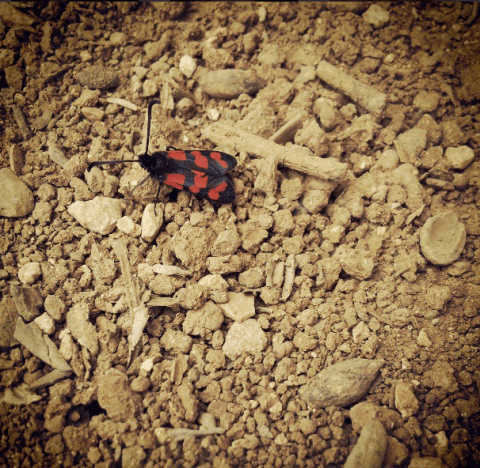
Lately, I find myself seduced by bugs.

bug
Photo by Jen Maidenberg

On the one hand, they’re so, so ugly.

So disgusting.

I don’t want them anywhere near me.

And yet, I can’t get close enough.

I want to examine them. Study their intricacies. See how they’re made. Gaze into their eyes.

I’m fascinated by their beauty. By the very clear and intentional design of their wings, their backs, their stingers.

Who made bugs so beautiful and so ugly at the same time?

I often ask myself the same question about religion:

Who made religion so beautiful and so ugly at the same time?

Who made it so I could find solace and comfort in prayer and community, while at the same time feel so ashamed at the behavior of  my community leaders and fellow members?

Who made religion so beautiful and so ugly at the same time?

Who made it so I could be so energized and enlightened by religious texts, and so confused and hurt by their antiquated, yet still upheld laws?

Who?

Who made it so beautiful?

Photo by Jen Maidenberg

So ugly?

At the same time?

And, perhaps the better question is why…

What purpose does this dichotomy serve?

Letting Go, Relationships, Work, Writing

Things I learned by being someone else’s assistant

I don’t know a thing about kids these days. Specifically, the kids getting bachelor’s degrees next month.

I know a lot about little kids — the ones who still need their bottoms and their noses wiped — but not about the big ones. The ones half my age. The ones desperately looking for jobs.

Apparently, it’s a dangerous time to be a young, reasonably intelligent but inexperienced job seeker, which makes me confused and sad.

Confused because I don’t remember my generation having the wealth of opportunities dem gosh darn newspapers claim existed.

Back when I was 22 (in the mid 90s, thank you very much), I had to agree to be somebody’s slave for a year (aka unpaid internship), and if I was really good at my job, maybe (just maybe) they’d bring me on the next year as a research assistant making an annual salary high enough to pay for food, but not necessarily rent.

The good news is that my upper middle class parents could supplement my income.

The bad news is I wanted to be independent so badly I said, “No, thank you,” and found a house to rent on 14th and East Capitol Street in Washington, D.C.  2 miles from the closest Metro stop, but just around the corner from your neighborhood hungry drug dealer.

I’m sad, too, to read that kids these days are having a hard time finding work because looking back, the first three jobs I had out of college were the hardest, the lowest paying, but most certainly the richest in terms of life lessons. I am the hard-working, versatile, compassionate professional I am today thanks to my experiences working like a dog for people who treated me poorly or patiently, as I reacted and responded to their every whim.

It helped that I worked for an egomaniacal fanatic academic;

a visionary, but temperamental creative;

a brilliant, but misunderstood obsessive-compulsive who craved gourmet cheese.

brie

These mentors (yes, even the crazy ones mentored me) taught me not only how to edit like a perfectionist; how to lick envelopes so they closed fully; how to follow up on faxes three times to make sure they were received; they also taught me who to be so people want to work for you; as opposed to arriving one morning minus one assistant, but plus one carefully typed, and heavily proofread “Dear John” letter on your desk.

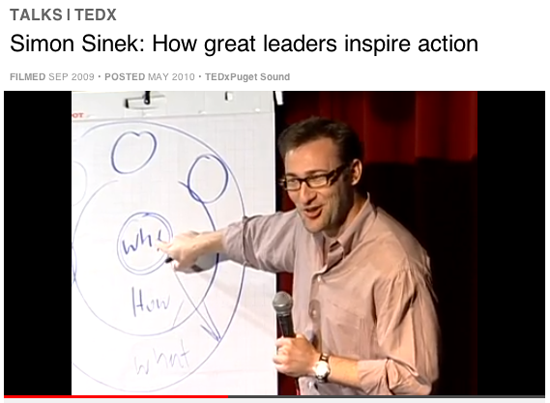
By being someone else’s assistant, I learned what Simon Sinek swears by:

“Those who lead inspire us… Whether they are individuals or organizations, we follow those who lead not because we have to but because we want to.”

Simon Sineky
Simon Sinek

Of the bosses that pushed me around — and all of them did, even the nice ones — I worked harder for the ones who treated me like a human being poised to be someone someday. Like a boss in the making. Like a grownup-to-be.

The man that finally promoted me from assistant to “coordinator” used to call me his “rising star.” And for this man, I worked hardest. To this day, more than a decade since I worked for him, I consider him my most inspiring and valuable mentor. If for nothing else than telling me, and telling others, I was a rising star.

He made me believe it.

And from his words, and his conviction, I rose.

It’s hard for me to believe or accept that there are no jobs out there for our young people. That there are no crazy, obsessive-compulsive pedantic workaholics seeking someone to read through and sort into color-coded folders 2,745 inbox emails; no minimum wage opportunities through which to prove how late you will stay in order to work your way up to a cubicle with three temporary walls instead of none.

I just don’t believe it.

If we aren’t going to give our young people today the chance to be someone else’s assistant, how will they ever learn to be grownups?

How will they ever learn who to trust and who not to? How to treat others? How to speak kindly? How it feels to finally receive acknowledgement, praise, a raise?

If we don’t maintain or create new entry-level positions for our young people, who will inspire them to action? To rise to the top in order to not be at the bottom anymore? To innovate something new to fix the stupid, old ways their bosses insist they follow religiously?

Our young people are our future.

And it’s our job to push them around,

so they will yearn to learn how to fly on their own.

Fly, and then lead.

Environment, Love, Mindfulness, Relationships, Spirituality

The Abundance Tree has sprouted

Seth Godin.

That man has a gift for producing nuggets of wisdom. Little snippets, little treasures of thoughtful brilliance that may equally apply to your personal life as they would to your career.

Today, his wisdom nugget was a metaphor plucked from nature. Here it is in its entirety:

seth godin plant seeds

It’s a lesson on abundance of which I need constant reminding:

The more unreservedly I give, the more abundantly I receive.

Thank you, Seth Godin. Message received. Seed planted. Abundance tree growing.

Soon after reading Seth’s nugget, I wrote … a bit reservedly… a rather vulnerable post. It was one of those that make me hesitate to hit the publish button.

In my hesitation, I heard the online voice of James Altucher who writes all the time that his most well-read blog posts –the ones that most touch a nerve — are the ones he almost didn’t publish.

So, feeling vulnerable, I hit publish anyway.

I published the vulnerable post because somewhere deep down beneath the fear and apprehension was a belief that some good would come from hitting the publish button; some good would come from sharing of myself; someone’s head somewhere would nod along with me; someone’s heart somewhere would swell with compassion or fellowship.

Hitting the publish button was me planting the seed.

A half hour later I saw a comment come in from Miss Corinne at A Green (ish) Life responding to my vulnerable post (positively) and telling me, by the way, she nominated me for a Liebster Award. I’m not sure what I was more excited about — that she liked my vulnerable post or that she nominated me for an award I never heard of before.

Either way, I felt all warm and fuzzy inside.

Abundance sprouting.

The very essence of the Liebster Award, it turns out, is unreserved giving. The trophy? Paying it forward.

Thank you, Seth Godin. Thank you, Miss Corinne. Thank you, James Altucher.

Stay tuned for my Liebster acceptance speech and nominations … and watch my abundance tree grow.

Letting Go, Living in Community, Love, Making Friends, Mindfulness, Relationships, Spirituality

Life is hard work and other things that make me feel tired, but alive

I am struck by the pictures my friend Holly is sending back to us from Hong Kong and Vietnam.

See more http://instagram.com/theculturemom

She’s feeding her wanderlust with banana pancakes, dim sum, and gorgeous panoramas, while feeding our desire for travel photography “porn.”

I love instagram.

Almost in the same moment that the drool drips down my chin,  while mesmerized by the lush green mountain ranges and Buddha statues, I long for the eyes through which I saw Israel in the first months I lived here.

The virgin immigrant eyes.

The virgin immigrant heart that burst with joy each and every day…at the beauty of this land; in curious awe of her people.

Cochav Hayarden, March 2012

When we first made Aliyah,  every drive was emotionally equivalent to a stroll through an art museum; every hike through a national park was a new adventure in a foreign land.

Every day I would find myself saying out loud: “Do I really live here?”

And I meant it in the same way a mother whispers over her newborn baby, “Are you really mine?”

Two years after making Aliyah, I find that my eyes and my heart are still capable of wonder.

But  it’s an experience that does not come as naturally and as automatic as before.

I need, instead, to make those moments happen.

And that takes a lot of work on my part.

I need to see the trash fire in Kfar Manda

smoke in kfar manda

— and turn my anger into compassion, and then activism.

And that’s really hard.

It’s much easier to be angry.  To rant. To shake my head.

I need to remember, in a moment I feel frustrated by my community, when I am outraged by their seeming indifference to the trash that peppers our fields

how grateful I am for my community.

How my community supports me.

How my community allows me the freedom to be a Jew in Progress. To be curious. To be a novice at living in this country.

Acknowledging my community as a gift, however, is really hard work when I am stuck in a moment of discontent.

It’s much easier for me to assume. To judge. To wish myself away from here.

It’s really hard work — and a huge emotional commitment — to be present in your life all the time.

To notice. To stop. To redirect. To be who you want to be, not your raw-emotion-of-the-moment.

It’s exhausting — living your best life.

It’s much easier to feel alive when you are on vacation — separate from the drudgery that often clouds your intentions.

It’s much easier to feel alive when you are first in love; experiencing a newness; your senses overwhelmed by glorious colors and smells.

I recognize this.

And I acknowledge that some days I am too tired to live my best life.

But on the alternate days — the ones in which I work hard for happiness, the ones in which I allow my heart to be open and my mind to be free — I find beauty that surpasses any landscape, any painting, any colorful market scene.

A vacation awaits me.

In my regular boring life.

And yours.

Love, Parenting, Relationships

Dear 38-year-old Me

Dear Jen:

It’s a trend in the last decade or so for writers or celebrities to pen letters to their younger, seemingly more innocent and vulnerable selves.

While sometimes introspective and poignant, this practice is a waste of time.

Letters lead only to wistful and wishful thinking.

Energy is better spent focusing on inventing a time travel machine.  Time travel is an action plan.

The thing is, I have trouble understanding the directions blockersto my 6-year-old’s “Blockers” board game, let alone the mind-bending quantum physics required to figure out how time travel would work.

The closest we writers will likely get to inventing a time travel machine is live tweeting a Quantum Leap marathon.

And so, we write letters.

Reading and writing letters are the next best thing to time travel.

I learned this last week as I was looking at old emails from the past 10 years.

Why was I looking at old emails from the past 10 years?

Because today I celebrate 10 years of being a mother.

I was looking for something in particular in my old sent letters.

A file called, “Tobey Grows.”

When I was pregnant with Tobey, I was a complete lunatic.

My husband told me so at the time, but I didn’t believe him. I thought he was just being an insensitive asshole.

But time traveling back into 2002 and reading the journal I kept both during my pregnancy and during Tobey’s first year of life, I see what a complete and utter crazy, control freak I was.

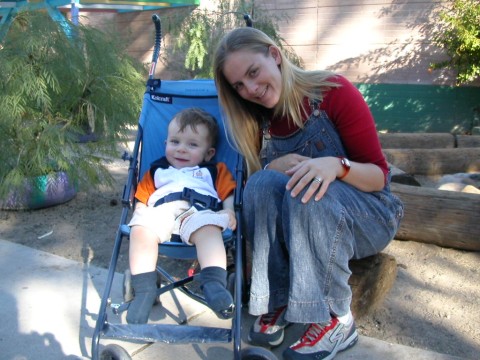
Don’t get me wrong: I was also really cute. Hot even. (Man, my hair will never be that blonde again. Damn, hormones.)

12/2003, Tucson, Arizona

But I was convinced that I was so powerful…and yet often felt completely and utterly powerless.

I thought that by maintaining control over my world, over my child’s world, that I could somehow protect him. Keep him safe. Turn him into the healthiest, strongest human being ever poised to be President of the United States of America.

And at the same time, as I read these journal entries and think back to that younger, blonder time, I realize how terrified I was.

How in a moment powerful transformed into powerless.

A fall from a swing. A slip in the bath. A bug bite. An allergic reaction.

That’s all it took to turn me into a powerless heap of Jello.

My life as a mother hasn’t changed all that much.  Powerful still turns into powerless in an instant.

But now, I know that powerful is an illusion.

I know that control is an illusion.

I know that I am not in control.

I’m not the driver.

I’m the navigator, sometimes.

I’m the backseat driver, a lot.

I’m the guy who writes the instructions manual.

I’m the girl upstairs who edits the manual three years later.

I’m the old lady who laughs at the manual years later when cars learn how to drive themselves.

*   *   *   *

This is not an easy understanding to retain, dear 38-year-old Me.

I’m still very susceptible to believing I am in control.

That I can keep him safe.

That I can protect him from this scary world.

That he will make it…thanks to me.

I’m still a bit of a complete lunatic. And I still think my husband is being a complete asshole when he tells me so.

But, for the record, he’s usually right.

The only difference now, 10 years later, is I can recognize my craziness a lot quicker.

And acknowledge it. And forgive it.

I’m a lot more forgiving of myself now.

It took me 10 years to let compassion for myself in.

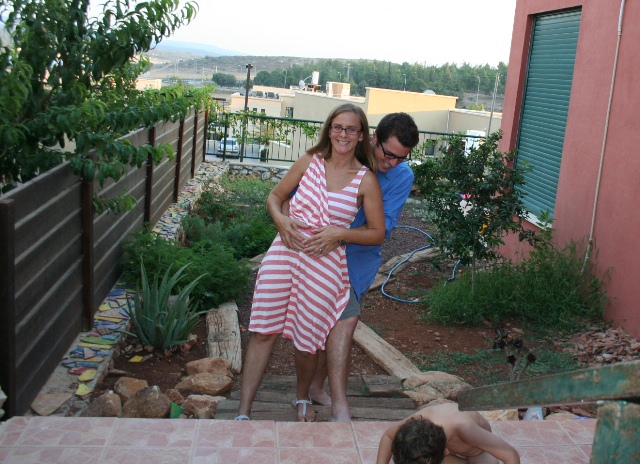
And while my hair is not as blonde, my shoulders are a lot lighter than they were 10 years ago when I first became a mother.

2012, Israel
2012, Israel

And the compassion I have for myself spreads to those around me…

To my husband.

To my own mother.

To my mother-in-law.

To my children.

To my friends.

To my enemies.

To strangers.

*   *   *   *

Dear 38-year-old Me:

Since opening my heart to my son 10 years ago, I have become so much more vulnerable to pain, to fear.

And somehow, strangely, during that same period of time I’ve managed to let go of pain, of fear.

A bit.

And let in love — a bit more.

I’m writing this letter to you today to remind you of that.

So that tomorrow, when fear creeps in, when control takes over, you remember that it’s all an illusion.

You remember that your husband is right.

You’re acting like a complete lunatic.

Love is more powerful than fear.

Breathe.

Love.

And breathe again.

Love,

38-year-old Me

Love, Making Friends, Relationships, Spirituality

Wonder might be what saves us

(This was originally posted on The Times of Israel)

In college, one of my best friends was Stephanie. We met sophomore year as we both hesitantly decided to join the eager freshman girls in sorority rush. By the time Rush Week was over, we knew that no matter how much or little we ended up liking the girls dressed in matching t-shirts and hair ribbons, we’d have each other.

And we did. Until the summer before Junior year when Stephanie got sick. She didn’t return for fall semester, and instead spent the next nine months receiving treatment for lymphoma. We spoke on the phone often during that time — in fact, when I remember Stephanie, I remember her phone voice, “Hey Jen, It’s Steph.” But I visited her only once at her parent’s home in Pennsylvania, a winter break road trip I dared alone from my parent’s house across the Delaware River.

I remember carefully washing my hands when I entered the house, and I remember how cheerful Steph was that day despite being clearly weakened. We played board games, and she showed me her computer station in the basement. The place, she told me, where she still felt connected to the world.

This was in 1994. The internet was still very young. I can’t remember if I even had an email address yet. If I did, I didn’t use it for anything other than connecting with my friends at school. But to Steph, the internet was everything. It was her only thing.

She told me about the friends she had made online; the games they could actually play together; the chat rooms. I remember being curious, but also sad. Who were these “friends” that my friend was so eager to meet each day; and how could she possibly get to know them simply through the green letters peppering a dark monitor screen?

But now I understand.

Almost 20 years later, I understand.

I understand how a stranger can make you feel alive.

How technology can be a life line.

And while for some, this is a more literal truth than for others; I do believe it can be a truth for us all.

I’m no technophile. In fact, I’m the mom that severely limits her kid’s computer time; rolls her eyes at her husband’s urgent need for the new IPhone; and worries that the next generation will never learn how to spell because they’ve never lived without Spell Check.

But, I’m no technophobe either. In fact, I believe that technology, and more specifically social media, just might be what saves us.

It’s a lofty statement with modest origins.

I realized today, for instance, how using Instagram has reignited my sense of wonder.

Through the lens of my mobile phone camera and the filter of Instagram, I suddenly find myself marveling at the beauty that is the backyard of my otherwise unattractive rental home in the Galilee:

I’m touched by the remnants of a lost time and place:

I feel in my heart the true miracle that is my son playing on the playground the day after a cease fire:

Through Instagram, I see the world with hopeful eyes, and from that space find myself seeking new objects of wonder.

Every day.

Wonder. Hope.

I’m on the look out for wonder and hope.

And when I find it, I want to share it.

This is what the world needs more of.

And it’s not just Instagram. Twitter ignites my curiosity. It’s in this space that I meet up with science geeks; where I’m reminded of just how many people out there really, truly want to save our planet. It’s in this space that I found my community in Israel; where I realized I’m not alone in my quest to make this land and the gentle hearts of those of us who live here understood by those who don’t.

Wonder and hope.

And Facebook, too. It’s here I’m inspired by the joy of the people I love. It’s here where I’m reminded by just how much people care about me, and just how much I care about others. How much my heart can burst at the photograph of a new baby born to someone I’ve never met in real life, but know through her blog what a gift that baby truly is.

Wonder and hope.

Social media –and your sharing bits and pieces of your wonder and hope — makes me feel alive.

And together, our joy at living, just might be what saves us.

Community, Love, Relationships

What comes after bliss

One of the first blogs I wrote about my Aliyah experience was a basic explanation of why we moved to Hannaton, and centered around our desire to live in an intentional community. I wrote this post less than a month after landing in Israel and only 12 days into our life on Hannaton.

I was in bliss mode.

Are you familiar with that method of operation?

Bliss mode:

* The first three months with your new boyfriend.
* The day before you marry your husband.
* The first two weeks your newborn baby is in the world. When he is so exhausted from birth he sleeps all the time. And you are still surrounded by friends and family who want to feed you and hold the baby.
* The first month at your new job. The one with the new title and the higher salary.

Bliss mode:

* The minutes after the editor accepts your pitch, but ten months and ten revisions before the piece is actually ready to submit.
* The first week in your new apartment, your new neighborhood. When you are absolutely, positively sure you made the best decision EVER!

When I look back at that post from January 2011, I can see how some of my friends and family back in New Jersey were upset with me. Put off by what they interpreted as my comparison between how I saw community here on Hannaton (“desired,” “nurtured,” “preserved”) and my all but outright trashing of community “back in America.”

Sorry about that. That was crappy of me. I would have been pissed off at me too.

Some of the less personally insulted friends and family, however, might have read the post and thought, “Ha! Give it time. You’re still in bliss mode, silly.”

I do that sometimes when someone is clearly operating in bliss mode.

And those seeming cynics would have been right.

The same way my brother-in-law — the one who told me and my husband in the first months of our courtship:

“You two are very cute. Enjoy it while it lasts.”

— was right.

Except, they’re not cynics. Not really.

His was not intended as a warning or a prediction or a buzz kill. It wasn’t a commentary on his own marriage or the strength of mine and my husband’s relationship or love for each other.

It’s just the truth.

Bliss mode begins and it ends.

It is scientifically proven.

And, as the researchers say, if we were constantly in bliss mode, we would never get anything done.

Think about it. Bliss mode is not sustainable.

Think about how much focused attention and energy it takes to build and maintain relationships; to create and raise a family; to build and sustain community; to develop a successful business.

If we were constantly in bliss mode … never in “Hey! You smell like cow manure all the time” mode … we would be so focused on our personal bliss that we couldn’t see the areas in which our situation could be improved.

Room for improvement doesn’t cancel out bliss.

It just reframes it.

And so I remind myself of this when I step in dog poop on my sidewalk for the 50th time this week. And I remind myself of this when I get yelled  at and honked at by an impatient driver, who happens to also be my neighbor. And I remind myself of this as my kids track in mud to my living room…and as your kids track in mud to my living room…and then they all eat shlukim on my new couch and spit out the wrappers onto the floor.

I remind myself that just because it’s no longer bliss…doesn’t mean it’s no longer love.

The best bliss is one that transforms into a loving and long-term attachment; a dedicated and loyal commitment.

Yes: Gorgeous sunsets over grassy hills and hot sex in inappropriate settings are bliss-scented bonuses that keep us warm during metaphorically cold, dark winter periods in our relationships — whether those relationships are with our partners or with our communities.

But attachment and commitment are what surely sustain us.