Letting Go, Writing

Midterm exam in letting go

I imagine the ultimate test in letting go is when you die.

If you progress into the afterlife or Heaven or stay put, cold in the grave (depending on your beliefs and spiritual affiliation), you get an A+ in letting go.

If you turn into a nice ghost, just hanging around moving chairs and creaking doors ’cause you have  a few things left on Earth to clean up, you can probably bank on a C + with the chance to take the test over when some nice human with special powers comes along, notices you moving chairs and stuff, and helps you transition into the post living world. If you turn into a scary ghost or some demon that possesses toy clowns (like in Poltergeist), you clearly are still majorly stuck, and have official failed the “letting go” test.

But if there were a midterm exam on letting go, I’d say that test would look like your laptop click click clicking and never turning on again.

And when your computer died — because apparently that’s what the click click clicking always means — and it took your creative writing and your photos to the grave with it, the midterm exam demands of you proof you know your material. You need to prove to  your friends and your family and your readership — and most of all to yourself — that you truly live this thing called ‘letting go.’

To pass the midterm, you need to breathe in deep, say a prayer that you did do a backup a month ago — and then publicly show some gratitude for that.

To pass the midterm, you need to be thankful that living your life on Facebook and Instagram means that part of your life exists somewhere else —  in that mythical land called “the Cloud.” To pass the midterm means writing an essay that explains why a dead computer is like ten times better than a dead person and five times better than a solar flare powerful enough to wipe out the electrical grid, and take the Cloud with it. To pass the midterm is to acknowledge that you do not know everything and to actively remember the times in your life when opportunity has appeared in the middle of an assumed catastrophe.

To pass the midterm, is to type your blog post on your smart phone and be happy you have a smart phone on which to communicate and smart people whom may guide you on how to cope with the loss of things that feel really really important…but are in the end, just things.

Letting Go, Love, Mindfulness, Relationships

Practice hard what you preach; then practice some more

There is what I preach and there is what I practice and there is sometimes overlap.

All of my preaching is prepared and shared with good intentions.

Yet there is intention and there is action and in between there is emotion.

Emotion gets in the way, sometimes.

A lot of times.

Meaning, no matter how good my intentions, and no matter how loud my preachin’, my emotions trump.

My emotions are

Royal

Straight

Flush.

Which brings me back to practice.

Knowing that my emotions trump my intentions, I may be (and must be) mindful in situations in which emotions run high.

The only way I know how to get better at acting with intention is to notice when I’m not…

and turn it around.

traffic

I love my emotions.

Okay, I value them.

But there are times when I wish what I know to be true would run through and through

all the way to my heart

As opposed to the doubt, the anger, the hurt, the fear

That runs through instead.

And all I can do in those moments

when the through and through is

doubt, anger, hurt, fear

is practice.

= = =

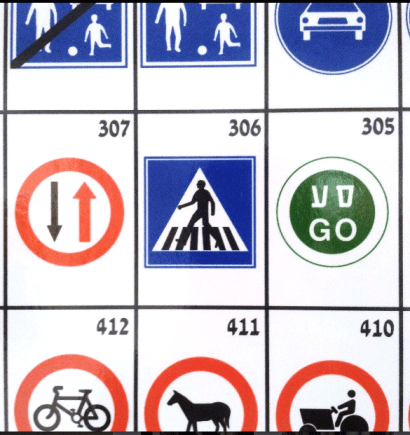
P.S.: For those seeking the conclusion to my driving test saga, sigh, I didn’t pass.

Letting Go

Friday writing challenge: 15 minutes of…

In Israel, Fridays are Saturdays. Which is to say — they are the first full day of the weekend.

But Fridays aren’t Saturdays.

For many reasons.

For one, Friday is the day leading up to Shabbat — the 25-hour or so rest period during the week for observant Jews.

We’re not observant Jews.

But we’re not, non-observant Jews.

I often refer to myself here in Israel as a Jew-in-progress.

I am playing with my Judaism.

It’s fun.

For me, Shabbat means dressed up Fridays and a Saturday morning buffet unlike any I’ve ever experienced before.

Fridays are a day to prepare for Shabbat, so that Saturday we may relax and enjoy being in the moment. Each moment. Whether the moment is a board game with my son, or a meditation group with my neighbors, or a quick nap in front of the TV.

On Fridays, we clean the house (since we never have time or energy during the work week); we prepare a nice dinner for our family or for guests (since Friday is the only night we truly eat together as  family); and — if we’re really lucky — my husband and I might find time for a snooze or a chapter or a whatever it is we want to do with our limited free time left.

My kids all have programs on Friday mornings, which is awesome.

But what typically happens is my husband and I spend the entire morning cleaning and cooking and then right at 11:45 am, 15 minutes before the kids come home, we’re finished.

We have 15 minutes left.

What can you do with 15 minutes?

Not really enough time to chill or read or watch the 12 hours of recorded programs on our DVR.

But 15 minutes IS enough time to write.

Most people would say, “not so.”

What can you write in 15 minutes?

What they really mean is: How well can you write in 15 minutes?

Well, what if the point was not to write well?

But just write … and share what you’ve written.

No time to think through your topic carefully. No time to outline your story. No time to proofread or edit.

No time left.

Writing this way requires a completely different mindset.

It means … you have to let go.

And just write.

For me, this is almost unspeakable. Except I just spoke it.

And I’m about to do it.

Want to play with me?

If so, go ahead. Write something. Then, add a link to your 15-minute Friday writing challenge post in the comments below. Tag your post 15-minute Friday.

Can’t wait to see what happens when you, too, choose to let go … and just write.

Climate Changes, Community, Environment, Family, Middle East Conflict, Survivalism, Terrorism

An imaginable future

When we first moved to Israel, I felt uncomfortable sitting on buses and in cafes.

I would casually look around, trying to avoid notice, to see if there were any suspicious people or packages about; not sure, exactly, what my reaction would be if I spotted one.

Over time I have found myself less and less suspicious. More at ease in public places, as it so happens, but still not at ease.

“At ease” is not a behavior I was born with — or maybe I was — and was just spooked one too many times by a mischievous friend or traumatized by too many VC Andrews novels.

The world, for me, has almost always been a scary place.

And I have almost always been easily startled.

While here in Israel, I cautiously scan the room for bombs; in the States, I cautiously scanned darkened evening streets for rapists and quiet alleys for thugs. I walked quickly through empty hallways and avoided elevators with lone men. I double and triple locked my doors, and was known to sometimes sleep with the lights on. Especially the night after The Blair Witch Project.

I remember being in a bar watching a band perform in New York City once, in the months just before 9/11 but fresh enough after Columbine to still be jumpy, and leaping off my seat at the sound of a small explosion in the back of the room. Someone’s hair had caught fire accidentally on the tea light candle intended for atmosphere, and instead of atmosphere we were treated to dramatic special effects.

After I caught my breath, I laughed out loud at my reaction, but internally asked myself what I had been so concerned about. What immediate danger did I think the noise indicated?

A gun shot?

An explosion?

A brawl?

It’s the first time I remember my unease extending from mild anxiety to a heightened concern for my immediate well-being and the well-being of others.

From then and there, unfortunately, my unease has only become gradually uneasier.

And not because my anxiety has worsened, and not because I moved to Israel.

In fact, my anxiety has significantly improved in the last decade since I started acknowledging it and paying attention to it and using focused breathing, meditation and mindfulness.

Moving to the slow-paced countryside of Israel, in some ways, has helped, too.

But no matter how significantly my anxiety has improved, the world hasn’t. Since 9/11, the way I see it, we have been witness to more violent crimes like those in Aurora and Newtown and Boston and have experienced the communal aftermath of incomprehensible tragedies like Katrina and Sandy and are becoming more and more awakened to the devastation of our planet and the resources we have taken advantage of all our lives.

And suddenly I am no longer a minor statistic in a clinical journal.

It’s not just me and my world viewed through an anxiety-colored lens.

The world itself has become anxiety-colored. The world itself is on edge.

I watched this video of grown men jumping out of their seats; seemingly reaching to hug each other at the sound of thunder booming loudly over Yankee Stadium during a rain delay.

At first, I giggled. It was cute. Funny.

And then I paused, and realized, it wasn’t funny at all.

Grown men — baseball players, even, symbols of fearlessness and recklessness — jumping out of their seats at the sound of a …

Boom!

We are living in a world in which we are now, clearly, all easily startled.

scaredy cats

I know I’m not the first to make the claim that the world is growing bleaker and blacker.

There are voices much louder than mine that have come before.

And even though my voice is not the first.

There is always a glimmer of hope it can become one of the last.

The year I was born poet and activist Shel Silverstein wrote:

“There is a place where the sidewalk ends
And before the street begins,
And there the grass grows soft and white,
And there the sun burns crimson bright,
And there the moon-bird rests from his flight
To cool in the peppermint wind.

Let us leave this place where the smoke blows black
And the dark street winds and bends.
Past the pits where the asphalt flowers grow
We shall walk with a walk that is measured and slow,
And watch where the chalk-white arrows go
To the place where the sidewalk ends.
Yes we’ll walk with a walk that is measured and slow,
And we’ll go where the chalk-white arrows go,
For the children, they mark, and the children, they know
The place where the sidewalk ends.”

(Where the Sidewalk Ends, by Shel Silverstein)

Those children are now grown.

Those children are now us.

And it’s indeed possible we have come to where the sidewalk ends.

And we need to choose in which direction we will continue.

We may continue to jump at loud noises, and then numb ourselves to an unacknowledged shared pain.

Self-medicating with food, technology, entertainment, drink, drugs, sex, consumerism, waste, whatever — silently signing the same consent form to ignore, to waive liability.

Or we may create together a world in which we can imagine its future.

A future not out of a dystopian film, but one lined with the vibrant green grass of my childhood memories and narrated by Shel Silverstein.

I want a future lined with colorful sunsets for my children to fall in love under.

And I want to hear thunder… and scream,

then giggle.

Knowing my fears are only imagined.

Letting Go, Love, Mindfulness, Writing

Easily attached

The best thing I never bought was this orange comb-brush.

my orange brush

How do I know?

Because I’ve had it now for more than 30 years.

I got it as a party favor at a girl’s sleepover party when I was six.

It’s traveled with me through 4 schools, 10 or so homes, and at least 100 handbags and backpacks.

It survived our Wheaton terrier — the one we had for less than a year — whose teeth marks are forever indented on its frame.

It survived at least two perms.

And it survived Israeli lice.

If this orange comb-brush could talk, it would say:

“You should have waited til after the bubble burst to buy a house.”

It’s a wise comb-brush.

About 15 years or so ago, I lost the orange comb-brush for a while.

I looked everywhere for it. Under the driver’s seat of my Nissan NX, inside eight or so Le Sport Sacs, behind the toilets and underneath the sinks of everyone I knew. I couldn’t find it.

Finally, I understood. It was really gone.

And so I bought the purple comb-brush. I carried it around with me for over a year until one day I found the orange comb-brush in a drawer inside my parent’s house.

I was elated. But also eerily aware that as happy as I was, I would have been perfectly okay had I never found the orange-comb brush.

I was okay.

Without the orange comb-brush.

Today, I still have both brushes. The orange returned to its rightful place in my handbag, while the purple spends most of its time lying next to my kids’ bathroom sink narrowly escaping Israeli lice.

I will never give up that orange comb-brush willingly. But I will be okay if it’s once again lost.

And while I thought for a long time, I would never feel as attached to the purple comb-brush as I did to the orange one, I notice my attachment shifting, my affinity for it growing. I see it in my memories and look for it when it’s missing.

It’s the purple comb-brush that I use to braid my daughter’s hair.

It’s the purple comb-brush that greets me in the evening as I turn off the lights to the bathroom and wipe down their crusty toothpaste from the sink.

And when three teeth from the purple comb-brush melted after someone accidentally left it on top of the toaster oven, I was really bummed.

But I kept the brush. Even though it’s deformed and not quite as useful, we still use it.

Osho writes that “attachment brings misery, unattachment brings blissfulness,” which sounds harsh except he softens his admonition with a dose of compassionate, measured reality:

“So use things, but don’t be used by them. Live life but don’t be lived by it. Possess things, but don’t be possessed by them. Have things — that’s not a problem. I am not for renunciation. Enjoy everything that life gives, but always remain free.”

And it’s this balance — between the bliss of having and the misery of not; between the misery of having and the bliss of not — that I seek.

I found it in that moment when I realized I didn’t miss the orange comb-brush so bad after all … but I was still happy to have her around again.

And the moment that I realized the purple comb-brush wasn’t just a meaningless replacement; that things change and people grow and new memories form …and new loves appear where there was once only plastic.

Mindfulness

Mindfulness is knowing that today sucks …emphasis on today

Some days just suck.

How do you find mindfulness in the sucky days?

Some days just suck.

1. Be aware that today sucks.

2. Emphasize the today instead of the sucks.

3. For fun: Walk around and say “today fucking sucks” out loud. This especially works if you never ever use the word fuck in your daily vocabulary. It works exceptionally well for individuals who never read anything that has the word “fuck” in it because they think it weakens or degrades the message.

There is nothing that brings you back to the present like walking around your house in sweatpants and a ponytail shouting “Today fucking sucks.” It often works quicker than choosing to let go or sitting in meditative prayer.

And frankly, we imperfect human beings sometimes need to acknowledge the fucking sucky in the world, the sucky in today, the sucky in ourselves, the sucky in other people, and in our relationships.

When we also acknowledge its immediacy, however, we mindfully frame the suckiness.

As in: Today sucks. This moment fucking sucks.

Ahhh…

Try it with a friend: It might make your day a little less sucky.

(And if that doesn’t work, play this Pink song at the the maximum volume and scream along like a 12 year old at a bat mitzvah.)

Community, Family, Living in Community, Love

A woman on the brink of death

(This was originally posted on the Times of Israel)

Sometimes I imagine I am a woman on her death bed.

How else to explain the sense of wonder I have the minute I pull out of my driveway each morning to head to work?

Before I even leave the boundaries of my small community in Northern Israel, my head turns from side to side looking out the car window for a sign of nature’s wonder.

Morning light breaking through a stunning cloud formation overhead.

cloud formation

The sun rising over the Eshkol Reservoir.

sun over eshkol

The first kalanit popping up in the fields lining the road into our neighborhood.

kalanit

Who else does this but a woman about to die?

Sometimes I catch myself imagining I am her — a woman on her death bed.

I am paralyzed. Frightened.

Could it be true?

What if it was?

And then I laugh with the realization that it is true.

We all are.

We are born to die.

And as much as we fear it, we spend our lives rushing towards it…towards death.

Rushing through breakfast; pushing the kids out the door; grabbing three different bags – a laptop bag, a lunch bag, a pocketbook – and throwing them into the back seat. We drink a to-go cup of coffee on the way. We turn on the radio and scan the words for news. News that will help us make decisions; make us feel right; make us feel wrong.

Get us there quicker.

We breeze by our coworkers; we tweet through our days. Our fingers sore from scrolling, from typing, from pointing.

Who else but a woman about to die notices the teeny tiny wren perched on the tallest branch of a pine tree across the street from the entrance to Rafael?

Who else catches through her passenger side window the hearty laugh of a teenage girl in a bronze glittery head scarf waiting for the bus to Karmiel?

Who else but a woman on the brink of demise notices the blend of hope and fear on the faces of the black men – the ones standing on the side of the kikar at the entrance to Kfar Manda — as she passes them during rush hour?

Who else but a woman about to die?

We characterize our behavior as “living,” but really we are rushing towards death. Getting there quicker, richer, righter.

Until we stop.

And in the moment we stop – in the slow minutes spent behind a tractor trailer chugging up a hill, for instance – we slow down death.

We drink in life.

Drink it in.

annabel bowling